


FC Bayern München 2013–14
Treba li Dinamo dodatno kazniti Almenu?


http://www.audi-reports.com/ar2013/stories/think-forward/

A discussion about COURAGE AND MOTIVATION, VICTORY AND DEFEAT, and the merits of playing the through ball in sport and business.
-
Audi achieved a new sales record in 2013, and FC Bayern Munich is more successful than ever on the pitch. Mr. Guardiola, Mr. Stadler, what is it like playing to win as part of a strong team?
Guardiola: When the season kicks off, no coach or player can guarantee success. And there isn’t a magic formula for winning. If there were, soccer would be as straightforward as going shopping in a huge mall: You’d just go in and choose the item you like the most. Where would the challenge or excitement be in that? I didn’t win the Champions League straight away. I started my career at Gimnastic de Manresa, a club in provincial Catalonia. STADLER: That takes me back to my boyhood days at my boarding school in Rebdorf, Bavaria, having a kick-about on the sports ground. I tried my hand as a forward … but let’s be honest: Anyone who thinks they are a born champion is setting themselves up for a fall. That’s as true at Audi as it is in the world of soccer. It’s the team that counts. From development and production through to sales and communications, we all have to pull together and have a clear vision of our goal. That’s how you win.
-
People learn little from their victories, but a lot from their defeats. How do you deal with setbacks?
Guardiola: Those are moments of great sadness for me. As if the floodlights suddenly go out. Seeing Barcelona go out against Chelsea in the Champions League semi-final in 2012 was such a moment. We were much better than our opponents, but then conceded an unnecessary goal in the return leg, and before we knew it we were out of the competition. That was a really tough defeat for me. I felt like I could no longer reach my team.
-
And was that what prompted you to leave Barcelona?
Guardiola: Yes. If you can no longer reach your players, as a coach, the time has come to move on.
-
Mr. Stadler, have you ever had moments when you felt like throwing in the towel?
Stadler: Specifically when things aren’t running smoothly, I try to turn the tables and play that crucial pass that opens up the game again. As a top manager, I can’t simply walk away from the game. It’s precisely then that you are called upon to show determination and leadership. Never give up … GUARDIOLA: … but leading a team takes huge amounts of energy. In other words, there are times when you need to recharge your batteries. That’s what I did in taking a sabbatical in New York. It was important for me, for my family and also for my former team.
-
Might your huge achievements with Barcelona simply have interfered with your hunger for success?
Guardiola: We were incredibly successful. 14 titles within the space of just four years meant it was the best period in the club’s entire history. But it can also be a curse. I found it increasingly difficult to motivate both myself and my team. I’m sure it’s no different at a successful company such as Audi.
-
Mr. Stadler, do you agree?
Stadler: Success and responsibility are the biggest motivators there are for my team and me. We have doubled Audi sales over the past ten years. That’s a worthy run of successes, almost comparable to Pep Guardiola’s 14 titles with Barca. But every year your goal is to go one better than the previous year. It’s as if the speedometer is reset to zero at the start of the year. The incentive is to push it back up as high as possible. GUARDIOLA: But in your case, that also means every year you have the chance to set a new record. With Barcelona I’d already won everything there was to win as player and coach of a club side. And I noticed that the team was finding it increasingly difficult.
-
So what motivated you to come to Munich, to a team that had just won the Treble?
Guardiola: I first got into conversation with FC Bayern Munich at the Audi Cup 2011. Over an espresso in the VIP Lounge, I got chatting to Karl-Heinz Rummenigge and Uli Hoeness about my career plans. Bayern’s current success couldn’t yet be foreseen at that point. But the challenge for me is specifically to coach a new team in FC Bayern Munich and build on the success of my predecessor Jupp Heynckes.
-
Mr. Stadler, where are you planning to take your team?
Stadler: To the top. We’ve already moved into the fast lane. We now need to step on the gas to make Audi the top premium brand worldwide.
-
How do you intend to overtake in the traffic jam? In Europe, progress has ground to a crawl. In southern countries, the sales figures are actually falling.
Stadler: At Audi, we have demonstrated how you can keep moving forward. We are very well positioned worldwide. And such a difficult phase for the economy also represents an opportunity. If we manage to learn from past political and economic mistakes, we won’t repeat them. That’s why I firmly believe the worst is behind us in Europe.
-
Isn’t that just what your industry wants to believe?
Stadler: No. I save my dreaming for night-time. We need a healthy dose of realism. People keep underestimating Europe’s economic potential. Europe is and remains our top sales region. It’s the backbone of our global success. And Europe has enormous cultural strength that stems from its very diversity. We just need to harness that potential.
-
How do you propose to do that? Can you give us a concrete example?
Stadler: We’ve been leading the way at Audi. We have brought young people over from Spain and given them the opportunity to learn with us here in Germany. At the moment we are doing the same with promising young Italians. During my time in Spain, I learned to appreciate the Spaniards as very creative people. Germans, for their part, are good organizers. When you bring such potential together, you get a winning combination. FC Bayern Munich is a glowing example of that.
-
Do you agree, Mr. Guardiola?
Guardiola: From my perspective, I can obviously vouch for that. We are now able to recruit an unlimited number of European players to our team. Without the Bosman ruling at the European Court of Justice in 1995, that would never have happened.
-
And what does that ruling mean for you as a coach?
Guardiola: It gives me the opportunity to field a very diverse team. In that respect, European integration is a guarantee of success in the world of soccer, too. FC Bayern Munich is evidence of that. The Dutchman Arjen Robben plays a brilliant pass to the Frenchman Franck Ribéry. He scores. And without the German Manuel Neuer in goal, the game wouldn’t even be possible.
-
Can different characters in a team or a company also become a curse?
Stadler: Most definitely not. Diversity brings diverse ideas. The trick is melding them, and that takes a huge amount of tact in dealing with employees. But that’s what it takes to steer a global enterprise successfully. GUARDIOLA: Yes, you definitely need that. But with so many stars in the line-up, as we currently have at FC Bayern Munich or my former club in Barcelona, you may also come across situations where diversity can be destructive. Everyone wants to play, but I can only put 11 players on the pitch at any one time. The ones left on the substitutes’ bench are most likely to be the ones who aren’t happy with my decision. And then there’s the pressure from the press and the fans to select particular players. Whenever I left Lionel Messi on the bench, for example, the whole of Barcelona was in uproar.
-
Are there any parallels between substitutes and the tough business of a successful carmaker?
Stadler: Audi doesn’t have anyone sitting on the substitutes’ bench. Everyone is in action and knows their position in the formation. In that respect too, it is all about efficiency. Compared to our competitors, we have the fewest employees per car built. That also means that our human resources managers have to perform at the highest level, because we need to sign up the very best players.
-
What is your most demanding task as Chairman of the Board of Management?
Stadler: Setting the direction. In order to be successful, I am especially consistent about that. I say a clear “No” if I think concepts won’t produce the results. On the other hand, I strongly advocate them if I am convinced that they point in the right direction. That is what employees expect from a boss. Ultimately my colleagues on the Board of Management and I bear responsibility for over 70,000 employees and their families. I can’t afford to be a procrastinator.
-
What exactly do you mean by that?
Stadler: That I have to be assertive. Even if that means swimming against the tide. I’ve had to do so ever since I was a child. My time at boarding school was no bed of roses. I made many friends who I am still in touch with today, but I also had to learn to keep fighting my corner and to stand up for my convictions. But trying to do so as a lone wolf doesn’t always work. Those were important lessons for me, and ones that stand me in good stead both in my job and in my private life.
-
Does that mean you run the Stadler family like a business?
Stadler: Others set the pace at home. Whether we’re talking about the shopping list or my daughters’ taste in music.
-
What’s the story in the Guardiola household? Who calls the shots there?
Guardiola: My kids and I have a similar taste in music, thank heavens. We can agree on Coldplay at least … I certainly don’t want to be the manager at home. My wife and I take decisions jointly. Harmony is important to me. I learned that at an early age. I also went to boarding school and struggled at first. I often felt alone and always phoned my parents in the evening.
-
Is that the reason why you still discuss career decisions within the family?
Guardiola: Yes, when I was planning to move to FC Bayern Munich only the Bayern board and my brother Pere knew …
-
… until Silvio Berlusconi spilled the beans?
Guardiola: That’s right. It seems Silvio Berlusconi, who was both Italian Prime Minister and President of AC Milan, might have started talking. Probably because I didn’t sign for his club.
-
Mr. Stadler, are there moles in your industry too?
Stadler: Industrial espionage is no rarity. Competition is tough, and the global economy in particular has a battle on its hands making sure that strategies and new products aren’t made public or divulged to competitors. The NSA affair made it clear that we need to improve our game in that regard. My personal take on it is that it has become even more important to be careful who you trust.
-
And who can you trust?
Stadler: My Audi team. I can always count on them. In the private sphere, my wife Angelika and my children. In terms of strategy and Group goals, I discuss matters at length with my closest colleagues and of course with Martin Winterkorn, the Chairman of the Board of Management of Volkswagen AG, and with Ferdinand Piëch, the VW Supervisory Board Chairman. GUARDIOLA: Do you talk business with your wife? My wife Cristina sometimes complains about my game tactics. She tells me I should start with the same team that won last time. Trying to explain my principle of squad rotation to her is harder than telling Arjen Robben: “You’ll be sitting on the bench today.” STADLER: I can certainly empathize with that. I can talk about soccer with Angelika for hours and still not agree. That aside, I try to separate my job from my family life.
So you draw a clear dividing line between family and career?
Stadler: It isn’t quite that simple. That would imply the idea of two hearts beating in my chest. That doesn’t work. The very interaction of family and career is the recipe for success. Though I admit when I’m at home my wife will often say: “You’re thinking about Audi again,” and of course she is right – and yet she is my rock. I draw strength from my family, and that equips me to do my job. That calm environment often fosters the best ideas for the Company. GUARDIOLA: You can’t keep work and family life strictly separate anyway. Anyone who tried to do that wouldn’t be authentic … STADLER: … and if you aren’t authentic, you won’t convince anybody.
-
After a match, players swap shirts. After this conversation, could you imagine swapping jobs with each other?
Guardiola: I certainly wouldn’t be capable of maintaining Vorsprung durch Technik. I’d be the wrong person. I really like driving my Audi S8, but I simply couldn’t do Mr. Stadler’s job. No way. Though I think he could do mine. Everyone knows a bit about soccer. STADLER: Well, it’s easy to say that. GUARDIOLA: But it’s true! Everyone has some understanding of the game! STADLER: There’s a little bit of a soccer expert in everyone, but whether they could really do the job is a different matter. I’m a strong believer of “cobbler, stick to your trade.” Everyone has their own skills and their own special qualities. The important thing is to use them in a way that brings you inner satisfaction. You have to celebrate your successes and give something back to society. That means Mr. Guardiola is in his element on the touchline, and I equally so at Audi.
-
Free kick to Mr. Stadler.
Stadler: (laughing) Let the players do their shirt-swapping. But I wouldn’t want to swap my job at Audi for a different one. Not even for one day.
PROF. RUPERT STADLER
was born on March 17, 1963 in Titting (Bavaria). He studied Business Management in Augsburg. He started working at AUDI AG in 1990. From 1994 to 1997, Rupert Stadler was Managing Director of Volkswagen/Audi Espana S.A. in Barcelona, before being appointed Head of the Board of Management’s Office at the
VW Group’s headquarters. Rupert Stadler has been Chairman of the Board of Management of AUDI AG since 2007. He was appointed to the Board of Management of Volkswagen AG in 2010. He and his wife Angelika have three children.
JOSEP “PEP” GUARDIOLA I SALA
was born on January 18, 1971 in the Spanish village of Santpedor. He joined the La Masia youth academy of Barcelona in 1984 and played for its first team from 1990 to 2001 before going on to play for clubs in Italy, Qatar and Mexico. In 2008, Pep Guardiola was appointed first-team coach of Barcelona. He won 14 titles in just four years, entering the record books as the Catalan club’s most successful coach ever. Pep Guardiola has been the FC Bayern Munich coach since 2013. He and his wife Cristina have three children.
Čitajte http://generalposlijebitke.blogspot.com/BŽV!

Njemački nogomet
Drama u Münchenu: Kovačeva Borussia izvukla remi protiv Bayerna, Stanišić ušao zbog ozljede
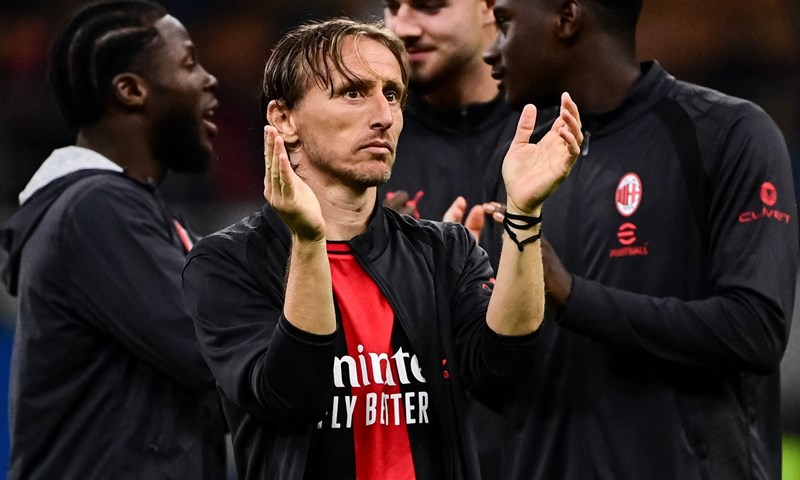
Talijanski nogomet
Modrić nakon pobjede u derbiju otkrio zašto je ostao u Milanu: 'Osjećam se voljeno i cijenjeno'

Engleski nogomet
Gvardiol otkrio koji trofej posebno želi osvojiti: 'To je nešto što me najviše gura'

Njemački nogomet
Nijemci hvale taktički potez Nike Kovača protiv Bayerna: 'Niko se usudio, a usudili smo se i mi'


https://www.youtube.com/watch?v=SI7N_2gD4QE
https://www.youtube.com/watch?v=f8UiQVY5a6Y
Javi Martineza možete prebaciti i u košarkašku momčad.
https://www.youtube.com/watch?v=f8UiQVY5a6Y
Javi Martineza možete prebaciti i u košarkašku momčad.
- Najnovije
- Najčitanije
Dobre vijesti za Hajduk uoči europskog gostovanja: Jedan od ključnih igrača mogao bi se brzo vratiti
29 min•Konferencijska liga
Modrićeva predstava u derbiju oduševila i Fabrizija Romana: 'Priča koja nema kraja'
3 sata•Talijanski nogomet
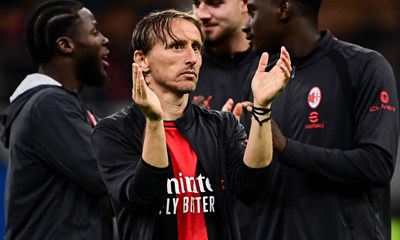
Modrić nakon pobjede u derbiju otkrio zašto je ostao u Milanu: 'Osjećam se voljeno i cijenjeno'
3 sata•Talijanski nogomet
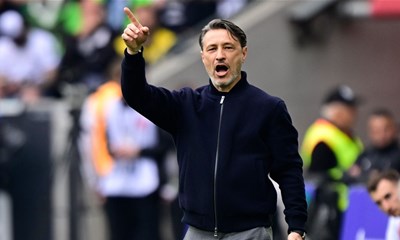
Kovač iznenadio Bayern taktičkom promjenom, njegovi igrači otkrili što se događalo na treningu
3 sata•Njemački nogomet
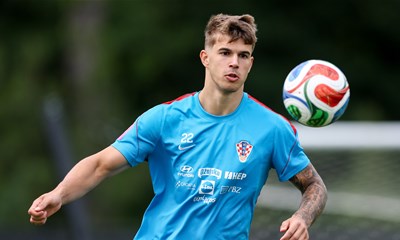
Vušković oduševio poznatog skauta nakon pobjede nad Cityjem: 'Uistinu talent svjetske klase'
4 sata•Engleski nogomet
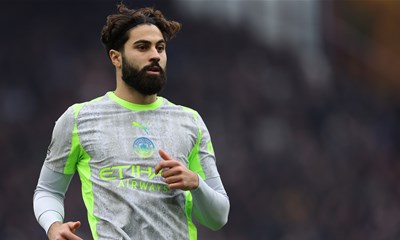
Gvardiol otkrio koji trofej posebno želi osvojiti: 'To je nešto što me najviše gura'
4 sata•Engleski nogomet
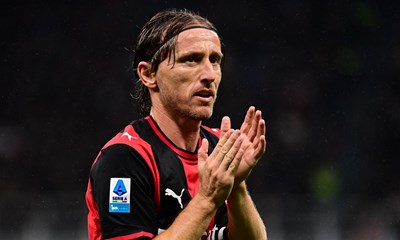
Talijani hvale Modrića nakon gradskog derbija: 'Profesor je održao lekciju', Sučić na meti kritika
5 sati•Talijanski nogomet
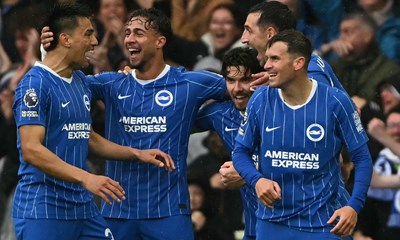
Vušković s Brightonom srušio Manchester City, Jakirovićev Hull ponovno ostao bez pobjede
19 sati•Engleski nogomet
Vušković oduševio poznatog skauta nakon pobjede nad Cityjem: 'Uistinu talent svjetske klase'
4 sata•Engleski nogomet
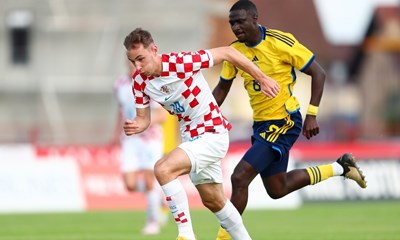
Lovro Zvonarek stigao do prvog pogotka nakon odlaska iz Bayerna, ali njegova momčad doživjela novi poraz
16 sati•Ostale lige
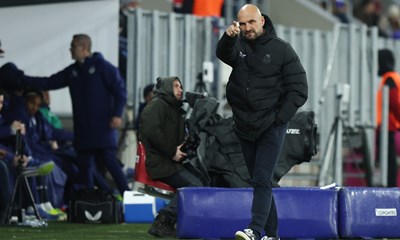
Veliki uspjeh Željka Sopića u Litvi: Dvojica Hrvata režirala preokret za naslov i dvostruku krunu
17 sati•Ostale lige
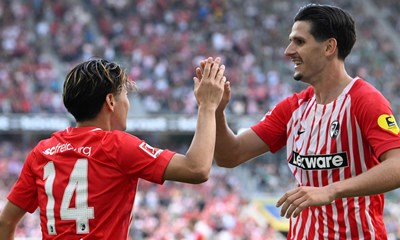
Matanović nastavio odličan niz i približio Freiburg vrhu Bundeslige, Kramarić ostao bez bodova
19 sati•Njemački nogomet
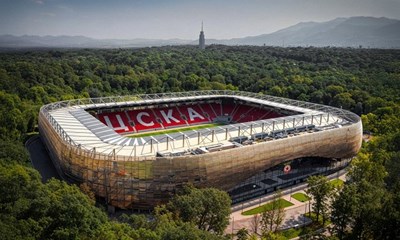
CSKA nakon tri godine otvara obnovljeni stadion, cijena je znatno manja od planiranog Maksimira
20 sati•Ostale lige
Kovač iznenadio Bayern taktičkom promjenom, njegovi igrači otkrili što se događalo na treningu
3 sata•Njemački nogomet
Modrićeva predstava u derbiju oduševila i Fabrizija Romana: 'Priča koja nema kraja'
3 sata•Talijanski nogomet