
FM 10


Football Manager 2010 new features blog Day 20: Team talks

Good afternoon everyone.
It’s day 20 of the FM2010 new features blogs. Hasn’t it gone quickly?
Today’s blog is all about team talks, and the improvements we’ve made to them in this year's game.
So I had a quick chat earlier with Riz, who is one of the senior coders at SI. He looks after the team talk area, amongst many others, so I asked him to tell you some of the things that have been changed this year.
This is what he had to say...
“Since team talks were implemented, we've received numerous suggestions on what kind of additional team talk options people would want to be able to give in the game. One of the most requested additions was the option to have specific team talks available during the pre-season, when you want to assess your squad and maybe urge some players to show you why they deserve a place in the first team.
"There are a number of new options for different pre-season situations now, like asking your players to show more competitiveness, or to work harder, or to focus on fitness and performance instead of the result.
"There is now also the option for the manager to compliment his team for a good first half, while giving them a bit of stick as well if the second half was below par. We've also added some variety to the existing team talk options, depending on different match situations such as second leg cup matches when it is not just the result of the ongoing match that matters, but the aggregate score as well.
"Outside of these additional new team talk options, we've naturally also worked on polishing the feature this year. This has included analysing reported issues from previous versions, fixing bugs and also tweaking the effects of team talks on players and the way AI managers and assistant managers at human clubs choose between different options available to them.”
Thanks for that Riz.
One thing he hasn’t mentioned there, and something I’m particularly fond of, is that you can now do individual talks for substitutes when you’re bringing them onto the pitch, which is something that’s been sorely lacking from the module in the last few years.
Tomorrow’s blog will be about the game's finances, and some of the new features in this area.
It’s day 20 of the FM2010 new features blogs. Hasn’t it gone quickly?
Today’s blog is all about team talks, and the improvements we’ve made to them in this year's game.
So I had a quick chat earlier with Riz, who is one of the senior coders at SI. He looks after the team talk area, amongst many others, so I asked him to tell you some of the things that have been changed this year.
This is what he had to say...
“Since team talks were implemented, we've received numerous suggestions on what kind of additional team talk options people would want to be able to give in the game. One of the most requested additions was the option to have specific team talks available during the pre-season, when you want to assess your squad and maybe urge some players to show you why they deserve a place in the first team.
"There are a number of new options for different pre-season situations now, like asking your players to show more competitiveness, or to work harder, or to focus on fitness and performance instead of the result.
"There is now also the option for the manager to compliment his team for a good first half, while giving them a bit of stick as well if the second half was below par. We've also added some variety to the existing team talk options, depending on different match situations such as second leg cup matches when it is not just the result of the ongoing match that matters, but the aggregate score as well.
"Outside of these additional new team talk options, we've naturally also worked on polishing the feature this year. This has included analysing reported issues from previous versions, fixing bugs and also tweaking the effects of team talks on players and the way AI managers and assistant managers at human clubs choose between different options available to them.”
Thanks for that Riz.
One thing he hasn’t mentioned there, and something I’m particularly fond of, is that you can now do individual talks for substitutes when you’re bringing them onto the pitch, which is something that’s been sorely lacking from the module in the last few years.
Tomorrow’s blog will be about the game's finances, and some of the new features in this area.

Football Manager 2010 new features blog Day 21: Improvements to the financial model
Good afternoon everyone, and welcome to the next installment of the Football Manager 2010 blog.
I’ll mainly be dealing with the financial aspect of the game today, but before I do, I have to apologise at not revealing the competition winner yesterday for the “go to my screens” re-name competition as per a previous blog.
We had hundreds of entries to the competition, and loads of good suggestions, but the one that came up again and again (more than 50 times in fact) was “Screen Flow”. So that’s what we’ve gone with.
The first person who sent us that suggestion was Hasdeep Sethi, so congratulations and thank you Hasdeep – I’ll be in touch in the next few days to get your details so that we can send you the game when it’s released.
Now back to business, literally.
Finance is a more and more important part of football. All the constant debates about foreign ownership, club debts, TV deals and the like show this. But the big clubs aren’t the only clubs we try and model in our games, and we have to try and ensure that all levels of club are catered for.
As well as a plethora of improvements in the financial model for all leagues in the game that are suggested by our team of researchers around the world, we’ve also found some time to make other improvements and additions in this area of the game for Football Manager 2010, some of which are revealed below in no particular order….
One change that seems small, but is actually pretty big, is that the game's financial model now deals in pennies, rather than in pounds. Whilst things tend to be rounded up on screen, it means that we’re much better able to model some of the world's smaller economies and clubs.
At the other end of the scale, with the ever changing football ownership, and the rush for success, we’ve looked to model that, too. For many years we’ve had a “sugar daddy” setting for clubs where a new owner comes in and throws money at a club as a long-term loan. But we’ve noticed different levels of this kind of ownership more and more in the last year, so we now have different levels, including keeping the current level, and adding two more.
One of them makes a club a force in the current league, but will expect them to be self sufficient if the club goes up a couple of levels. The other means the manager isn’t given any extra budget, but losses are covered at the end of the season to make sure the club can survive.
If the club does go into administration, we’ve better modeled this and what are known as “CVAs” to make it more realistic.
There have been changes to the way budgets are calculated and shown, so you can now see player and non-player wage details easily, but have them all be part of one overall wage budget for the club, too.
The season ticket module in the game has been re-written so as to more accurately model the real world, as has the sponsorship code, so you can now have multiple shirt sponsors and extra team sponsors, which are read from the game's database.
That’s it for today. Tomorrow, I’ll be looking at scouting and searching.
I’ll mainly be dealing with the financial aspect of the game today, but before I do, I have to apologise at not revealing the competition winner yesterday for the “go to my screens” re-name competition as per a previous blog.
We had hundreds of entries to the competition, and loads of good suggestions, but the one that came up again and again (more than 50 times in fact) was “Screen Flow”. So that’s what we’ve gone with.
The first person who sent us that suggestion was Hasdeep Sethi, so congratulations and thank you Hasdeep – I’ll be in touch in the next few days to get your details so that we can send you the game when it’s released.
Now back to business, literally.
Finance is a more and more important part of football. All the constant debates about foreign ownership, club debts, TV deals and the like show this. But the big clubs aren’t the only clubs we try and model in our games, and we have to try and ensure that all levels of club are catered for.
As well as a plethora of improvements in the financial model for all leagues in the game that are suggested by our team of researchers around the world, we’ve also found some time to make other improvements and additions in this area of the game for Football Manager 2010, some of which are revealed below in no particular order….
One change that seems small, but is actually pretty big, is that the game's financial model now deals in pennies, rather than in pounds. Whilst things tend to be rounded up on screen, it means that we’re much better able to model some of the world's smaller economies and clubs.
At the other end of the scale, with the ever changing football ownership, and the rush for success, we’ve looked to model that, too. For many years we’ve had a “sugar daddy” setting for clubs where a new owner comes in and throws money at a club as a long-term loan. But we’ve noticed different levels of this kind of ownership more and more in the last year, so we now have different levels, including keeping the current level, and adding two more.
One of them makes a club a force in the current league, but will expect them to be self sufficient if the club goes up a couple of levels. The other means the manager isn’t given any extra budget, but losses are covered at the end of the season to make sure the club can survive.
If the club does go into administration, we’ve better modeled this and what are known as “CVAs” to make it more realistic.
There have been changes to the way budgets are calculated and shown, so you can now see player and non-player wage details easily, but have them all be part of one overall wage budget for the club, too.
The season ticket module in the game has been re-written so as to more accurately model the real world, as has the sponsorship code, so you can now have multiple shirt sponsors and extra team sponsors, which are read from the game's database.
That’s it for today. Tomorrow, I’ll be looking at scouting and searching.


Football Manager 2010 new features blog Day 22: improvements to scouting and player searching
As such, I’ve merged some subjects together to attempt to have it make sense, so the blogs today are about scouting, player search and search filters.
As I mentioned in the transfers blog, there has been a lot of work done this year on fixing issues in the transfers section, and this has a big knock on for scouting too, with us trying to ensure that the scouts in the game report back as they would do in real life, with better feedback than in previous titles to really help you decide which of the five right backs you’ve just scouted would be the best fit for what you need, and the best value for money.
This is also the same for the clubs that you’re not managing, so don’t expect it to be much easier – the computer controlled scouts and managers are hungrier than ever before when it comes to snapping up the players that they need too.
And it’s not just about those players you’re trying to sign, but the scouting of your opponents too. I mentioned in the backroom advice blog about the tactical feedback you get, and in the pre-match meeting with your staff they’ll give you all kinds of information and statistics about your opposition, as well as the next opposition scout reports being improved, such as including scout reports on the players that the scout designates as key players.
One quite major change to your football knowledge inside the game is with regards to the positions that the footballer can play in. In previous games you could see all of the positions that a player was capable of playing in, and how good they were in each one. Now, you just see their natural positions, and you need to scout the player to be able to see what non natural positions they player can play in. Seeing as we’ve had it in the game like that for many years with the player stats, it make sense for us to expand upon that.
With player searches, it’s now possible to adjust all attributes up or down easily in player search with the addition of a “+” and “-“ button for all of the attributes you’ve set up, rather than having to do them all individually.
Something returning to the series that we can’t work out why it went in the first place is that when setting up a player search, you can now use an option to match x out of y attributes to get a better chance of finding a player as good, or nearly as good, as you want to.
There are lots of new player search filters too such as:
* “Appeared in” player search filter to see players who are already cup tied.
* Part-time, amateur, youth and MLS specific options.
* Extra contract expiry options.
* Can now filter by “at least” in staff search in regards to their reputations.
* You can now filter by “leagues” for players, to just see players playing in the Championship, for example.
Then there’s the “Asking price” filter which has been added on player search screen
Oh, and filters added for both “trained in nation”and “trained at clubs perfect for searching for players to make up the necessary numbers in your squad with the prevalence of rules necessitating them.
That’s enough for today on those subjects. Now for something else.
There should be a new edition of the Football Manager podcast available later this evening featuring, err, me, Johnny Abrams from sport.co.uk and Billy from FMDatabase talking about football, playing “feature roulette”, revealing the winner of the last editions competition, a new competition, and a new feature called “Ask Miles” where someone from the FM community (in this case, Billy) gets to ask me questions about Football Manager and Sports Interactive. As always, it’s available from iTunes at the princely cost of absolutely nothing, with all the back catalogue episodes available for the same price.
Have a lovely weekend everyone – I’ll be back on Monday with more information about the forthcoming FM2010.
Cheers
Miles
SuperSport HNL
Abramović: 'Dinamo je u nekim situacijama potegnuo ručnu, vidio je da je moćniji i bolji'
SuperSport HNL
Kovačević i Boban bili su u pravu - kvaliteta nikada nije bila upitna, trebalo je samo vremena
Konferencijska liga
Zekić: 'Rijeka će morati biti na maksimumu protiv Strasbourga, ali bi mogla profitirati'
SuperSport HNL
Zekić o Mejiji: 'Čudi me da je tako lako otišao u Osijek, očekivao sam da će ga Vukovar zadržati do ljeta'
Football Manager 2010 new features blog Day 23: Speed tests and Paulo Nutini
Hello everyone – I hope you all had lovely weekends.For us at SI Towers it was a busy one to say the least. We’re on the final straight now for development of Football Manager 2010, and had certain deadlines to hit, which we have done.
These deadlines mean that a bunch of us have been at the studio or on call all weekend whilst the QA teams at Sports Interactive and SEGA try to break the game. Thankfully it was quite peaceful, but it’s a very strange feeling to have jetlag when I haven’t travelled anywhere, having gone to sleep at 6am each day this weekend (and not even with drink inside me….)
We are now at a stage called "release candidate one" with the game. This is the first version of the final master DVD of the game, and it is now over at SEGA for a period of lock down testing for a few of days, before it goes off to start the manufacturing process.
Normally there will be five or six release candidates as issues are found with the different versions of the game (we have six different DVD’s that have different languages on for different countries).
These issues are normally things like a missing language file on a DVD, or minor data errors, but could include anything, so it’s both great and frustrating for us to have a “lockdown” period where we’re not allowed to change anything code-wise unless something is found.
Typically, once this process starts, it takes a couple of weeks to complete until we’re officially “gold” (which means that gold master disc is in manufacturer) and if all goes normally, it would lead to the demo being released (as previously hinted at) two weeks before the games release.
Now that we’re at this stage, we’ll be working out what the system specifications for the game are (which, again, as previously hinted, are likely to be pretty close, if not identical, to FM2009) but we also do “speed tests” to see how the game runs, and whether our optimisations have worked.
When we do speed tests, they are done in a controlled environment, so we have one PC that is only allowed to be used for these tests. This same machine is used to do tests with previous version of the game, and then with the latest version, with exactly the same in game set up, which involves running a season with an unemployed manager.
Two different tests are done, one with full detail match engine, which means every match in the game is played through in full, and one with minimum detail, which means the matches are played through our quick match engine.
When you’re playing the game, you typically have a mixture of both, with any competition you are in played in the full match engine, and ones that you aren’t in played with the quick match engine, although this is completely configurable in the “detail level” section in the games preferences screen.
Anyway, onto the results…
Full match detail – a speed increase between Football Manager 2010 and Football Manager 2009 (fully patched) of 16%.
Quick match detail – a speed increase between Football Manager 2010 and Football Manager 2009 (fully patched) of 43.5%
So whilst I’m impressed with those, what do they mean to you when you’re playing the game?
I asked a couple of our Dream Team off-site testers how they felt about the speed this year.
Tim Pyke
“The speed in FM10 has had a nice optimization done to it since FM09. Not only is the actual processing speed faster but the UI is far more responsive.
"I have been running as general a game with 11 leagues over three nations with a couple of custom cups included (Anglo Scottish and Anglo Italian Cups anyone?) to do most of the beta testing on and it zips through very nicely.
"Even when leaving four nations running over a day to run a few holiday tests I will get through five or six seasons in a 12 hour stretch which gives me plenty of data to use.
"My data base size will always be custom with the standard large and a few additional selections included to bump up the player numbers. For my mid-range PC running a hyper-threading 3.2ghz P4 processor and 2.5gb RAM this is perfectly good for me.
"As a comparison with FM09, I would generally run the English league structure down to Blue Square North and South with only the standard large database loaded and a Saturday match day would take a few minutes to run through which I didn't mind.
"During the FM10 testing phase I have tried running English structure all the way down to Level 10 (Wessex League Division One and Sussex County League Division Two) thanks to the new editor.
"This is an increase from seven leagues to 46 and although the Saturday processing might be a minute or two longer I think for a six fold increase in leagues this is a tremendous improvement. With this improvement more players of the game will be able to increase the number of active leagues running if they wish without much difference in processing speed.”
Neil
“FM10 is running great. A lot quicker then 09 in my opinion and it also seem a lot more responsive. I’m currently playing with large database with English Premiership and Championship loaded then the top leagues from Russia, Spain, Italy, Germany, France, Holland, Turkey, Ukraine, Brazil, Argentina and Portugal, and it runs great.”
Dean Ketley
“FM2010 is like Usain Bolt compared to FM2009 on my machine, it really does eat up the processing time so much so that I'm playing with four extra leagues compared with 09 and it still runs, I'd guess, at least 30% faster. Really have been impressed with the speed of the game throughout testing and can safely say your guys have done a tremendous job with this.
"The game is running with a large database (42000 players I think) with full detail in England and latter stages in Spain and Italy.”
Nick Mahiltz
“Speed is by far improved, what took 30 minutes to start a game takes less than 3 minutes. Responsiveness in the UI and match engine has dramatically improved, the optimisation is by far the best seen in the FM series.
"I’m using a Dual Core laptop with 2GB of ram, with all leagues in England, Scotland and Iceland and a large database, on full detail.”
Nik Reeves-McLaren
“The speed difference between FM2009 & FM2010 really is noticeable: FM2010 is more responsive, and processes more quickly. Starting a new game is also much faster.
"I’m running on a single core Pentium 4, with a custom database (large database but with every international player retained from every continent). It comes to a total of 31,000 players, whilst keeping the players selected relevant for my task as Blades manager!
"For most of my testing, I am running England (all the way down to Level 10) and Scotland (again, a custom editor file - implementing an 18-team per division pyramid down to the Juniors). Only two countries, but 58 divisions and a lot of extra cups!
"Even with 58 divisions running, I'm rarely left waiting for results to pour in.”
So there you go. Now last week, we had a special visitor at SI Towers, the one and only Paolo Nutini, who is well documented as being a big fan of the game. He had a day off whilst on tour, so came to see us and had a play around with FM2010, and did a little interview with us. You can watch it here (and turn your speakers up, as it’s not the most professionally recorded video in the world!)…
See you all tomorrow for another blog about FM2010 and it’s new features.
Cheers,
Miles

- Najnovije
- Najčitanije
Vukovar 1991 je ozbiljna momčad i daleko je od otpisane
14 sati•SuperSport HNL
Abramović: 'Dinamo je deklasirao Hajduk, drugo poluvrijeme bilo je odrađivanje posla'
17 sati•SuperSport HNL
Emocije na tribine, trezvene glave u urede
20 sati•SuperSport HNL
Zekić: 'Dinamo će se tek razigrati, a svi znamo kakav je mentalitet u Splitu, ostalo je dugih 11 kola'
17 sati•SuperSport HNL
Zekić o promašaju Epaillyja: 'Događa se, a hvala Bogu pa u moje vrijeme nije bilo toliko kamera'
17 sati•SuperSport HNL
Abramović: 'Dinamo je u nekim situacijama potegnuo ručnu, vidio je da je moćniji i bolji'
18 sati•SuperSport HNL
Dinamovac koji je pod stalnim udarom kritika zaslužuje isključivo - pohvale!
18 sati•SuperSport HNL
Emocije na tribine, trezvene glave u urede
20 sati•SuperSport HNL
Dinamovac koji je pod stalnim udarom kritika zaslužuje isključivo - pohvale!
18 sati•SuperSport HNL
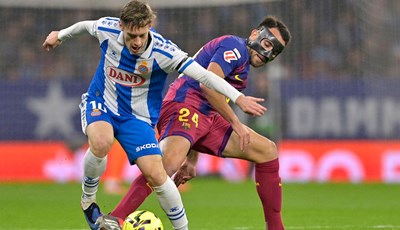
Espanyol lagano posustaje, posljednjeplasirani Oviedo prilika je za buđenje
22 sata•Španjolski nogomet
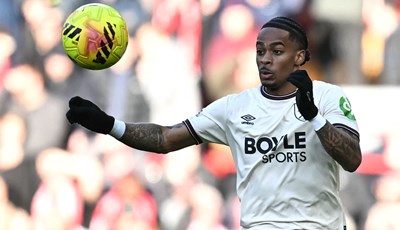
West Ham i Brentford bore se za posljednje mjesto u četvrtfinalu FA kupa
23 sata•Engleski nogomet
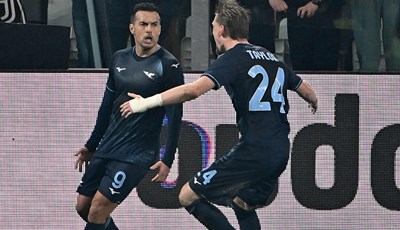
Lazio traži izlaz iz krize, a u goste mu dolazi Sassuolo koji je baš ušao u formu
22 sata•Talijanski nogomet
Kovačević i Boban bili su u pravu - kvaliteta nikada nije bila upitna, trebalo je samo vremena
23 min•SuperSport HNL
Vukovar 1991 je ozbiljna momčad i daleko je od otpisane
14 sati•SuperSport HNL
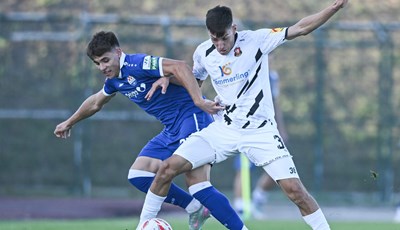
Kronologija: Bez pobjednika u Velikoj Gorici, domaćin promašio meč loptu
2 dana•SuperSport HNL