
Luka Modrić

http://www.guardian.co.uk/sport/2008/may/06/croatiafootballteam.europeanfootball?gusrc=rss&feed=sport
Modric maps a future for the old-school playmaker
Classic No10s such as Riquelme may remain a glorious anachronism in the best Argentinian tradition but Croatia's creative figurehead points the way ahead in Europe
- Jonathan Wilson
- guardian.co.uk,
- Tuesday May 6 2008
This article was first published on guardian.co.uk on Tuesday May 06 2008. It was last updated at 10:34 on May 06 2008.

Modric is ready to make his mark at Euro 2008 ... and then at White Hart Lane. Photograph: Ian Kington/AFP/Getty Images
Until last week, the only time I had seen Juan Román Riquelme in the flesh was when England beat Argentina in that friendly in Geneva in 2005. That night he was superb, embarrassing Ledley King, and it was almost as though the surge of relief after he was withdrawn with five minutes remaining carried England to score two late goals and win a game in which they'd been outplayed. But even that is not really to see Riquelme.
No, to see him truly you have to see him in his natural habitat, playing for Boca Juniors in the Bombonera, at the court he holds in his thrall. I saw him in Boca's 2-1 win over Cruzeiro in the Copa Libertadores last Wednesday, when he was very, very good; then on Sunday in the superclassico against River Plate, when he was very, very bad (although he was still far better than poor, broken Ariel Ortega).
In both games there was a palpable thrill in the crowd when he came into possession, a sense of expectation, a desire for him to do something, anything even vaguely constructive so they could sing his name. Riquelme once commented that when his side lost, it was always his responsibility. That is neither self-pity nor arrogance: it is simply the truth.
To a British eye at least, the way he plays is astonishing. He is the creative fulcrum, rarely venturing back into his own half, despite Boca fielding two orthodox centre-forwards in Martin Palermo and Rodrigo Palacio. This is a position – the "enganche" (literally, the "hook") – that simply no longer exists in western Europe. Perhaps in Argentina, where there is a self-conscious artistry to the football, the role will linger, but the comparison with Croatia, another nation where the No10 has historically been revered, is instructive. Evolution is never linear, so this is an over-simplification, but it could just be that while Riquelme is the last of the old-school playmakers, Luka Modric is the first of the new.
Even in Argentina, where the 4-3-1-2 remains the default, Riquelme is regarded as slightly old-fashioned. "Riquelme's brains," Jorge Valdano said, "save the memory of football for all time … he is a player of the time when life was slow and we took the chairs out on the streets to play with the neighbours." It is not quite true to say he never attempts to regain possession once it is lost, but he certainly doesn't prioritise chasing and harrying.
To watch Boca is to be reminded of an excessively unionised workplace in which no one dares go beyond the precise remit of their job description. At one point on Sunday Boca's holding midfielder Sebastian Battaglia, who headed the only goal and was generally excellent, won a tackle, steadied himself and began to advance into space, only to tap the ball needlessly to Riquelme when he reached the halfway line. He could have kept going, Riquelme could have made a run, there would have been options: but that is not the way things are done at Boca.
In Croatia the default formation, at least until very recently, has been the 3-4-1-2, a formation that places a similar creative burden on the number 10. That was the shape Zlatko Kranjcar employed in the 2006 World Cup, with his son Niko as the playmaker. In Germany the set-up was made to look sluggish and outmoded, partly because playing three centre-backs is only really effective against two out-and-out forwards and the majority of sides now play with only one striker (so instead of two markers and a libero, you get a marker, a libero and a redundant player, with the wing-backs forced back to deal with the opposing wide-men), but also because when there is only one creative outlet, it is relatively easy to stem the supply.
For years football was about individual battles, but since the Sixties it has become increasingly systematised. Valeriy Lobanovskyi always insisted that a team was "a dynamic energy system" in which the energy of the collective was greater than the sum of the energies of the individual units within it. In a sense the bonds between the units were of greater significance than the units themselves. What that means in practical terms is that whereas previously a playmaker could flourish if he could get the better of his marker, now he could find two or even three men on him – and this is the crucial part – without his team-mates being left dangerously free elsewhere on the pitch.
There were never 10 battles going on simultaneously; a systematised approach tries to move the players whose battles are not taking place at that specific time to over-man in key areas – essentially near the ball – rotating and moving accordingly. As Arrigo Sacchi puts it, a player should move not according to where he thinks a player in his position should move, but by assessing the position of the ball, his team-mates, the space and his opponents. Nothing is fixed, everything is relative.
All of which means that the classic playmaker is doomed. In Argentina, where the victory of system over the individual is not yet won, and in international football, in which a lack of training time means systems are necessarily less sophisticated, perhaps he will continue to prosper, but essentially Riquelme is a glorious anachronism. In Croatia too, system has yet fully to take hold, and Modric operates in a similar way for Dinamo Zagreb.
What has been striking about him, though, is the way he has changed his game at international level. When Slaven Bilic replaced Zlatko Kranjcar as national coach, he announced he was doing away with the 3-4-1-2 in favour of a Dutch-style 4-3-3. That created panic amid traditionalists, who see the playmaker as central to Croatian football, but they need not have worried. In the end Bilic settled on a 4-1-3-2, and managed to fit into that two players who have in the past played as No10s – Niko Kranjcar and Modric. Kranjcar is now happily adapted to a left-sided attacking midfield role, but Modric too has had to change his game.
"For Dinamo he plays in the hole but for the national team he's another midfielder, playing in the middle with Niko Kovac," Kranjcar explained. "He showed against England when he played against Barry, Lampard and Gerrard that he can cope in the middle of the pitch against English opposition. I don't think it will be a problem. He's maybe not going to push players around, but with his quickness of feet, and his balance and his vision he'll cope. He's really special. He's a player who's really comfortable on the ball. People enjoy having him in the team. He's quick of thought. Good with both feet, can run all day long, and he plays football. He's got a great future."
The Tottenham-bound Modric himself has spoken of the "increased defensive responsibility" he has with the national team, and that is what marks him out as a different kind of playmaker. He can take his place within a system, rather than living apart, having to have the system built around him as was the case with old-school No10s like Riquelme. None of that, of course, means that his apparently frail physical frame will necessarily be able to cope with an English season – it is a very different thing to survive a physical battering over the course of 38 games than in a one-off qualifier – but it does suggest the sort of intelligence and adaptability he will need to prosper in the Premier League. There is, to use that word so beloved of Lobanovskyi and Sacchi, a "universality" about him that marks him as a thoroughly modern player.
[uredio Lynx17 - 06. svibnja 2008. u 17:42]

http://www.index.hr/sport/clanak/je-li-modric-haptefobicar-kevin-keegan-svakog-tko-mu-se-priblizi-dira-po-licu/385816.aspx
Ovi su stvarno nadmašili sami sebe...


Marko Marušić je napisao/la:
jedino svabi mogu napisat ovakav naslov 
u stanju su za sve izmislit rijec od 50 slova...
bas tako
inace strassenfussballer je ono "genije sa stihom ulice" i kompliment je kao odgovor na retortne nogometne proizvode po akademijama milana, arsenala i slicnih
prevest cu clanak kad budem stigao

Nogometni svijet
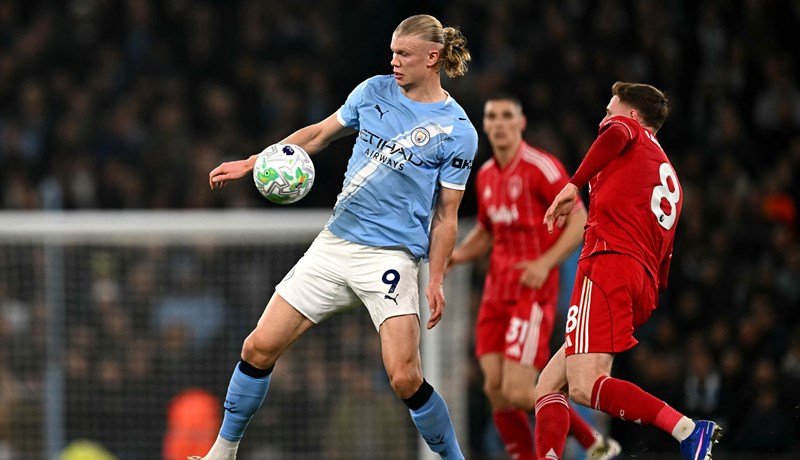
Epaillyjev zicer u SHNL-u podsjetio na Sivonjićev, ali gore su promašivali Ronaldo i Haaland
SuperSport HNL
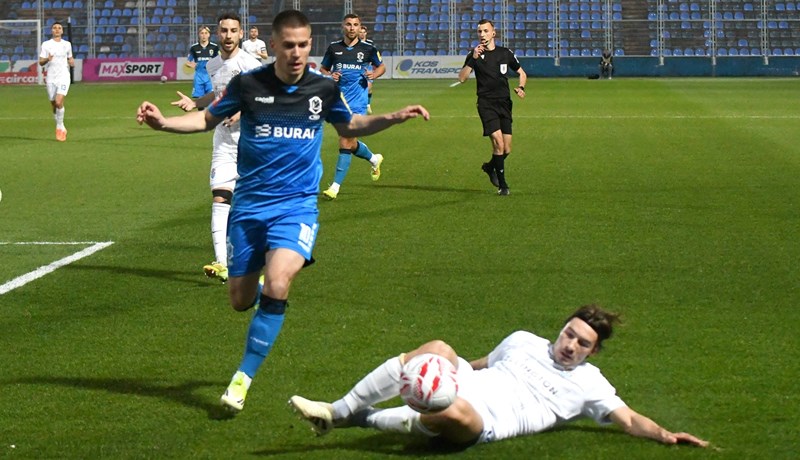
Igrač utakmice: Strijelac i asistent još jednom vodio Varaždin do pobjede
Prva NL
SuperSport Prva NL: Tri gola, tri boda i pjesma u autobusu Orijenta nakon gostovanja u Karlovcu
SuperSport HNL
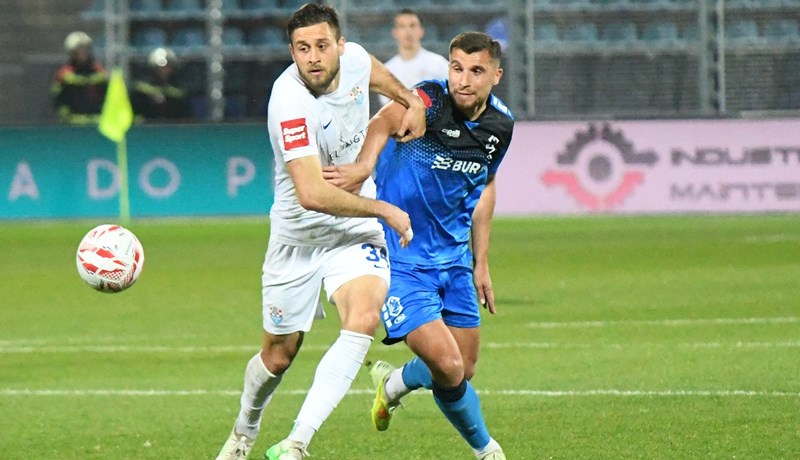
Varaždin prekinuo crni niz, Vukovar svoj nastavio i doveo se u još veće probleme

- Najnovije
- Najčitanije
Sjajan derbi u SuperSport HMNL-u, Olmissum u trileru sa šest golova svladao Futsal Dinamo
7 sati•Futsal
Igrač utakmice: Strijelac i asistent još jednom vodio Varaždin do pobjede
8 sati•SuperSport HNL
Aleksa Latković uoči završnice dvoboja potvrdio pobjedu Varaždina
8 sati•SuperSport HNL
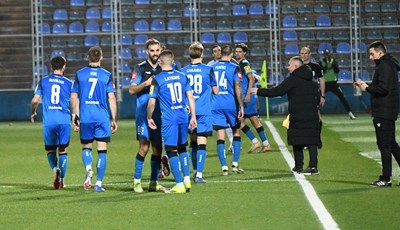
Odlična akcija iz kornera i zasluženo vodstvo Varaždinaca
8 sati•SuperSport HNL
SuperSport Prva NL: Tri gola, tri boda i pjesma u autobusu Orijenta nakon gostovanja u Karlovcu
9 sati•Prva NL
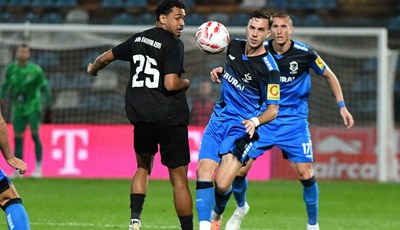
Kronologija: Varaždinci nadigrali i zasluženo svladali posljednjeplasirani Vukovar
11 sati•SuperSport HNL
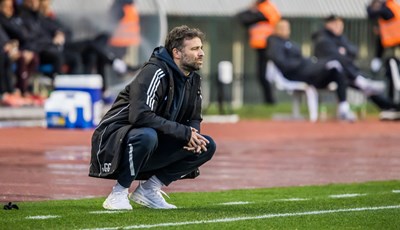
Garcia: 'Igrači nekad pretjerano reagiraju, to je proces, ali moraju biti pametniji'
10 sati•SuperSport HNL
Kronologija: Varaždinci nadigrali i zasluženo svladali posljednjeplasirani Vukovar
11 sati•SuperSport HNL
Kronologija: Strasbourg do pobjede na Rujevici u dvoboju s Rijekom
1 dan•Konferencijska liga
Dinamo mora imati spremnu zamjenu za Mišića, a u SuperSport HNL-u nameću se tri kandidata
13 sati•SuperSport HNL
Top 5 utakmica vikenda: Poslastica do poslastice, okršaji ljutih rivala su kao finala ili majstorice
21 sat•Talijanski nogomet
Garcia: 'Igrači nekad pretjerano reagiraju, to je proces, ali moraju biti pametniji'
10 sati•SuperSport HNL
SuperSport Prva NL: Tri gola, tri boda i pjesma u autobusu Orijenta nakon gostovanja u Karlovcu
9 sati•Prva NL

Budi se Hrvatski dragovoljac, upisao je prvu pobjedu u SuperSport Drugoj NL nakon pet mjeseci
11 sati•Druga NL
Varaždin prekinuo crni niz, Vukovar svoj nastavio i doveo se u još veće probleme
9 sati•SuperSport HNL