
Nogometni stadioni

riki_mo je napisao/la:
Slažem se, ali meni se posebno dopala unutrašnjost. Dimenzionisana je tako da valjda svaki dvoranski sport izgleda ok, u ovoj dvorani neće biti onih rupa, praznog prostora, iz gola, što se inače stvaraju po nekim arenama.
Da baš ne veliš po ZG Areni

nek i Krušlin vidi Rija, al Hrvatsku sine voli

križevci je napisao/la:
riki_mo je napisao/la:
Slažem se, ali meni se posebno dopala unutrašnjost. Dimenzionisana je tako da valjda svaki dvoranski sport izgleda ok, u ovoj dvorani neće biti onih rupa, praznog prostora, iz gola, što se inače stvaraju po nekim arenama.
Da baš ne veliš po ZG Areni
ko zna, možda prepozna...
inače nema potrebe da se neke "naše" objektivno odlične građevine uzimaju kao negativni primjeri. Čitajte http://generalposlijebitke.blogspot.com/BŽV!


Jinan Olympic Sports Center (simplified Chinese: ??????????; pinyin: Jinán aolínpiketiyu zhongxin) is a sports venue in Jinan, China. It is located in the south-east of the city. The area is home to the main sports venues for the 11th National Games of the People's Republic of China in October 2009, including the main Jinan Olympic Sports Center Stadium. The entire precinct is 81 hectares in size.
The overall layout of the Jinan Olympic Sports Center is known as Donghe Xiliu (simplified Chinese: ????; pinyin: donghé xiliu; literally "East Lotus, West Willow") due to the distinctive architecture of the venues. Also, the city flower and tree of Jinan are the lotus and Chinese willow, respectively.
- Jinan Olympic Sports Center Stadium - Located on the western side of the center. It is known as Xiliu (??) or "West Willow" as the external frame of the stadium resembles willow leaves. It is the main stadium and hosted the opening ceremony, track and field and football events during the National Games.
Located on the eastern half of the center, the following three venues together resemble a lotus flower and are known as Donghe (??) or "East Lotus":
- Jinan Olympic Sports Center Gymnasium - Hosted the closing ceremony and gymnastics events of the National Games.
- Jinan Olympic Sports Center Tennis Stadium - An indoor tennis stadium that hosted the preliminaries and finals of the tennis in the National Games.
- Jinan Olympic Sports Center Natatorium - Hosted the swimming and diving events at the National Games.
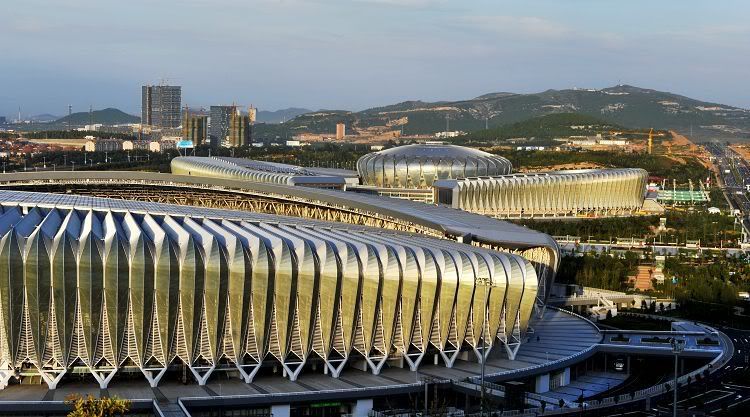
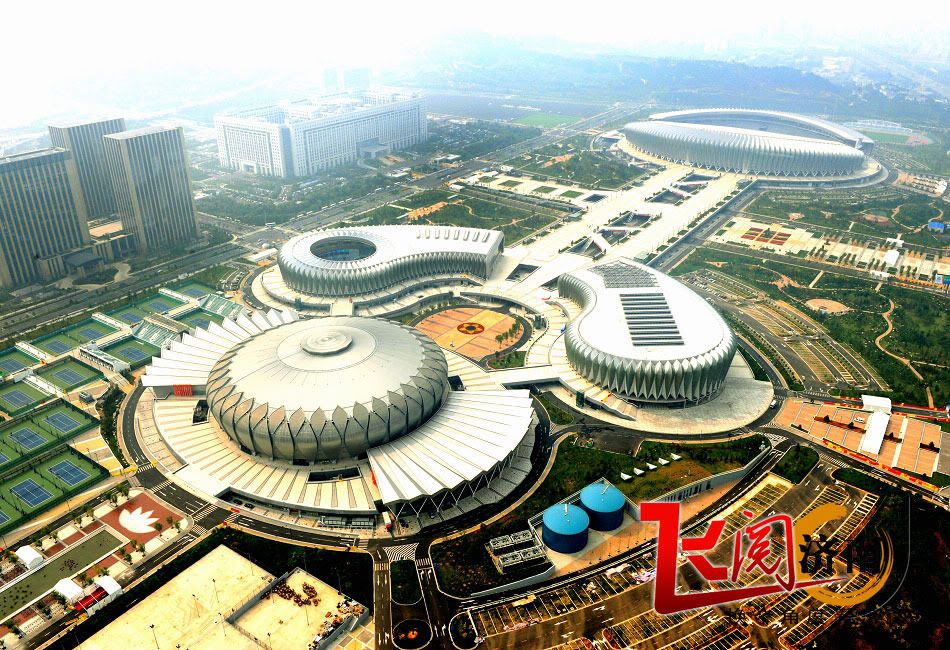
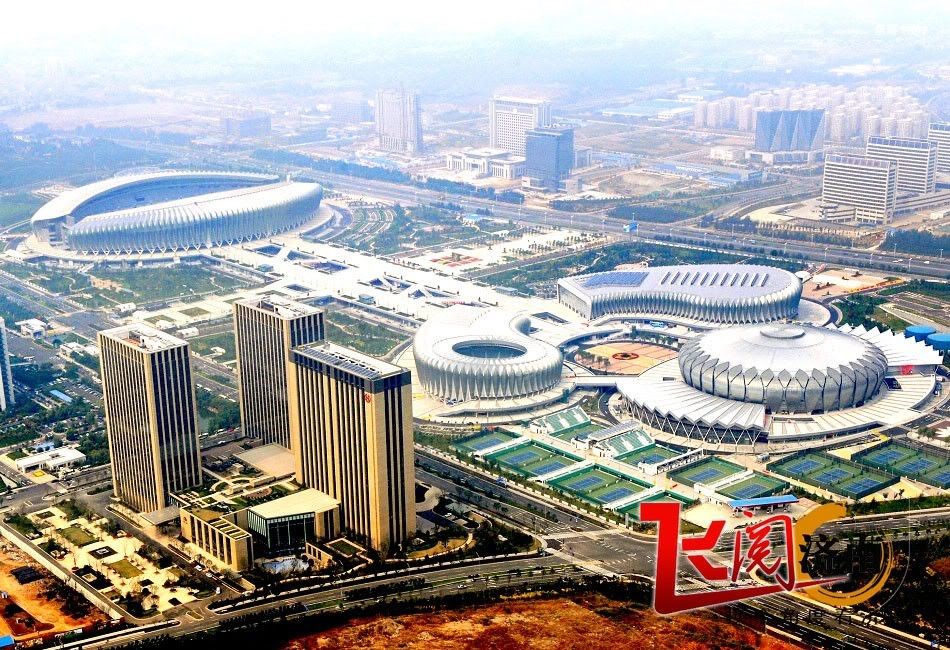
[uredio riki_mo - 10. studenog 2010. u 12:06]
Čitajte http://generalposlijebitke.blogspot.com/BŽV!


Da je bilo više sreća ovo bi bilo aktuelno, evo ipak...
UEFA U21 Championship - Denmark 2011
Dates
March 27, 2009 - September 7, 2010 : Qualifying Rounds
October 9 - 13, 2010 : Play-off for Final Tournament
June 12 - 20, 2011 : Final Tournament (group stage)
June 23, 2011 : Semifinals and Olympic Qualifying play-off
June 25, 2011: Final
City´s and stadiums´s
Aarhus
Aarhus, or Arhus, is the second largest city in Denmark, and 99th-largest in the European Union, and the sixth-largest amongst the Nordic countries. The principal port of Denmark, it is situated on the east side of the peninsula of Jutland in the geographical center of Denmark. Aarhus is the seat of the council of Aarhus municipality with 307,000 inhabitants and 239,865 in the inner urban area, and app. 800.000 inhabitants within 1/2 hour transport. the city claims the unofficial title "Capital of Jutland".
Aarhus is the main and biggest city in the East Jutland metropolitan area (Danish: Byregion Ostjylland). which is a co-operation in the eastern Jutland with 17 Municipalities. With more than 1.2 million people living in the area it represents approximately 23% of the population of Denmark and is the second largest metropolitan area after the Copenhagen metropolitan area.
The Stadium
NRGi Park is a modern Football and athletics stadium in the southern part of Aarhus inner city, the stadium is a allseater with a capacity of 21.000 people.
The stadium was build in 1920 as Aarhus Idratspark and the latest renovation was in 2001.
It will get a smaller renovation before 2011 so the stadium better can handle the big crowds at concerts and football games.


Aalborg
Aalborg sometimes written as Alborg, is a city in Denmark. Its population, as of 2009, is 122,461, making it the fourth largest in the country after Copenhagen, Arhus, and Odense. The earliest settlements date back to around 700 AD. Its location by the Limfjord made it an important harbour during the Middle Ages, and an industrial centre later. Today the city is in a transition from a working-class, industrial, city to a knowledge-based one.
The Stadium
Energi Nord Arena was build in 1960 as Aalborg stadion and the latest renovation was in 2002.
The capacity is 13.800 using both seating and standing areas, for international matches the capacity is 10.500.


Herning
Herning is a Danish city of Region Midtjylland. It is the main town and the administrative seat of Herning Municipality. Herning has a population of 45,470 (1st January 2009) including the suburbs of Tjorring, Snejbjerg, Lind, Birk, Hammerum and Gjellerup, making Herning the twelfth largest urban area in Denmark.
Herning is home to Messecenter Herning, the largest exhibition centre in Scandinavia, which gives the town a reputation for its many trade fairs.
Carl-Henning Pedersen and Else Alfelt's museum of art aka Herning Art Museum is one of the major attractions.
The stadium
MCH Arena is a Danish football stadium. It is situated in Herning and is the home of FC Midtjylland. In the opening match, FCM won 6-0 against Akademisk Boldklub. Until 2009, the stadium was known as SAS Arena.
Messecenter Herning owns the stadium. It cost 85 million DKK to build the stadium.
The stadium is approved for UEFA Europa League and national games.
The stadium is locally known as Zidan Arena as Mohamed Zidan, FC Midtjylland's former striker, scored nine goals in the first three matches played there.


Viborg
Viborg is a town in central Jutland, Denmark and is the seat of both Viborg municipality and Region Midtjylland. Viborg is also the seat of the Western High Court, the High Court for the Jutland peninsula. Viborg Municipality is the second largest municipality of Denmark, covering 3,3% of the total land area of Denmark.
Viborg is one of the oldest towns in Denmark, with Viking settlements dating back to the 8th century. Due to its central location, the town had great strategic importance, in political and religious matters, during the Middle Ages. A motte-and-bailey type castle was once located in the town. Viborg takes its name from a combination of two words: Wii, meaning a holy place, and berg, meaning a hill.
The Stadium
Viborg Stadion is the homeground of Viborg FF and is build in 1930 and is renovated in stages from 2001 to 2008, the pictures posted does not show the 4 office towers build in each corner.
The capacity after the renovation is 9.566 and the stadium is a allseater besides 500 standing places build to reach the capacity of 10.000 as the danish FA wants for all superliga stadiums.


Here is a new picture with one of the office towers in the corners.

Čitajte http://generalposlijebitke.blogspot.com/BŽV!

Europske lige
Krizmanić asistirao za pobjednički pogodak OFI-ja u četvrtfinalu Kupa protiv AEK-a
Reprezentacija
Ždrijeb novog izdanja Lige nacija održat će se sredinom veljače u Bruxellesu

Njemački nogomet
Union Berlin u dobrom ritmu gostuje kod momčadi koja je malo iznad opasne zone
Njemački nogomet
Briljantna večer Kramarića: 'Stari kao dobro vino'
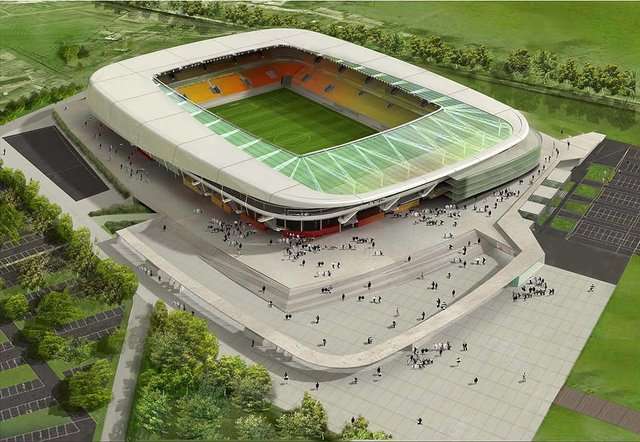
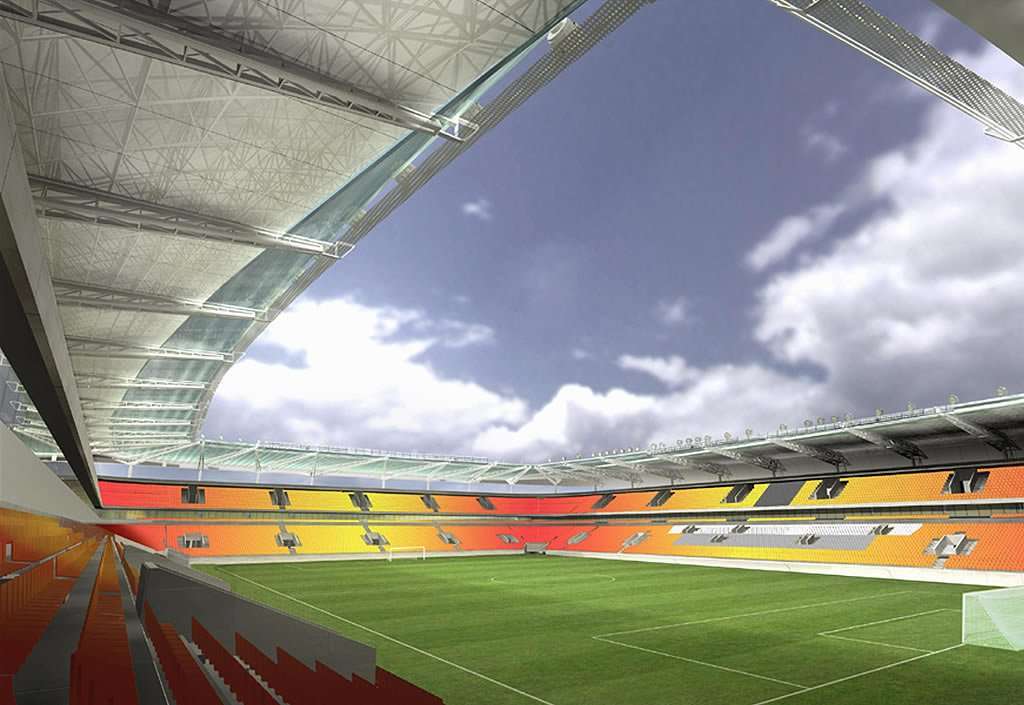
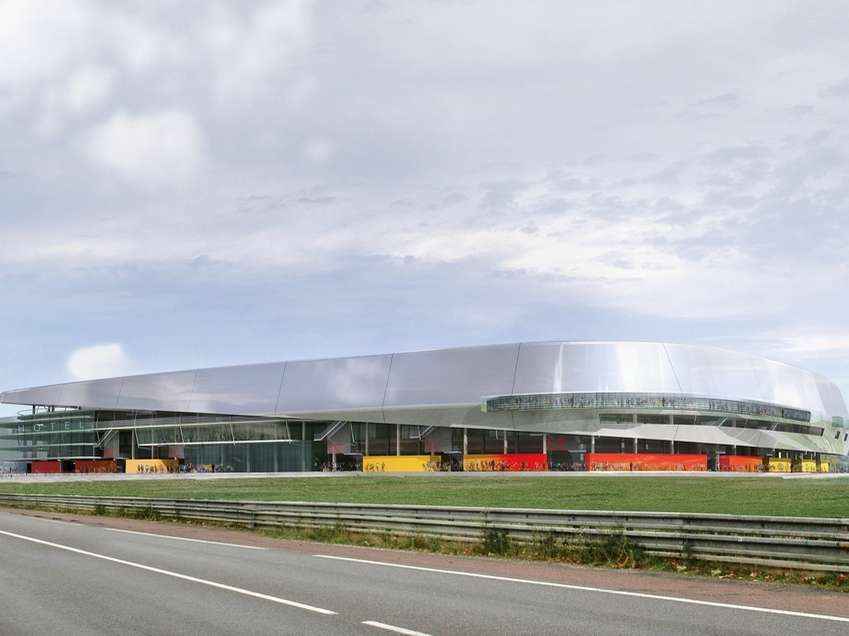
Location: Le Mans, Pays de la Loire (stadium located inside the circuit of the 24 Hours)
Name: MMArena (New Stadium)
Tenant: Le Mans FC (formerly Le Mans Union Club 72)
Capacity: 25,000 seats (2,000 business seats + 32 suites)
Opening: late 2010 (under construction)
Architects: Cardete & Huet, Studio B. Huet, jointly with Vinci (construction)
Cost: €102M (Public–Private Partnership: Local authorities & Vinci + naming rights: MMA)
Rainwater collection system
Project:
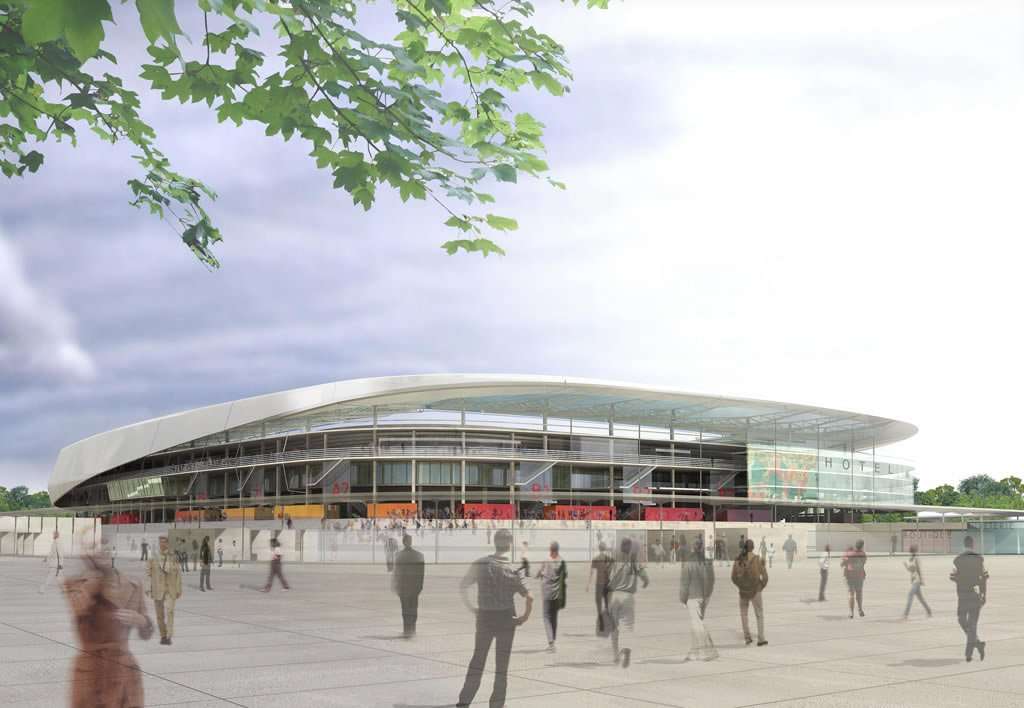


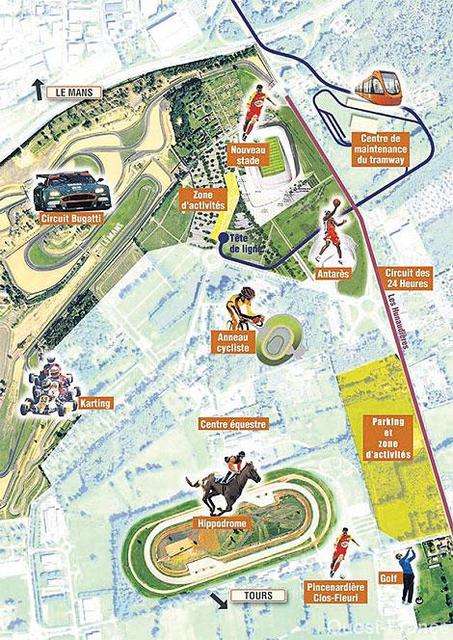

Construction:


Čitajte http://generalposlijebitke.blogspot.com/BŽV!
Location: Le Havre, Haute Normandie
Name: "Grand Stade" (New Stadium)
Tenant: Le Havre Athletic-Club
Capacity: 25,000 seats, expandable to 30K (3,500 VIP seats)
Opening: Early 2012 (under construction)
Architects: SCAU, KSS, IOSIS, jointly with Vinci (construction)
Cost: €80-100M (100% Public: Local authorities)
Retractable tiers for concert configuration
Energy-plus-stadium: Renewable energy (photovoltaic cells)
Rainwater collection system
Project:


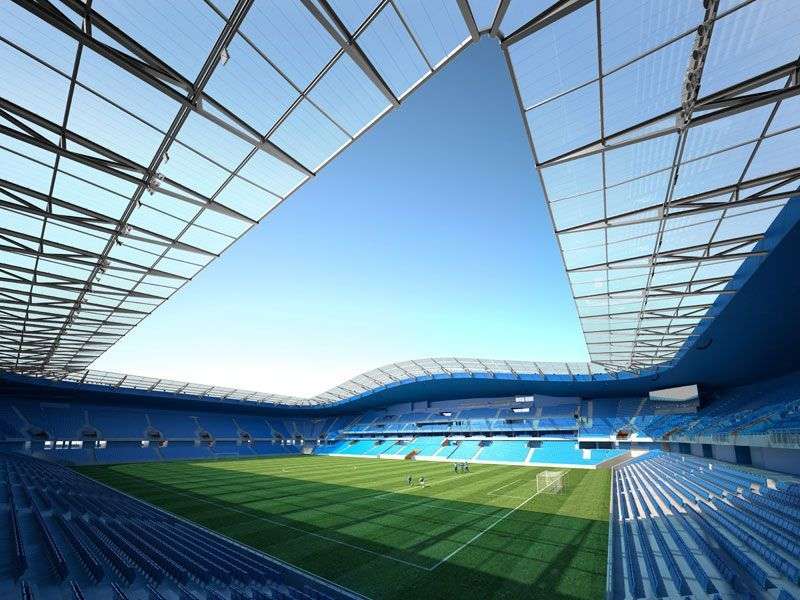

Preliminary works & Construction:


Čitajte http://generalposlijebitke.blogspot.com/BŽV!
- Najnovije
- Najčitanije


Barcelona ima najviše igrača iz svoje škole u Petici, Dinamo uz bok Liverpoolu i Portu
1 sat•Europske lige
Dinamo potvrdio dolazak Filipinca: 'Znam da će biti izazovno, ali borit ću se za svoje mjesto'
3 sata•SuperSport HNL
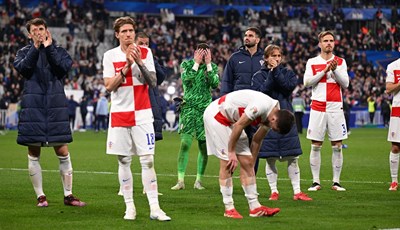
Ždrijeb novog izdanja Lige nacija održat će se sredinom veljače u Bruxellesu
3 sata•Reprezentacija
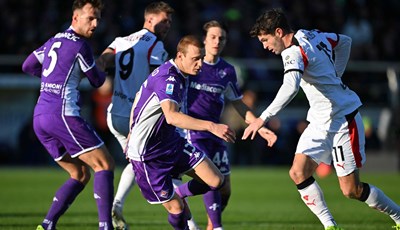
Como pobjedom protiv Milana hvata priključak s Top 5, Modrić i suigrači pokušavaju držati korak s Interom
4 sata•Talijanski nogomet

Union Berlin u dobrom ritmu gostuje kod momčadi koja je malo iznad opasne zone
6 sati•Njemački nogomet

HNS odabrao bazni kamp Vatrenih za Svjetsko prvenstvo
9 sati•Reprezentacija
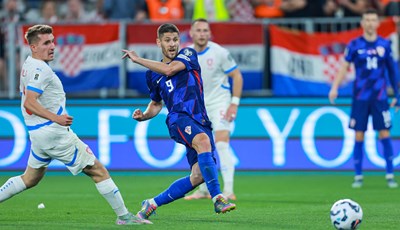
Briljantna večer Kramarića: 'Stari kao dobro vino'
10 sati•Njemački nogomet
Como pobjedom protiv Milana hvata priključak s Top 5, Modrić i suigrači pokušavaju držati korak s Interom
4 sata•Talijanski nogomet

Raspoloženi Kramarić do hat-tricka već u prvom poluvremenu!
21 sat•Njemački nogomet
Union Berlin u dobrom ritmu gostuje kod momčadi koja je malo iznad opasne zone
6 sati•Njemački nogomet
Dinamo potvrdio dolazak Filipinca: 'Znam da će biti izazovno, ali borit ću se za svoje mjesto'
3 sata•SuperSport HNL
Varaždinci remizirali protiv momčadi koja nastupa u Ligi prvaka
23 sata•SuperSport HNL
Lokomotiva bez finala Arena kupa, Velež slavio i borit će se za trofej s Vukovarom
22 sata•SuperSport HNL
Barcelona ima najviše igrača iz svoje škole u Petici, Dinamo uz bok Liverpoolu i Portu
1 sat•Europske lige
Ždrijeb novog izdanja Lige nacija održat će se sredinom veljače u Bruxellesu
3 sata•Reprezentacija