


Reprezentacija Srbije

Bubili je napisao/la:
Da li neko zna ko je taj mali Nemanja Matic
mladi reprezentativac, ponikao u Kolubari iz Lazarevca sadasnjem drugoligasu. Presao u slovacke Kosice pre dve godine, dao neke golove za mladu repku, bio u januaru na probi u Middlesboroughu..navodno je talantovan, ali posto ga nisam gledao ni na TV, ne mogu vise reci. Igra ofanzivnog veznog, napaca, sta li vec...
uskoro ce Vojislav da pronadje neki novi podatak na Wikipediji, pa da prosipa mudrost, a narocito ce da bolduje ako sam negde pogresio 


9. jun 2009.
| Izvor: B92, Goal
 Holandski fudbalski klub Ajaks planira da u svoje redove dovede mladog fudbalera Partizana Ivana Obradovića.

Ajaks dovodi Ivana Obradovića?
www.partizan.rs
Gigantu iz Amsterdama preti opasnost da ostane bez odbrambenog fudbalera Tomasa Vermalena, koji se sprema da pređe u londonski Arsenal, pošto je, navodno, već dogovoren transfer od 13 miliona evra. Samim tim Ajaks je u potrazi za odgovarajućom zamenom za Vermalena, a prvi izveštaji govore da su rešenje pronašli u mladom fudbaleru ‘crno-belih’.
Prema pisanju holandskog ‘De Telegrafa’ Ajaks bi u najskorije vreme mogao Partizanu da pošalje i zvaničnu ponudu za Obradovića.
Obradović, koji je sedam puta nastupio i za selekciju Srbije, zapao je
za oko nekolicini velikih evropskih klubova, ali prisustvo zemljaka
Mralema Sulejmanija u Ajaksu, navodno, je razlog više zbog koga bi
defanzivac prešao baš u klub iz Amsterdama.
Očekuje se da će
Ajaks krenuti u realizaciju ovog transfera čim Vermalen i zvanično
napusti taj klub. Cena 20-godišnjeg levog beka je 7 miliona evra.

Revitalised Serbia riding high under Raddy Antic
Serbian football is in a mess domestically but the national team could take a big step towards South Africa with victory in the Faroes
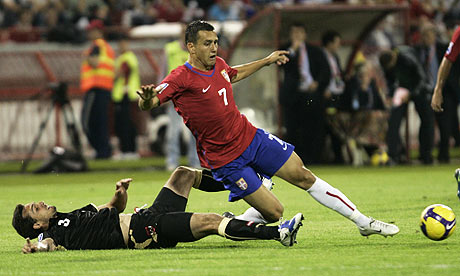
Serbia's Bosko Jankovic, right, is challenged by Martin Stranzl of Austria during the Serbs' Group Seven victory in Belgrade on Saturday. Photograph: Darko Vojinovic/AP
Red Star are disintegrating, crowds for domestic matches remain low and violent, and there are constant allegations of corruption. Serbian football should be in a mess – domestically it is in a mess – and yet somehow the national team sits atop what looked a tough qualifying group for the World Cup.
No other group featured three sides who had been at Euro 2008, and yet should Serbia win in the Faroe Islands tomorrow they will lead second-placed France by eight points. Raymond Domenech's side will, admittedly, have two games in hand, but that gap will seem an almighty gulf to an underperforming team who are already under pressure.
Given the quality of their performances so far, winning in the Faroes shouldn't be a problem, but this is Serbia, who remain as enigmatic as any team in Europe. In recent years they (or Serbia-Montenegro, or Yugoslavia when all that was left of it was Serbia and Montenegro) have contrived to lose in Azerbaijan and Kazakhstan, and yet they also qualified for the last World Cup by conceding a single goal in 10 qualifying games.
Heading for Germany, there seemed genuine reason for optimism, despite being grouped with Argentina, Holland and Ivory Coast. Then Montenegro seceded, and the Montenegrin forward Mirko Vucinic withdrew from the squad (injured, it was said, but it seemed a convenient injury), being replaced by the son of the manager, Ilija Petkovic.
That led to allegations of nepotism and morale disintegrated, exemplified by the brawl that erupted on the training field when Savo Milosevic got involved in a spat between Mateja Kezman and Nemanja Vidic. Then Vidic hurt his back, and Petkovic mystifyingly changed tactics. It was textbook self-destructiveness, and Serbia-Montenegro (as Fifa still regarded them) lost all three games.
There is nothing to say something similar won't happen this time round, although in Raddy Antic, Serbia at least have a coach whose charisma and experience in managing Real Madrid, Atlético Madrid and Barcelona should stave off the early signs of discontent. The comparison with the job Ciro Blazevic – another ebullient strongman – is doing in Bosnia-Herzegovina is hard to avoid. Not surprisingly, Antic has been keen to stress how good morale is. "We've created a really positive atmosphere and our confidence is high," he said. "We've genuinely turned into a big family, and that's definitely the biggest success."
For that, he must take credit, having made conscious efforts to create a sense of togetherness. The friendly against Bulgaria last November, for instance, was designated as a farewell game for Milosevic, even though he hadn't played international football since the World Cup. The former Aston Villa forward wandered about for 35 minutes during which time he scored twice and missed two penalties, Serbia went on to win 6–1, and everybody shared a warm glow from celebrating the career of a fine servant of Serbian football.
It is not just, of course, about mood. There is also a tactical flexibility about Antic's Serbia, which means one injury to a key player should not undermine them as it did in Germany. They also have rather more creativity than Petkovic's side had, even if the Chelsea defender Branko Ivanovic is their leading scorer in qualifying. Dejan Stankovic remains the main director in midfield, but in Milos Krasic of CSKA Moscow, Serbia also have pace and flair on the right, while Milan Jovanovic offers intelligence in a withdrawn attacking role.
I first saw Jovanovic six years ago, as he orchestrated a 5–1 win for Vojvodina over Sartid (a game that was particularly memorable for the evacuation of half the stadium at half-time when some local schoolchildren lobbed a teargas canister into the away end). I suspected then that, for all his ability, he might be a little lightweight, a little slow, and the fact that at 28 he is still playing in Belgium perhaps suggests he will never make it at the very highest level. But he was Belgium's player of the year in 2007-08, and it is heartening to see the impact he has had on the national side recently – wit, evidently, still has its place.
Will he have his place, though, in the World Cup? Assuming Serbia don't slip up against the Faroes – Nikola Zigic will return, but they will be without Vidic after he turned an ankle in the 1–0 win over Austria at the weekend, while Stankovic and Bosko Jankovic are suspended – qualification will be decided by the home games against France and Romania in September and October.
There is even the remarkable possibility that, should Serbia win tonight, and France then fail to beat Romania – who looked much improved on Saturday, beating Lithuania 1–0 in Razvan Lucescu's first game in charge – a victory for Serbia over France on 14 September would seal their place in South Africa. "My ambitions," Antic said, "are much bigger than just qualification."
Those are bold words given Serbia's history of choking, but perhaps, therefore, it is best that Serbia do not dwell too much on the potential pitfalls of the here and now. "Antic has brought refreshment and improvement," the former Yugoslavia coach Ivica Osim said in an interview in Blic. "Serbia look relaxed and unburdened – and only the best can fight off the stress, the fear and the pressure."
If Antic can do that with Serbia – and, it must be said, they looked edgy at times against Austria – then he really is the best.

losmi je napisao/la:
Bubili je napisao/la:
Da li neko zna ko je taj mali Nemanja Matic
mladi reprezentativac, ponikao u Kolubari iz Lazarevca sadasnjem drugoligasu. Presao u slovacke Kosice pre dve godine, dao neke golove za mladu repku, bio u januaru na probi u Middlesboroughu..navodno je talantovan, ali posto ga nisam gledao ni na TV, ne mogu vise reci. Igra ofanzivnog veznog, napaca, sta li vec...
uskoro ce Vojislav da pronadje neki novi podatak na Wikipediji, pa da prosipa mudrost, a narocito ce da bolduje ako sam negde pogresio
hm ne znam o cemu pricas, niti zasto me uzimas u usta bez razloga?! Mozda sam ti negdje nabio kompleks(sto je ocigledno) pa lupas gluposti.
Nogometni svijet
Šuker nominiran u izboru za Kuću slavnih, bori se s Del Pierom, Henryem i Xabijem Alonsom
Liga prvaka
Njemačka i Španjolska se bore za dodatno mjesto u Ligi prvaka
Sportnetissimo
Top 5 utakmica vikenda: Mogu li (donedavni) autsajderi srušiti Inter i Arsenal, hoće li Kovač potvrditi Ligu prvaka?
SP 2026.
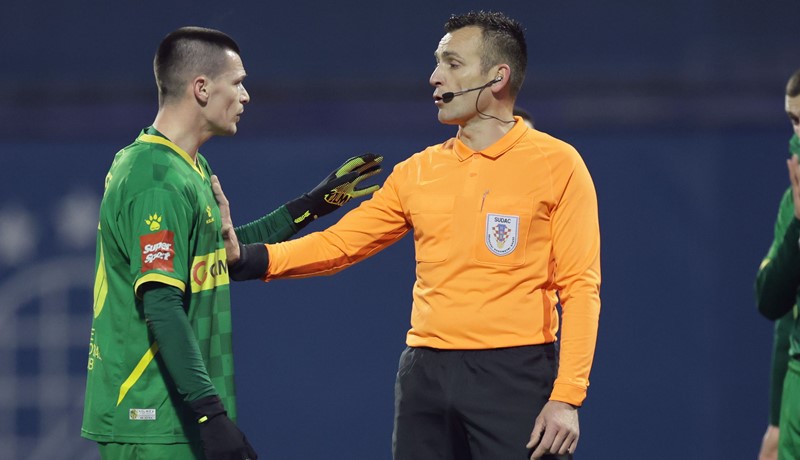
Ivan Bebek sudjelovat će na Svjetskom prvenstvu kao VAR sudac


- Najnovije
- Najčitanije
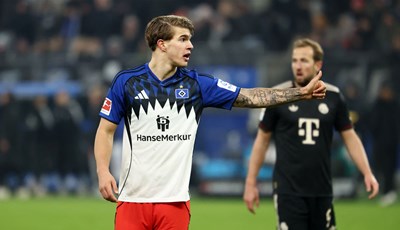
Bivši branič Varaždina zabio za važnu pobjedu Kiela kod Fortune
13 sati•Njemački nogomet
Varela i Šunta dolaze kao pojačanje u ekipu Jerka Leke
15 sati•SuperSport HNL
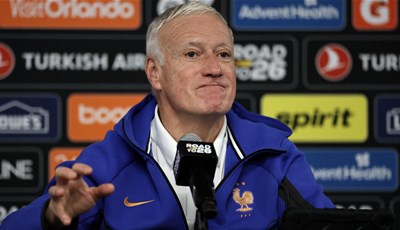
Didier Deschamps našao se na radaru Real Madrida
17 sati•SP 2026.
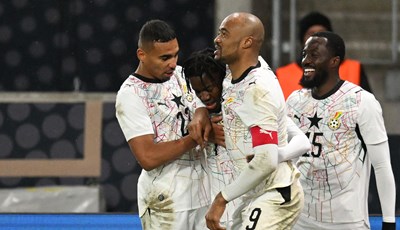
Loše vijesti za hrvatskog protivnika: Najbolji igrač Gane mogao bi propustiti Svjetsko prvenstvo
1 dan•SP 2026.
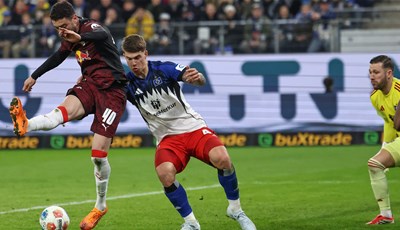
Luka Vušković ima priliku srušiti još jedan rekord Bundeslige, već ga je izjednačio
1 dan•Njemački nogomet
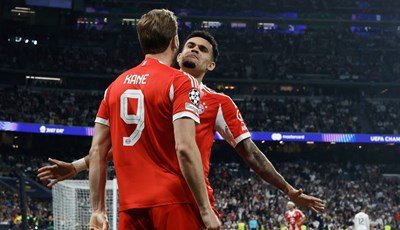
Utrka za Zlatnu kopačku: Harry Kane vraća se na tron, Messijev rekord neće biti ugrožen
23 sata•Originalno
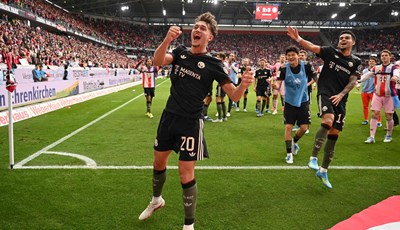
Njemačka i Španjolska se bore za dodatno mjesto u Ligi prvaka
1 dan•Liga prvaka
Utrka za Zlatnu kopačku: Harry Kane vraća se na tron, Messijev rekord neće biti ugrožen
23 sata•Originalno
Luka Vušković ima priliku srušiti još jedan rekord Bundeslige, već ga je izjednačio
1 dan•Njemački nogomet
Varela i Šunta dolaze kao pojačanje u ekipu Jerka Leke
15 sati•SuperSport HNL
Loše vijesti za hrvatskog protivnika: Najbolji igrač Gane mogao bi propustiti Svjetsko prvenstvo
1 dan•SP 2026.
Vušković izvan konkurencije za susret protiv Stuttgarta
3 sata•Njemački nogomet
Didier Deschamps našao se na radaru Real Madrida
17 sati•SP 2026.
Bivši branič Varaždina zabio za važnu pobjedu Kiela kod Fortune
13 sati•Njemački nogomet
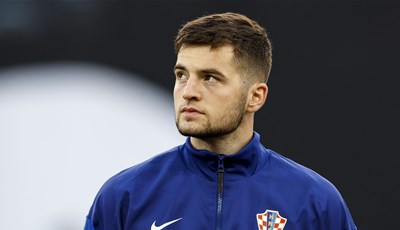
Inter, Manchester United i Arsenal budno prate Baturinu: Como je već odbio 30 milijuna
2 dana•Talijanski nogomet