
SP 2010 - Osmina finala


Imali su Argentina i Nemačka blagu pomoć sudija ali su mnogo bolji od Mexica i pogotovo Engleske pa će njihov eč biti pravo finale
Sudije moraju da imaju barem još dva pomoćnika kao što je u Uefa kupu ovako ne mogu sve da vide
+ sudijsko uverenje gospodina Larionde
Sudije moraju da imaju barem još dva pomoćnika kao što je u Uefa kupu ovako ne mogu sve da vide
+ sudijsko uverenje gospodina Larionde
svi za jednog, jedan za svi!

http://www.youtube.com/watch?v=74PWmVHwqPY
Jedini koja nešto zna o prognozama jako brzo je izabrao što znači razvaljotka.
Jedini koja nešto zna o prognozama
jako brzo je izabrao što znači razvaljotka.[uredio madmax17 - 28. lipnja 2010. u 09:38]
"Smoke me a kipper, I'll be back for breakfast!" 🎸⚽🏀🎨

England v Germany: as soon as I saw our tactics I knew we'd lose, says Michael Owen
I watched the England game with family and a couple of friends and, as soon as I saw the formation we were going to play, I said to them, 'We are going to get beat’.


Gone missing: Wayne Rooney, who had a poor
World Cup, troops off the field after England's disappointing exit at
the hands of Germany on Sunday
There is no one in the world who can convince me that the German players are better than ours, but after seeing our team line up I knew we were going to lose. I don’t think it is down to our players so much; I just feel their formation has basically beaten ours. We were outplayed due to being tactically beaten.
It hurts me to say it as a striker who almost needs to play up front with another, but the days of 4-4-2 against a good team are going. I said from the start of the tournament that I would be concerned with playing that formation.
I hoped that the manager would revert to 4-5-1 as soon as we met stronger teams, because if you lose that midfield battle, you lose the game more often than not.
I think 4-4-2 is a good formation, but if things are not going right the easiest thing in the world is to get rigid. As a player, you think, 'We are struggling, I’ll just play in my position’ and all of a sudden you are in two straight lines of four and you get people going between the two lines.
Germany obviously had their two solid midfielders and then their player just off the striker, who was actually breaking from a deeper midfield position. They basically had one extra in the midfield. People say we looked awful at the back, but any team in the world will look awful at the back if the game pans out the way it did.
It is frustrating because we looked so good and assured in qualifying. I think there was definitely a change of formation from those games, when tactically we looked as if we couldn’t get beaten.
People will look at Frank Lampard’s 'goal’ as a turning point and, yes, everyone can see it should have counted and, yes, we do need video technology. But two wrongs do not make a right. It did not make any difference and it did not deserve to make any difference.
It will be the end now for one or two players. A lot of the squad will be well into their thirties by the time of the next World Cup and, while no doubt some of them will stay in the England team, you would want more coming through. You would like to see more players in the 20-22 age bracket, but we are top heavy in good older players. That it is a bit worrying.
As for the wider issues, I think the question of a mid-season break and the demands of the fixture list is something worthy of debate. You look at some of our players who have been playing all season and we do not look fresh. We do seem to go into World Cups with a lot of injuries.
The Premier League demands a lot more effort than any other and your body cannot keep doing it and doing it over a full season. You cannot have everything. You want the best league in the world, you want fast, entertaining football which we play all season through any weather. You get all that in England, so there has to be a sacrifice somewhere and maybe it is taking its toll in the tournaments.
In the longer term, you have to fear for the future of the game. Football is massively popular in England but, when I was a kid, I never had a computer or anything. I drive along the road now and look at parks and they are empty. When school was finished I would be straight to the park at 4pm and my mum would be dragging me by the ear at 9pm to get home to bed.
Life has changed and kids cannot be getting the same practice as my generation. Yet look at the beaches in Brazil and the streets of Africa and you can see why so many players come from abroad.
"Smoke me a kipper, I'll be back for breakfast!" 🎸⚽🏀🎨
England v Germany: time for Fabio Capello to fall on his sword after poor World Cup
Time to go, grazie and arrivederci. Why? Not just because of 4-1 but because of 4-4-2.

Drazie and arrivederci: Fabio Capello got
England's World Cup campaign wrong and must go now

Even after this embarrassment, even when presented with the distressing evidence, even when stepping over the stiffening corpse of England's World Cup campaign, Fabio Capello refused to acknowledge that his system was to blame. As Capello won't change his system, England must change the manager.
They think it's all over for Capello. It can't be long now. He will on Monday talk to Sir Dave Richards, the chairman of Club England, but the FA and its expensive Italian now appear locked in a loveless marriage, heading for the divorce courts and a tidy pay-off.
The man who announced England would reach the World Cup final also asked to be judged on results: draws with the United States and Algeria, victory over Slovenia and an evisceration by the Germans, bringing England's worst ever World Cup finals loss, are patently not good enough.
"When you lose a performance, the manager is criticised,'' Capello said. "We didn't play too badly in the first game against USA, making a big mistake [by Robert Green]. We played a bad game against Algeria. We played well against Slovenia.''
Refusing to accept a deserved defeat with dignity, Capello then castigated Sunday's officials for failing to spot that Frank Lampard's shot had crossed the line. His players also deserve censure for their meek surrender, particularly heavyweight names like Steven Gerrard and Wayne Rooney who punched so far below their weight, but they never looked happy with 4-4-2.
Capello does not look in the mood to go quietly. He raged against the fading of the light, disputing that he had changed tactics from the successful 4-2-3-1 formation used in qualifying to the 4-4-2 deployed so disastrously in South Africa.
"I think the players, when they play well, play all systems,'' he argued. "We have played this system always in qualification. No one asked me that question then. We always play the same system. It has not changed.
Absolutely not." A manager with such a distinguished club record as Capello can take issue with reporters' assessments but he cannot escape the concerns seeping from under the dressing-room door. The folly in not seeking the views of players was laid painfully bare on Sunday.
If Gerrard had played in his Liverpool position and Rooney in his Manchester United role up top, England would have had their two potential match-winners in tandem. Such good friends as Gerrard and Rooney love working together. At 30, Gerrard will never play in a World Cup again. His one shot at international glory has been taken away.
If England had played 4-2-3-1, they may still have lost to the vibrant Germans but it would have been worth utilising a system that coaxed the best from Gerrard and Rooney. Capello wouldn't.
He was wedded to 4-4-2 from the moment England began preparing in earnest for the World Cup. On one day in training in Irdning last month, Capello looked at the Gerrard-Rooney axis but then abandoned it, apparently still remembering the failed attempt against France in Paris in March 2008. Yet Rooney has changed, maturing into a magnificent force in the box as his goal sprees, many from crosses, proved at United.
Capello was having none of this Gerrard-Rooney talk. So England headed into the World Cup with tactics that Steve McClaren would have been berated for: 4-4-2 with Rooney and Emile Heskey. Too predictable, too prosaic.
Capello soon realised that Heskey was struggling as any resident of the Holte End could have told him. Heskey went, Jermain Defoe came in but for the goal the Tottenham Hotspur striker scored against Slovenia, he was never going to bond with Rooney. Too different.
Capello's adherence to 4-4-2 wasted Rooney, who has looked out of sorts throughout. It cannot be any lingering ankle discomfort. Capello keeps insisting Rooney is fully fit and has been devastating in training. So it must be the tactics. When Rooney's club manager, Sir Alex Ferguson, comes to major games, particularly in the Champions League, he invariably goes Rooney upfront on his own. Rooney's international manager refused.
The flaws inherent in 4-4-2 were brutally exposed here as the Germans flooded through. Gareth Barry resembled the boy who stood on the burning bridge as Mesut Özil and Bastian Schweinsteiger lit fires all around. Lampard did well going forward but struggled defensively. How England missed Owen Hargreaves, the one natural holding midfielder in the country. How England cried out for another body in there, for Gerrard to perform in a system that echoed Germany's 4-2-3-1, a formation that gives width and central numbers.
The manager made other mistakes, starting with the Capello Index which surprised some players. Here was their leader involved in a money-making online venture that judged their merits. Wise counsel at the Football Association prevailed and Capello pulled the plug from the computer.
Capello is a proud man blessed with an accomplished record in club football but he failed to listen to more people within the FA firm about the perils of guiding England at tournaments. To raised eyebrows within the building, Capello observed that he did not worry about the players' "down time", believing they would all retire to their rooms and read Proust. The conscientious FA put a library into the squad's Rustenburg base but it has hardly been used. Boredom crept in.
Knowing his players were nervous, Capello should have avoided constant debate about the mischievous ball and "the fear" that he kept saying he saw in their eyes. He looked to have fallen out of love with the job. His English was not progressing, his briefings shorter and shorter.
For all the criticism levelled at Capello, he is not responsible for the lack of goalkeepers, for the paucity of quality in certain positions and for the reality that some players are exhausted when they arrive from relentless club combat in a lad that thinks itself above a winter break.
As well as considering Capello's future, the FA must continue to address the future of the game, investing more in Sir Trevor Brooking's plans to improve the technical levels of players available to the England coach. Capello, though, must take ultimate responsibility for not using his resources better.
Six contenders for the job
Roy Hodgson: The former Inter Milan manager would be favourite to succeed Capello after guiding Fulham to their highest Premier League finish and the final of the Europa League in consecutive seasons. Has international experience having managed Switzerland, UAE and Finland.
Harry Redknapp: Popular and gregarious man-manager who handles the media well and has worked with many of the England players at club level. Football Association may be concerned that he comes with too much baggage, what with a court case pending over alleged tax evasion.
Martin O’Neill: He was the public’s choice to succeed Sven-Goran Eriksson in 2006, but failed to impress in his interview with the FA. Has built a team based around young English players at Aston Villa and is an excellent motivator.
Stuart Pearce: The Football Association sought Pearce’s inclusion in Capello’s team in order to groom him as a future coach. He has been successful with the Under-21s, but there remain doubts about his aptitude and experience.
Arsene Wenger: An outsider for the job, but the Frenchman knows English football inside out, has an outstanding track record at Arsenal and would be able to co-ordinate the development of a new generation of talented players.
Sven-Goran Eriksson: Take a chance on him? Suddenly taking England to the quarter-finals does not look that bad. The Swede is available after resigning from the Ivory Coast job after the Africans’ exit from this tournament.
"Smoke me a kipper, I'll be back for breakfast!" 🎸⚽🏀🎨


DayVee je napisao/la:
Ma dajte. Pa ne sjede u FIFI idoti koji za inat ne žele tehnologiju.
To je vrlo kompleskno pitanje koje otvara Pandorinu kutiju.
Ako se recimo dozvoli svakoj strani gledanje 2 ili 3 situacije kao u tenisu ili američkom nogometu; može se dogodit da ih oni potroše na bezazlene situacije a da na kraju opet prođu kardinalne greške.
Ako se gleda svaka situacija tada bi utakmica trajala 5 sat i bilo po 10 penala i 10 crvenih kartona. Vjerojatno se videom može dokazati penal kod svakog kornera, slobodnog udarca i gužve, te kartoni po pravilim. Kd svake druge dubinske lopte je netko možda 2 cm u zaleđu. Nogmet bi se pretvorio u cirkus. Prije nego se zalijeće sa takvim priijedlozima treba pogledat pokoju utakmicu sportova u kojim postoji gledanje snimki, recimo NHL-u i NFL-u.
Argentina možda ne bi bila prvak 1986. da Maradona nije dao gol rukom. No prošlo je preko 20 godna i činjenice ostaju.
Hoćemo li poništit titulu i pozvat 50-godišnje veterane da se okupe i osvoje naslov prvaka 1986. godine?
Koliko god to okrunto i nepravedno bilo, vjerojatno je ovo bez tehnologije najbolje rješenje.
Treba prihvatit da nogomet igraju i sude ljudi, a ljudi griješe. To je sastavni dio nogometa.
Filozofski gledano, tražiti savršenost u nečemu u čemu sudjeluju ljudi je apsurd.

kakva hrpetina gluposti.
tebi ni jedna jedina recenica nije na mjestu...dobro ajde,mozda ova prva "Ma dajte." moze proc.

u danima sretnim,u danima grubim!


riki_mo je napisao/la:
Nevjerovatno je kako npr. na srpskim forumima se drugačije doživljava pobjeda Njemačke. Baš sam se iznenadio. Jedino se priča o nepriznatom golu.
I meni je to zanimljivo, primijetio sam odavno da Hrvati većinom navijaju za Njemačku, a Srbi većinom za Englesku.

sve prolazi sve se mijenja, idu dani idu godine, samo Zrinjski ostaje ponos moje Hercegovine
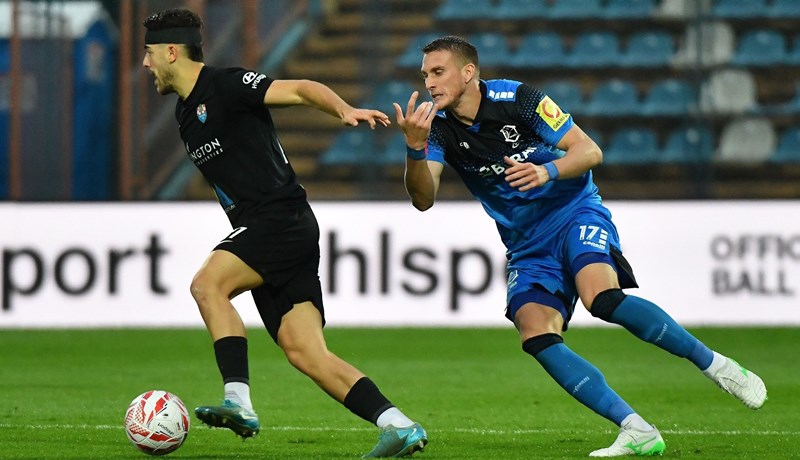
SuperSport HNL
Varaždin i Vukovar već više od mjesec dana bez pobjede, je li vrijeme za prekid niza?
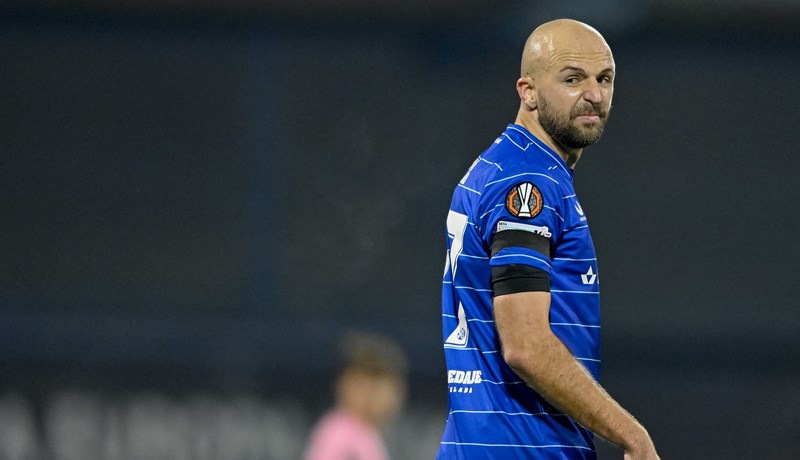
SuperSport HNL
Dinamo mora imati spremnu zamjenu za Mišića, a u SuperSport HNL-u nameću se tri kandidata
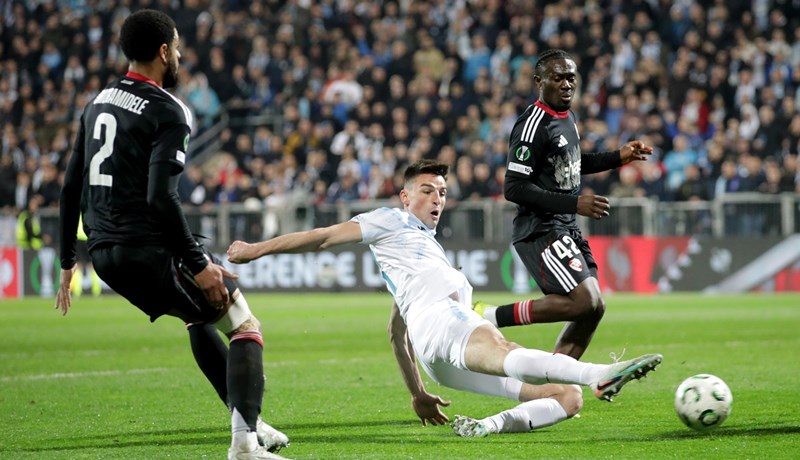
Konferencijska liga
Rijeka pokazala da može i još uvijek je itekako u igri
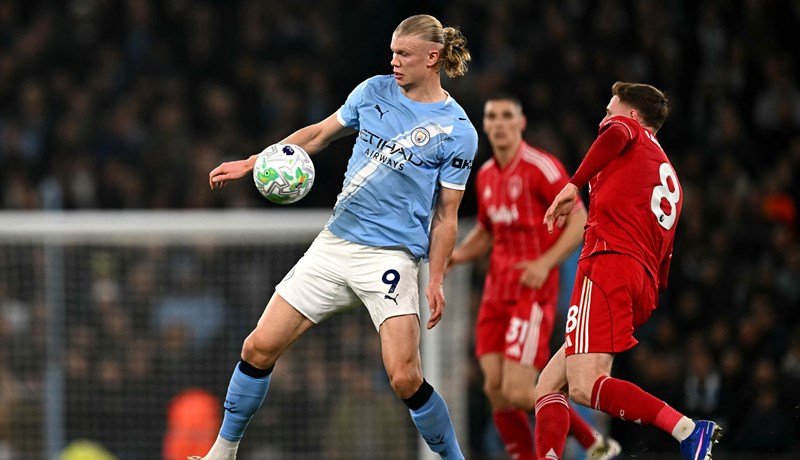
Nogometni svijet
Epaillyjev zicer u SHNL-u podsjetio na Sivonjićev, ali gore su promašivali Ronaldo i Haaland


- Najnovije
- Najčitanije
![[UŽIVO] Varaždinci poveli u završnici prvog dijela nakon sjajne akcije iz kornera!](/photos/_resized/521/45/0000000000521459_400_230_cut.jpg)
Garcia: 'Igrači nekad pretjerano reagiraju, to je proces, ali moraju biti pametniji'
47 min•SuperSport HNL
Poznate postave za prvi susret 26. kola SuperSport HNL-a: Varaždin bez Zelenike, Špoljarić starta kod Vukovara
2 sata•SuperSport HNL

Budi se Hrvatski dragovoljac, upisao je prvu pobjedu u SuperSport Drugoj NL nakon pet mjeseci
1 sat•Druga NL
Dinamo mora imati spremnu zamjenu za Mišića, a u SuperSport HNL-u nameću se tri kandidata
3 sata•SuperSport HNL
Barcelona se nada da će generacija iz 2007. nadmašiti onu iz 1987. predvođenu Messijem, Fabregasom i Piqueom
5 sati•Španjolski nogomet
Epaillyjev zicer u SHNL-u podsjetio na Sivonjićev, ali gore su promašivali Ronaldo i Haaland
6 sati•Nogometni svijet
Kvaratshkelija zadovoljan u PSG-u unatoč interesu Manchester Uniteda
7 sati•Francuski nogomet
Kronologija: Strasbourg do pobjede na Rujevici u dvoboju s Rijekom
1 dan•Konferencijska liga
[UŽIVO] Varaždinci poveli u završnici prvog dijela nakon sjajne akcije iz kornera!
1 sat•SuperSport HNL
Dinamo mora imati spremnu zamjenu za Mišića, a u SuperSport HNL-u nameću se tri kandidata
3 sata•SuperSport HNL
Garcia: 'Igrači nekad pretjerano reagiraju, to je proces, ali moraju biti pametniji'
47 min•SuperSport HNL
Poznate postave za prvi susret 26. kola SuperSport HNL-a: Varaždin bez Zelenike, Špoljarić starta kod Vukovara
2 sata•SuperSport HNL
Varaždin i Vukovar već više od mjesec dana bez pobjede, je li vrijeme za prekid niza?
7 sati•SuperSport HNL
Budi se Hrvatski dragovoljac, upisao je prvu pobjedu u SuperSport Drugoj NL nakon pet mjeseci
1 sat•Druga NL
Top 5 utakmica vikenda: Poslastica do poslastice, okršaji ljutih rivala su kao finala ili majstorice
11 sati•Talijanski nogomet