
josip broz tito



Decorations awarded by foreign countries
| Country | Decoration | Date and Place | |
 |
Austria | Order of the Grand Star for Important Merit for Republic of Austria with Sash | 9. February 1965 Vienna |
|
Afghanistan | Grand Collar of the Order of Almara with Sash | 1. November 1960 Belgrade |
|
Belgium | Grand Cross of the Order of Leopold with Sash | 6. October 1970 Brussels |
|
Bolivia | Grand Collar of the Order of the Eagle of Andes | 29. September 1963 Cochabamba |
|
Brazil | Grand Collar of the National Order of South Cross | 19. September 1963 Brasilia |
|
Bulgaria | Order "Liberty of People 1941 - 1944" 1st Class | 25. November 1947 Sofia |
|
Bulgaria | Order "9. September 1944" with Swords 1st Class | 25. November 1947 Sofia |
|
Bulgaria | Order of Georgi Dimitrov | 22. September 1965 Sofia |
|
Burma | Grand Collar of the Order of Aga Mah Tiri Tudam | 6. January 1955 Rangoon |
|
Cambodia | Royal Order of Cambodia 1st Class with Sash | 20. July 1956 Brioni |
|
Cambodia | Grand Collar of National Independence | 17. January 1968 Phnom Pehn |
|
Cameroon | Grand Cross of the Order of Merit for Cameroon with Sash | 21. June 1967 Brioni |
|
Central-African Republic | Grand Cross of the Order of Merit for Central Africa with Sash | 3. May 1972 Belgrade |
|
Chile | Grand Collar of the Order of Merit of Republic of Chile | 24. September 1963 Santiago |
|
Congo | Order of Merits for Congo with Sash | 10. September 1975 Belgrade |
|
Czechoslovakia | Order of the White Lion 1st Class with Sash | 22. March 1946 Prague |
|
Czechoslovakia | Military Order of the White Lion "for Victory" 1st Class | 22. March 1946 Prague |
|
Czechoslovakia | Order of the Slovak People's Uprising 1st Class | 22. March 1946 Prague |
|
Czechoslovakia | Military Cross for Merit 1939-1945 | 22. March 1946 Prague |
|
Czechoslovakia | Czeschoslovakian Military Cross 1939 | 22. March 1946 Prague |
|
Czechoslovakia | Order of the White Lion 1st Class With Collar and Sash | 26. September 1964 Brioni |
|
Denmark | Knight's Order of the Elephant with Sash | 29. October 1974 Copenhagen |
|
Egypt | Grand Collar of the Order of Nile | 28. December 1955 Kairo |
|
Ethiopia | Grand Collar of the Order of Queen of Saba with Sash | 21. July1954 Belgrade |
|
Ethiopia | War Medal of Saint George with Victory Leaves | 21. July 1954 Belgrade |
|
Ethiopia | Medal for Defence of the Country with Five Palm Leaves | 21. July 1954 Belgrade |
|
Finland | Commander Grand Cross of the Order of the White Rose of Finland with Collar and Sash | 6. May 1963 Belgrade |
|
France | Military Cross with Palm 1939 - 1945 | 7. May 1956 Paris |
|
France | Medal for Military Merit | 7. May 1956 Paris |
|
France | Grand Cross of the Order of Legion of Honour 1st Class with Sash | 7. May 1956 Paris |
|
France | Order for Combatant Merit 1st Class | 29. June 1956 Belgrade |
|
France | Grand Cross of the National Order for Merit with Sash | 6. December 1976 Belgrade |
|
DR Germany | Order of the Grand Gold Star of Friendship between Nations with Sash | 8. June 1965 Berlin |
|
DR Germany | Order of Karl Marx | 12. November 1974 Berlin |
|
DR Germany | Order of Karl Marx | 12. January 1977 Belgrade |
|
FR Germany | Order of Grand Cross of Special Class for Merit for Federal Republic of Germany with Sash | 24. June 1974 Bonn |
|
Great Britain | Knight of the Grand Cross of the Order of the Bath with Collar and Sash | 17. October 1972 Belgrade |
|
Greece | Grand Cross of the Order of Saviour with Sash | 2. June 1954 Athens |
|
Guinea | Grand Cross of the Fighter for Independence | 7. January 1961 Belgrade |
|
Hungary | Grand Cross with Star of the Order of Hungarian Republic with Sash | 7. December 1947 Budapest |
|
Hungary | Order of Merit for People's Republic of Hungary 1st Class | 7. December 1947 Budapest |
|
Hungary | Order of the Flag of People's Republic of Hungary with Brilliants 1st Class | 14. September 1964 Budapest |
|
Indonesia | Order for Bravery | 28. December 1958 Djakarta |
|
Indonesia | Order of the Great Hero | 7. April 1960 Brioni |
|
Indonesia | Order of the Grand Star of Republic of Indonesia 1st Class with Sash | 16. June 1961 Belgrade |
|
Iran | Grand Collar of the Order of Pahlavi with Sash | 3. June 1966 Bagdad |
|
Iran | Commemorative Order "2500-years of the Iranian Empire" | 14. October 1971 Persepolis |
|
Iraq | Order »Al Rafidain« 1st Class with Sash | 14. August 1967 |
|
Iraq | Military Order »Al Rafidain« 1st Class with Sash | 7. February 1979 Bagdad |
|
Italy | Order of the Grand Cross of Merit for Republic of Italy with Collar and Sash | 2. October 1969 Belgrade |
|
Japan | Grand Sash of the Highest Order of Chrysanthemum | 8. April 1968 Tokio |
|
Jordan | Order »Ben Ali« with Collar and Sash | 11. February 1979 Amman |
|
Kenya | Grand Collar of the Order of Golden Heart of Kenya 1st class | 18. February 1970 Nairobi |
|
DPR Korea | Order of the Hero of Republic with Sash | 25. August 1977 Pyong Yang |
|
DPR Korea | Order of the State Flag 1st Class | 25. August 1977 Pyong Yang |
|
Kuwait | The Chain of Mubarak | 3. February 1979 Kuwait |
|
Liberia | Highest Order of Knighthood of Pioneers of Republic of Liberia with Sash | 14. March 1961 Monrovia |
|
Libia | Order of the Republic with Sash | November 1973 Belgrade |
|
Luxembourg | Order of the Knight of Golden Lion of the House of Nassau with Sash | 9. October 1970 Luxembourg |
|
Mauretania | Order of the Grand Cross of Mauretania with Sash | 5. September 1968 Brioni |
|
Mexico | Collar of the National Order of Aztec Eagle | 30. March 1963 Belgrade |
|
Mexico | Medal of Independence | 15. October 1963 Mexico |
|
Mongolia | Order of Suha Bator | 20. April 1968 Ulan Bator |
|
Morocco | Grand Collar of the Order of Mehamedi | l. April 1961 Rabat |
|
Nepal | Order of Ojasvi-Rajanya with Collar and Sash | 2. February 1974 Kathmandu |
|
The Netherlands | Grand Knight's Cross of Lion of the Netherlands 1st Class with Sash | 20. October 1970 Amsterdam |
|
Norway | Grand Cross of the Order of Saint Olaf with Collar and Sash | 13. May 1965 Oslo |
|
Pakistan | Order Nishan Pakistan of the Highest Class | 13. January 1961 Belgrade |
|
Panama | Order of Manuel Amador Guerro with Collar | 15. March 1976 Panama |
|
Poland | Order of the Cross of Grunwald 1st Class | 19. October 1945 Belgrade |
|
Poland | Medal of Victory and Freedom 1945 | 16. March 1946 Warshaw |
|
Poland | Partisan Cross | 16. March 1946 Warshaw |
|
Poland | Order of the Grand Cross for Military Merit 1st Class with Sash | 16. March 1946 Warshaw |
|
Poland | Order of the Grand Cross of Revival of Poland with Sash | 25. June 1964 Warshaw |
|
Poland | Order of the Grand Cross of Revival of Poland | 4. May 1973 Brdo pri Kranju |
|
Portugal | Grand Collar of the Order of Saint Jag with Sash | 23. October 1975 Belgrade |
|
Portugal | Grand Collar of the Order of Don Henriho with Sash | 17. October 1977 Lisboa |
|
Rumania | Collar of the Order of Karol the First | 16. December 1947 Bukarest |
|
Rumania | Order of Knight Mihael 1st Class | 19. December 1947 Bukarest |
|
Rumania | Order of Knight Mihael 2nd Class | 19. December 1947 Bukarest |
|
Rumaina | Order of Knight Mihael 3rd Class | 19. December 1947 Bukarest |
|
Rumania | Order of the Star of Socialist Republic of Rumania 1st Class | 18. April 1966 Bukarest |
|
Rumania | Order of Victory of Socialism | 16. May 1972 Drobeta-Turnu Severin |
|
San Marino | Grand Cross of the Order for Civil and Military Merit of San Marino with Sash | 25. September 1967 Belgrade |
|
Senegal | National Order of the Lion with Sash | 30. August 1975 Brdo pri Kranju |
|
Syria | National Order of OMay of the Highest Class with Sash | 6. February 1974 Damascus |
|
Somalia | Order of the Somalian Star with Sash | 26. March 1976 Belgrade |
|
Sudan | Grand Collar of the Order of Honour | 12. February 1959 Khartum |
|
Sweden | Royal Order "Serafim" of the Highest Order with Sash | 29. February 1959 Stockholm |
|
Togo | Grand Cross of the Order of Mono River with Sash | 23. June 1976 Belgrade |
|
Tunizia | Grand Collar of the Order of Independence | 9. April 1961 Tunis |
|
USSR | Order of Suvorov | September 1944 Moscow |
|
USSR | Order of Victory | 29. September 1945 Belgrade |
|
USSR | Commemorative Medal Celebrating 20 Years of the Great Patriotic War | 30. June 1965 Moscow |
|
USSR | Order of Lenin | 5. June 1972 Moscow |
|
USSR | Order of October Revolution | 16. August 1977 Moscow |
|
Venezuela | Collar of the Highest Order of the Liberator | 17. March 1976 Caracas |
|
Zambia | Order of the Great Commander and Distinguished Combatant for Freedom 1st Class with Sash | 8. February 1970 Lusaka |

 :
:

 smeker
My Women
Only women with whom Tito allegedly had children or was married to are listed. All the facts are taken from "The Loves of Josip Broz", a book researched with Tito's consent and written by Filip Radulovic. All other women with whom Tito also had relationships of some kind are (in his own words to Radulovic) "too numerous to find out".  Marusa Novakova
1912, they meet in Cenkovo, Czechoslovakia in 1912. She is a factory apprentice.
He doesn't have any money and searches for work. He pretends to be a graduate
in engineering from Croatia. They meet at a strike for bigger wages. She
is going to school and her father is a doctor. Tito suggests her to take
some money secretly from her father. She is shocked. During that time he also
meets Mrs. Klara. Marusa does take some money from father so Tito buys himself a
suit. He borrows money from other workers constantly and reads a lot. He suggests they
would have a child together but she wants to marry first. He promises her marriage.
Then she confesses she already is engaged but wants to dump her fiancé. Klara also
sends him money and goes to live with her when he learns about Marusa's love. Klara
was older than Tito and that stopped him from marrying her. He returned to Marusa
after she officially dumped her fiancé. They had plans to move out of Cenkovo and
they left for Plzen and stayed at her aunt's. There she learned she was pregnant.
He said they should marry immediately. He took a job at Skoda car factory in Plzen,
where he met Liza Spuner who invited him to Vienna. On the day of marriage
when all the wedding guests were arriving he went away to Vienna...
Son Leopard Novakov, born 1913, an economist, lives in Prague;
Liza Spuner
They meet in Plzen, Czechoslovakia in 1913, later they live together in
Vienna at her apartment. She's a high society girl with her own mansion that
Tito likes very much. He also likes one of the maids. Liza is ten years older than him.
When they make love she gets very aggressive and beats him all over his face,
chest and the shoulder and even strangles him a bit. He gets scared and locks
himself in the bathroom... Later she brings another man into the house and has
sex with him as Tito listens. He is very angry. Since then they have a more of
a business relationship. He is buying cloth for her throughout Austria for
her. Later they get together again and suggests he improves his manners.
So Tito learns to ride horses, dancing, fencing, playing the piano. He goes
often to the racetracks where he meets Tereza Stacner... He writes
love poems for Liza. Slowly the rumors start that he is not what he seems to be...
Liza doesn't believe. Tito makes love to the maid he adores. He suggests marriage
but she refuses and says she is too old for that. One day she finds out he is
stealing cloth from her and gets mad. She tells him to go to church and pray.
He went and prayed for two hours. She confessed she is pregnant. He went on
a business trip and never came back. In despair she started to drink...
Son Hans Spuner, Austrian, 1914, Mechanical Engineer, dies 1942/3 under Kozara on
the German side fighting Tito's Partisans;
Tereza Stacner
Croatian high society girl of Austrian Descent, they meet at the Vienna
Racetracks. Later the affair continues in Zagreb, where she was studying.
In 1914 he is drafted, and although she tries to help him avoid the Amry,
she can not prevent him from being drafted. At the draft he acts being
deaf, but is discovered; as a result he almost gets executed and is sent
to the Petrovaradin Fort prison. Tereza comes to visit, and later gets
him out of jail via her father's influential links in high society. He
has to go in the Army and learns how to shoot with firing arms - becomes
the best shooter of the garrison and later gets the Austrian Army award
as a perfect shooter; he is the third in fencing at the Austrian Army Championship.
He is sent to the Russian front, doesn't come back. Paul & Gabriela
Stacner, twins, 1915, Zagreb, Gabriela died, Paul became an Engineer;
Ljusa Sedlovska
Meets her in 1915 in the Korutovo village while on the run from his army
unit. She is a young wife of kulak Mihael Sedlovski. He stays at the village
and paddles horses; girls come often to just look at him. He meets another
girl named Ira Gligorieva and makes love to her in the woods as Ljusa lent
him money for an evening dress that he could go dancing. Tito is happy;
Ljusa is intelligent, plays piano, she's fluent in French, makes gobelins,
goes hunting. Later Ljusa gets angry, because he spends so much time with
Ira. He wants to go to America and tells Ljusa to go with him..., but she
is afraid of her husband. Tito meets many Russian girls and sleeps with
them in all possible places. Ljusa's husband is jelous and suspicious.
Once he catches them when making love; he shoots Tito and beats Ljusa who
begs him to stop it as she is pregnant... Son Kiril Sedlovski, born 1915
in Russia, a doctor/veterinarian;
Ira Gligorieva
After being shot he is taken to a hospital, where a nurse takes care of
him - nurse Ira. Ira is jealous of Ljusa, he denies having a child with
Ljusa. Ira discusses marriage with him... He is almost arrested by the
Tzar Army, but pretends to be ill. On July 17, 1915 he marries Ira Gligorova
in Svjazensk, Russia. He gets drunk and repeatedly says he would become
the Russian Tzar. They move to the city and live in an apartment. He becomes
a supervising technician in the hospital. Ira was actually born into a
prince family, but her father sold all their property; so they lived a
poor life and quarreled often. Then he meets Daria, a doctor, at a party
at Ira's godfather. She is beautiful and is constantly teasing him; so
Tito visits her at her villa and sleeps with her... He repeats this procedure
more and more often and tells Ira, that he always wanted to dress nicely.
Ira gives premature birth in the seventh month and dies after it; Son Serjoza
Gligoriev, born 1915, political worker in Brjamsk, former Soviet Union;
Daria Andirelova
Meets her when working in the veterinarian dispensary. After Ira dies,
he moves to Daria's place; he takes care of the stables. He sleeps with
Daria only when she wants to; they do it in the forest as well. They go
to Moscow for holidays to her parents' villa in Voronjska street, where
he meets Olja Kutina, who studies economy. Darja is pregnant and always
follows him; she wants to marry and Tito says yes, but he also says he
does not have appropriate papers from Croatia. Olja is visiting him often
at his house, so Darja and Tito have a heavy quarrel, and so he leaves
her, thinking Olja would accept him. But she doesn't as she is afraid of
her father. Darja wants him back, he says she should give him half of her
estate, so she decides to leave him forever. He denies being the father
of her son. He goes to the city to search for Olja... Son Josip Andirelov,
born in 1916, Russia, dies as Red Army Aviation Officer in Berlin in 1944;
Nina & Svetlana Bazan (twins)
He comes to Sankt Petersburg to visit Nina, whom he met on his winter vacations
in Datov, Sibiria, with Olja Kutina, student of economy, and he already
slept with Nina there. Upon his return to Moscow with Olja from the winter
vacation, he goes directly to Nina in St. Petersburg and never comes back.
Nina wants to marry him, he is 25 years old at that time. Both Nina and
her twin sister Svetlana practice piano every day. He becomes aware of
Svetlana as well, but on his walks he looks after Neva, too. Doctor Bazan
notices the money is missing from the family safe; Tito is then already
engaged to Nina and quarrels about this money. Later he spends three days
he with Svetlana... then both sisters feel sickness; both are pregnant
but Svetlana agrees with Tito to say that she is pregnant with one of her
professors... Then the October revolution starts, he is put in prison and
sent to Sibiria because he has no papers. Son Vladimir Bazan, born 1918
in St. Petersburg, doctor in Petersburg.
Zuhra Badahur
He looks as a bourgeois in his winter mink collar coat; while on a prisoner
train to Siberia, he jumps off near Omsk. He mingles among local Khirghizes.
An old man sends him to see the rich Khirghiz cattle owner Zalid Badahur
with 5.000 sheep and 3.000 horses. Tito presents himself as cattle salesman
from Dzalal-Abadu; he is greeted with highest honors and put in the nicest
yurt. The evening program includes the recital of poetry among others with
Zuhra Badahur (nickname Mahabetnama - meaning the God's love), Zalid's
daughter... She has long braids; it's here he finds out about the revolution
in Russia. Tito says he would buy 1.000 sheep and presents Zalid with an
advance payment; they celebrate the deal in the evening and Badahur wants
to offer him a girl, but Tito is much more in favor of Zuhra, who sings
the song of two shepherds in love... He kisses her, lies about a big library
he possesses, and tells her that he is not married; he is thinking about
marrying a girl not to be prosecuted by the Red Army. He becomes a shepherd
having a relationship with Zuhra; he promises to marry her and her father
gives his blessing; on March 18, 1918 Zuhra Badahur marries Joze Brozdun.
Zuhra gives him a horse and he names it Ban (Croatian word for Tzar). A
few months after the marriage she becomes pregnant and then he finds out
he does not love her anymore. When she announces her pregnancy, there is
a three day celebration but Tito wants to leave... Then the Red Army comes
and asks the people to vote for their representative and they choose Badahur,
who gets more votes than there are voters. Zuhra wins a golden horseshoe
in a riding contest and the very next morning Tito takes this golden souvenir
and leaves for Omsk. Son Kadi Badahur, Khirgiz, born 1918, engineer of
petrochemistry in Baku.
Pelagija Belousova
Tito is riding and riding... he pretends he is a Khirgiz. On his way to
Omsk, he gets caught and is taken to prison. During the interrogations
for several times a lovely girl enters and leaves the room. It is Pelagija,
nicknamed Polka. He finds out he met her in 1917 at a railroad station.
She remembers well because she was at that time only 14... He forced her
then to... for the very first time... She wants to marry him. She saves
him and he gets a kind of a job driving a truck. One day he takes Pelagija
and a Party secretary to Omsk where he for the first time sees Lenin's
photo. He often drives around to neighbouring villages with Pelagija sometimes
joining him. They make love and she tells him he is "a true Eastern Emir".
They are allowed to get married, but soon the news breaks out that he is
fooling around with a school teacher Ana Ivanovic. But Pelagija Belousova
marries Tito on June 19, 1919. Son Zarko Broz, born 1920, Red Army officer,
National Hero, lived in Yugoslavia.
Vida Kogej
In March 1934 he comes out of the prison in Ogulin and stays for a while
at Bishop Rozman's Residence. He is being introduced as Engineer Rudi,
a representative of an Austrian company. Once he goes for a walk to drink
fresh water from the spring in the garden and there he notices a young
girl walking toward the spring as well; he looks pale and she thinks he
has tuberculosis; he tells her about the prison and invites her to join
him for a walk; he speaks about Russia and she seems calm. Many times they
meet in the garden, but she stays at a distance. Tito is more and more
persistent to Bishop's neighbor; he tells her he plays piano and promises
to bolshewize her; she invites him to tea and she plays piano for him;
at the end he kisses her fingers; then he plays, but terribly. This makes
him sour and he leaves abruptly. For a long time they don't see, she prepares
to leave for Vienna to continue to study piano. When they finally meet
he apologizes for the last time and kisses her. He persuades her not to
go to Vienna yet and so they play piano very often. And also make love.
She has to go back for Autumn exams. He asks her to take him with her to
Vienna, as he has no papers. They dress as mountaineers and cross the border.
In Vienna she is passing the exams and he is meeting communists and bringing
other women to their apartment, introducing them to Vida as Communists.
She is pregnant, but doesn't make it public, as Tito tells her that that
is the Communist ethic... He makes a plan to leave her. One day he comes
home and she is packing; he finds the dear john letter. He promises her
to marry her. But a few days later they quarrel; she asks: "Why do you
attach to women, and when you do, why do you leave them pregnant, so they
struggle even more terrible?" He replies: "The woman must protect herself
from getting pregnant." And he leaves. Son Dimitrij Kogej, 1935, Vienna,
professor of music;
Elza Gerlach
He is working in Moscow at the Comintern and Elsa has her office beside
his. His code name is Valter. He is a bit in love, but she doesn't pay
him any attention. She is a true Bolshevist, responsible, beautiful. Nicname:
Rider. He invites her to Podmoskovje to a dacha of the Lazutkins, who also
work at the Comintern. There are also the Kieglers from Germany. They sleep
in the same room and she asks him to do her, but he replies the Croatians
are a bit slower with it. He is too drunk to satisfy her. But in the morning
he is ok enough to compensate for the missed night activity. While at the
Comintern he is once called into the head office because he is reportedly
consuming too much electricity in his hotel room. She accuses him of living
a life too comfortable for a communist. Then he asks her to form him as
a personality and for the first time he admits his faults. He wants to
marry her but isn't sure the Comintern would allow it. He is a changed
person now, truly conscientious. First he is informed he was nominated
for the member of the Executive Committee of the Comintern, but at the
Congress he isn't elected. But they get the permission to marry. The registrar
asks for any possible hindrances and Tito doesn't admit he is still married
to Pelagija and has a child with her, because he could be accused of bigamy,
so he says there are none. So they marry and get an apartment with a radio.
She travels on secret missions to Germany and France and brings him presents:
perfumes and money from some bookshop. But he returns to his old habits.
He spends much time with actress Vassilitsa Koveshnikova and offers her
marriage. Elza gets pregnant, she follows Tito everywhere and even beats
him; he often visits the actress. He decides to revenge. First he is nice
but frames her with made up meetings with Western spies in Germany and
France. So on November 6, 1936 she is arrested by the NKVD and he moves
on to the actress. Son Viktor Gerlach, 1937, Moscow, a German, his fate
unknown.
Jeanne Coitier
In 1937 he comes to Paris and meets a woman with a daughter on the square
where he lives and invites her for a drink. She is Jeanne and he is Jozko
Broz. They speak Russian as he doesn't understand French. She is a widow
for one year already, her husband, a naval officer, died in an accident
and his body never was retrieved; they have lunch; she still wears black,
but he tries to persuade her it would be easier for her to go out again.
Tells her black doesn't fit her. After some time that he followed her she
agrees to teach him French. Daughter's name was Danielle. One day as she
is already in bed Tito comes for a lesson in French. And shows Jeanne the
French kiss. He is a regular guest of a casino owned by a Russian emigre
Matvejeva. There creme de la creme gathers. In the morning hours Jeanne
teaches him and doesn't resist any more. He lies about having a job but
instead earns money by lucky numbers at the roulette in the casino. There
he meets a Turkish lady Mahri, escorted by two Turks in national dresses.
He gets a major win and Mahri congratulates and kisses him. He goes to
Jeanne's. She warns him she can get pregnant quite easily but they make
love. She adores him and he moves to her place. Danielle goes on his nerves.
They buy a car and drive around Paris to their rich friends. Danielle hates
him and Jeanne gets pregnant. Because Danielle doesn't get along with Tito
Jeanne also doesn't want to be with him anymore. He even slaps Jeanne.
She runs out of the apartment; he writes a letter and leaves. Son Olivier
Coitier, 1938, Paris, lives in Paris, Nuclear Physics expert;
Zuhra Reuf-Anadolka
She is a rich, high society woman. He decides to pay her full attention.
He has to prepare himself for his first visit, because there are rumors about
him going around Paris - that he is extremely rich and a shareholder of a gold
mine in Yugoslavia. He visits his friend Joza Kopinich and tells him that he
needs a castle to impress Anadolka. He rents the castle of a Spanish marquee,
that lies at the outskirts of Paris. The next day he moves to the castle and lives a
luxurious life. He is angry as Jeanne was the first woman that kicked him
out. Anadolka is exchanging lovers overnight and makes things because of
which her lovers attack one another. They meet. He nicknames himself the
Golden Prince. She has a store with silk in Paris. He invites her to the
castle and she comes with his driver. His heart is filled with love. She
leaves. He visits the Institute for Protocol and is already good in French.
He travels to Spain, Russia and Turkey and brings her presents. Together
they visit the casino, she invites him to a dinner and they make love.
She doesn't take him serious, although he mentions a marriage. She says
she would marry him if her father agrees. He insists she give him a golden
ring with her initials. She goes to London for three days and in the meantime
he spends two days with a woman - Physics professor from Peruggia. Anadolka's
father agrees to marriage. They get drunk together and Tito vomits. They
fall asleep. The marriage is in Paris, besides her father Ishar there are
twenty wedding guests. He invites Cesarec, Kopinic and Kidric. The lunch
is at the Hilton hotel. He wants to move to her place and she wants to
stay at his mansion. In July they are on their honeymoon in Turkey (Istanbul,
Ankara, Izmir and Erurum). He likes the fact that Ishar has a harem and
wants to peek at it. The Turk is afraid that Tito would burst into the
harem and tells his guard to watch carefully. Tito wants to invest in a
gold mine in Turkey. After that Ishar allows him to visit harem with nine
women. After the visit Tito says Mashalla. Upon his return to Paris he
gives back the castle to the Marquee and says Anadolka he sold it. He is
broke and wants to borrow from Kopinic for the gold mine in Turkey for
a joint investment. Tito and Kopinic travel to Turkey and sign a deal to
buy a five percent share in the mine. He takes over the financial books
of her company and sells silk as well. He keeps a journal, but it was not
mere a financial one, but also included women. Entries included items like:
"November 17, 1938. I arranged a meeting with Mrs. Helen in Hotel Maxim.
I have not seen anything so ugly. My tongue got stuck when I saw her. She
demanded samples. I said I didn't have any. I asked her to cancel the deal
but she refused." He thinks more and more often about returning to politics.
So he does and he also visits the casinos. He says he will go to Croatia
and gather complete documentation about his status which she has doubts
about. He doesn't come back for long. She receives a letter from him that
he will return, but soon loses hope. She engages with other men again.
He returns to Paris with some papers saying he is a noble man. He is angry
she betrayed him. Her two bodyguards throw him out of the mansion. Son
Izet Reuf, 1938, Paris, a Turk, lives in Istanbul, salesman;
Herta Haas
They meet in 1937 in Paris. She is his courier from Paris to Yugoslavia.
In 1940 in Istanbul they agree to marry. She lives with him in a hotel
apartment. She is an Austrian. They move to Zagreb and he is hiding from
the Germans. She is a Communist Party member, pregnant with Tito and is
working on special assignments given by Kopinic. The Germans want to arrest
her because they think she is married to Tito. But she is only engaged.
They want to have her as a hostage so Tito would turn himself in. But they
don't arrest her. She gives birth. Tito is at that time organizing the
national uprising in Yugoslavia and wants her to join the Partisans. She
gives her son into an asylum, although not happy about it, and is exchanged
for a German officer. So she joins the Partisans. There he is already in
a relationship with Davorjanka... Herta decides to run away. He agrees.
So she does. Son Aleksander Misa Broz, 1941, Zagreb, Croatian;
Davorjanka Paunovic-Zdenka
She is sent to him as a courier in 1941. She studies French, he takes her
for his own secretary. He is Secretary General of the Communist Party of
Yugoslavia at that time. She accompanies him on his illegal missions including
the one to Belgrade... While in Belgrade his favorite is Ljubimka Djodjevic-Buba.
But Zdenka pays her visits too. His neighbor is Gestapo Chief for Serbia.
In 1942 between Belgrade and Foca they spend their most wonderful moments
together. The battle brings them even closer together. The Communist Book
of Rules is adopted stating equality and that they are not allowed to have
intimate relations. So he tells her. But he uses every opportunity to sleep
with her, so his people are always looking for a good spot for them to
make love. She is pregnant. He suggests she shouldn't have an abortion.
They can give the child in the custody of a family until the war is over...
She gives birth and a family in Foca takes the baby. She gets tuberculosis.
The Communists want to call a meeting of the Central Committee with one
issue only: his personal relationship with his private secretary. At the
meeting present were 37 party members, including Aleksandar Rankovic, Milovan
Djilas, Mosa Pijade, Cana Babovic, Sreten Zujovic, Vladimir Smirnov...
Tito says punish me, but I can't be without her. He has to promise he will
marry her after the war is over. So he does. She follows him on all his
journeys and through all his battles stands by him although her medical
state deteriorates. She doesn't want to get a treatment in Moscow or London.
Tito tells her it is impossible to see the child which they will get back
after the war. She goes to Moscow for treatment but there instead of getting
the treatment she gives speeches. Upon liberation Tito in Belgrade moves
to the White Mansion. He sends her to the Golnik Sanatorium. Her condition
deteriorates. She dies on May 1, 1948. At her funeral he says: "You were
my greatest love." Son Slavisa Paunovic, 1942, Foca, Serbian;
Jovanka Broz
After Davorjanka's death Tito is very introversive. He even says that he
doesn't love any woman anymore. He talks to Ivan Krajaèiæ-Stevo, almost a
family member. Stevo sent Jovanka to Tito and asks him if he liked her.
Tito replies that she is wild and asks for another woman. But Stevo replies
he doesn't need a young woman. He suggests Zinka Kunc, a renowned Yugoslav
opera singer. Zinka is surprised when Stevo contacts her. "How does Tito imagine
this relationship? We do know each other, but never were close... I need time
to think." Stevo gives her one day and his business card. She writes a letter to
Tito and suggests that they should first become fond of each other and that
after marriage Tito must promise to give her total freedom in her professional
career - singing in the world's leading opera houses and concert halls. Tito
wants to talk to her in person as soon as possible so she pays him a visit.
They have dinner and the next morning they have a walk in the garden. Tito
promises not to hinder her career but doesn't want her to continue living
in Zagreb. She accepts his proposal to move to Belgrade and Tito is
very pleased. She moves and they live together.
She hates everyone kissing up to Tito and the numerous personnel (21 people taking
care only of his appearance, 16 of his food). After some time she also has to announce
herself when wanting to see her beloved. When he wants to make love to her
he sends her a message through his personal aide (army officer). Tito once writes:
"Tell her, I would like to sleep with her tonight." She replies: " I can't. I have
my period." "Ask when she will be able to do it." "When my period is over."
She complains about this communication system and he replies she should adapt
to this way of life and not criticize it. He points out that Haile Selassie
is being served by 5.000 people.
She travels a lot and gives concerts (in the Met etc.) and their relationship slowly
fades away. He asks her to call him and to meet secretly in a Paris villa he
would buy for her, but she refuses. His last words to her are: "No woman is so
charming and blessed as you."
Then he realizes he doesn't a very smart, authoritative and popular wife but a woman,
that would obey and take care of him. Jovanka has been stationed at the White palace since
1945 and is very pretty. She is also very disciplined, full of energy and the
youngest female army officer. After his breakup with Zinka he once meets her and takes
her riding and later to see a film in his private projection room. After the movie
he makes a move but they don't end up in bed. Later they meet several times
and have sex. He has a bilious attack and after surgery he decides to marry her.
He sends her to learn the basics of diplomatic protocol at the Roman Yugoslav
Embassy.
They marry in April 1959, best men are Aleksandar Rankovic (Minister of the
Interior Affairs) and Ivan Gosnjak. She takes care of the personnel and the
house affairs with all of her energy. She knows Tito likes three things above
all: 1) luxury 2) authority and 3) continuous upgrading of his ingenious statesmanship
He enjoys riding horses, hunting, walking, resting, cooking, growing tangerines...
He comes up with the idea of the non-aligned movement. She is the first one to
learn about it. She takes care of all 40 Tito's residencies throughout the country.
Continuously she is upgrading and refurnishing these palaces. She takes special
care of the Blue Train, Tito's private/official train composition, equipped
like in the James Bond movies. She takes care of the Galeb ship and he works on
his public image and presence in the media. He enjoys spectacular delights such
as the hand-over ceremony of the youth relay. Branko Mikulic suggests to
elect Tito as president for life in 1971 and such a constitutional amendment is
accepted. Cities wear his name, stamps shine with his image as well as
golden coins bear his face... He travels a lot to the non-aligned countries
and Jovanka is in charge of his "missions of peace". She takes care of their sojourn,
food, swimming, security, presents for hosts... They have a special counselor for
presents, Sreten Djokic. Slowly the national economy goes down the drain and Tito feels
helpless. The power is handed over to his aides and closest friends. They
want to isolate Jovanka from Tito because they fear she could make Tito once
again take control of the state affairs - so she is dangerous. Stane Dolanc
and Branko Mikulic tell Tito that Jovanka and General Djoko Jovanic are
preparing a coup d'état... She is being locked in a house arrest and the General
is forced to retire. Jovanka is in shock and wants to get in contact with him
but all the time they take care of making up new and new stories...
They arrange for Tito to meet opera singer Gertruda Munitic and they meet many
times out of Belgrade. Tito grows very fond of her and tries to keep the
relationship very secret but Stane Dolanc tells the story to a western journalist
who publishes it and so Jovanka finds about it as well.
Tito's health slowly deteriorates - he wants to take care of Jovanka before
he dies. He tells Stane Dolanc and Stevan Doronjski that after his death Jovanka
is entitled to all the rights and benefits of a president's wife. After he dies
the reaction is quick. Jovanka is again put into house arrest and all
her rights of a president's wife are revoked, all her valuable belongings
including precious presidential gifts taken away from her. She lives in Belgrade.
Nogomet
Crystal Palace preko Zrinjskog do prolaska u osminu finala
Košarka
Mijatović: 'Svi igrači su u tako dobroj formi, u kakvoj ih nisam već dugo vidio'
Rukomet
Barcelona pokazala klasu i potpuno razmontirala Zagreb
Nogomet
Dinamo se vratio i izborio produžetke, tamo ostao s igračem manje i bez prolaza u osminu finala
- Najnovije
- Najčitanije
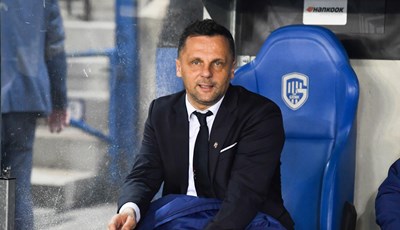

Goda: 'Dali smo sve od sebe, šteta što se to nije isplatilo'
4 sata•Nogomet
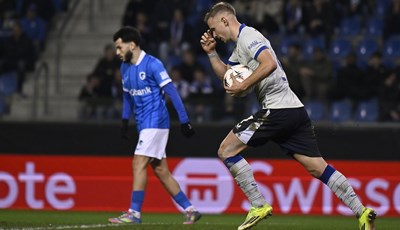
Dinamo se vratio i izborio produžetke, tamo ostao s igračem manje i bez prolaza u osminu finala
5 sati•Nogomet

Perkovićev Noah nije sačuvao prednost, Sigma Olomouc slavila u Švicarskoj
4 sata•Nogomet

Moro s Bolognom prošao dalje, Nottingham sačuvao prednost
5 sati•Nogomet
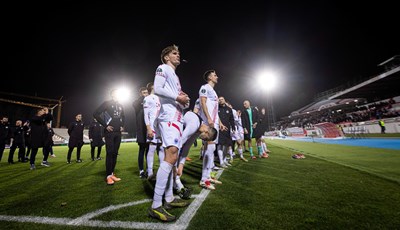
Crystal Palace preko Zrinjskog do prolaska u osminu finala
5 sati•Nogomet
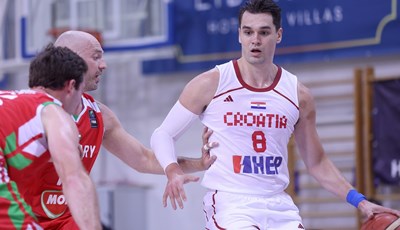
Hezonja uoči reprezentacije predvodio Real Madrid do pobjede
5 sati•Košarka

Barcelona pokazala klasu i potpuno razmontirala Zagreb
5 sati•Rukomet

Hrvatski vratar briljira u Španjolskoj, samo je sjajni Islanđanin ispred njega po broju obrana
3 dana•Rukomet
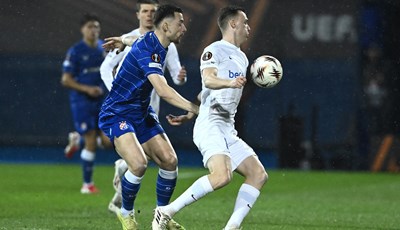
Kronologija: Genk kroz produžetke eliminirao Dinamo i ostavio ga bez osmine finala Europske lige
7 sati•Nogomet

Lille uz dosta problema s ozljedama ide po preokret u Beogradu protiv Crvene zvezde
16 sati•Nogomet
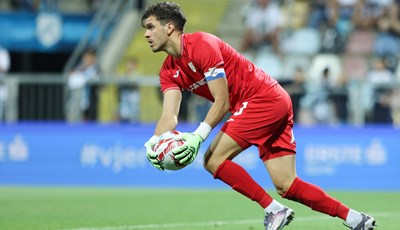
Kronologija: Rijeka odradila posao u uzvratu i prošla među 16 najboljih u Konferencijskoj ligi!
9 sati•Nogomet
Dinamo se vratio i izborio produžetke, tamo ostao s igračem manje i bez prolaza u osminu finala
5 sati•Nogomet

Rijeka maestralnim drugim poluvremenom izbacila Omoniju i prošla u osminu finala!
7 sati•Nogomet
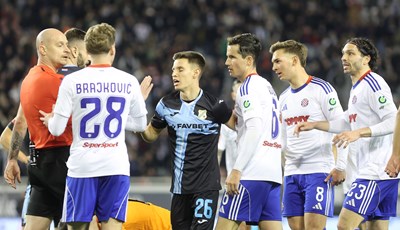
Poznata suspenzija za Sigura i Petroviča, Hajdukov igrač propušta dvoboj protiv Dinama
14 sati•Nogomet
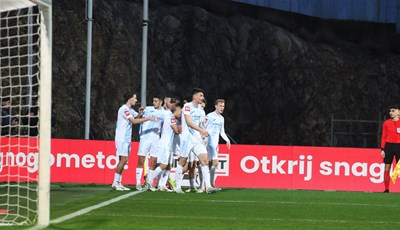
Rijeka bez Sancheza na klupi pred svojim navijačima brani minimalnu prednost protiv Omonije
18 sati•Nogomet