Makedonija

Bogomdani
Bogomdani
Dokazano ovisan
Pristupio: 30.07.2007.
Poruka: 12.100
05. listopada 2020. u 19:04

Znači u Bugarskoj dođe popisivač, pita Makedonca koje je narodnosti, ovaj kaže Makedonac a popisivač napiše da je Bugar


Ili mu objasni da to nema pa Makedonac slegne ramenima pa kaže a onda sam Bugar


Ili nešto treće?

Samo vjera, nada i ljubav, a najveća od njih je ljubav. Merčep, Praljak, Prlić, Petković, Ćorić, Pušić, Stojić - velikani hrvatskog naroda
Stefan84
Stefan84
Dokazano ovisan
Pristupio: 10.10.2018.
Poruka: 15.308
05. listopada 2020. u 19:04


Rukometni Profesor
Stefan84
Stefan84
Dokazano ovisan
Pristupio: 10.10.2018.
Poruka: 15.308
05. listopada 2020. u 19:06

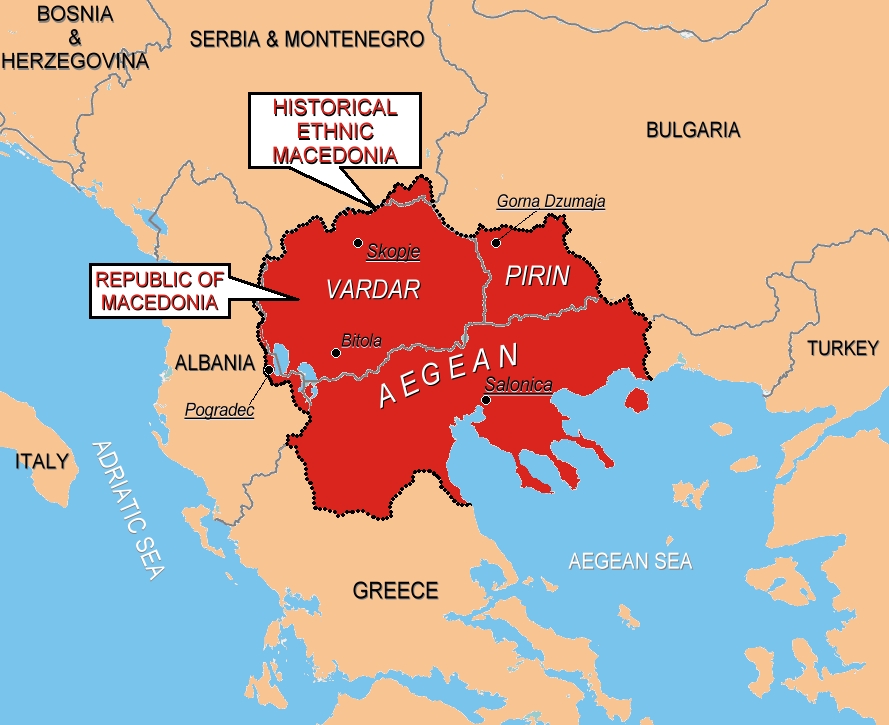
After the partition of Macedonia in 1913, the Macedonians of Pirin became a minority, within the new Bulgarian borders. The results of the 1946 Bulgarian census concerning the Macedonian population were never made public by the Bulgarian authorities. However, Yugoslav sources claim that 252,908 people declared themselves as Macedonians in that census. The Bulgarian census of 1956 recorded 187,789 Macedonians, over 95% of whom lived in the Pirin region of Macedonia. For some "strange" reason, however, just after less than a decade, in the 1965 census the number of Macedonians dropped to only 8750 and in the district of Blagoevgrad which previously had the highest percentage of Macedonians it was less than 1%. This is also the time of a number of political trials of people accused of activity based on Macedonian nationalism. As example, in 1964 four people from Blagoevgrad were reportedly tried for writing "We are Macedonians" and "Long live the Macedonian nation" on a restaurant wall. In February 1990, all the spokesmen of the main Bulgarian political parties stressed that there was no "Macedonian Question" and that the Macedonians were Bulgarians. However, developments within Bulgaria pointed to the contrary. In March, a communiqué from an organization calling itself "The Solidarity and Straggle Committee of Pirin Macedonians" appeared claiming to speak for "the 250,000 Pirin Macedonians". On March 11, the Independent Macedonian Organization, Ilinden, which was formed in November 1989, organized a rally in Sofia with demands for cultural and national autonomy of Macedonians in Bulgaria, displaying slogans like: "We are Macedonians and nothing else" and "United Macedonia: a guarantee for peace". The following map entitled Minorities in Bulgaria, can also be found in the Hugh Poulton's "The Balkans - Minorities and States in conflict". The Macedonians are very clearly recognized as a national minority that occupies the Pirin region.


The Macedonians of Pirin Macedonia Demand Human Rights This is the letter from the leadership of the Macedonian Democratic party in Bulgaria which was sent to the Commission for Human Rights within the Council of Europe in 1994. "Dear Sirs, We address you as a last instance - we, the leadership of the Macedonian Democratic party in Bulgaria (MDP), with the aim of expressing our resolute protest in relation to the conditions of the human rights of the Macedonians in Bulgaria. We, the Macedonians in Pirin Macedonia and the other Macedonians, who have been moved forcefully, or 'freely' to the provinces in the country, are not given the right to organized political and cultural social life. We want to be loyal citizens of the state we live in, but we are denied all rights, from national self-orientation, to the rights of congregation in all kinds of socio-political associations. We founded the party exclusively on democratic principles, but we are not allowed to register, due to an article in the Constitution which does not allow the formation of a party which protects the nationality of its members - in our case, that is Macedonian national affiliation. In such a situation, over two million Macedonians can not take part in the elections with full rights, with their own candidates, to present them in Parliament and protect their interests. Illegality has been proclaimed against t he activists, members and sympathizers of MDP, and against the members of the United Macedonian Organization "ILINDEN," or to be more specific, they are placed outside the law, while the police organs are carrying out terror, under the leadership of the state public prosecutor. We, the Macedonians in Bulgaria are not allowed by the police to pay our respects and bow before the grave of the great Macedonian revolutionary Jane Sandanski, in an organized way, nor to lay flowers and wreaths at the monuments of Goce Delcev in Blagoevgrad and other prominent Macedonian revolutionaries. Every year, on the day of the death of Jane Sandanski, killed in a most vicious way by the Bulgaria national-chauvinists, the police blocks the roads that lead to the grave and the place where the Pirin King was killed. The police physically beats the Macedonians from "Ilinden" and the other Macedonian formations who meet on this occasion, they tear up the newspapers and brutally beat us, who are headed towards the grave of Jane Sandanski. The se conflicts, which occur regularly every year, have already turned into small wars between the Bulgarian police and the most courageous Macedonians in Bulgaria. The most powerful media - the Bulgarian national TV, however, presents the conflicts in a biased manner - in the spirit of the official state anti-Macedonian policy. Our activities and appearances, which have absolutely no anti- national manifestations, a re presented by the television, in front of the entire Bulgarian populations, in such a way: as if we, the Macedonians, have dared to get organized and fight for our human rights, and manifest ourselves as sworn enemies of Bulgaria and the Bulgarian people. All of this, however, is very likely to lead to real political cataclysm one day. We, the Macedonians from Pirin Macedonia and the Bulgarian provinces, who dare back off in front of the measures of the Bulgarian police and restrain ourselves from responding to the physical torture by the police, who bare all this humiliation and allow ourselves to be beaten, will find that one day, our patience will explode and it is absolutely possible that it would come to bloody battles, i.e. a second Bosnia.


Amnesty International on behalf of the Pirin Macedonians Amnesty International, International Secretariat, 1 Easton Street, London WC1X 8DJ, United Kingdom 22 APRIL 1994 Bulgaria: Amnesty International Urges Authorities To Ensure Police Observance Of International Human Rights Standards Amnesty International is urging the authorities to ensure that police abide by international human rights standards at tomorrow's ethnic Macedonian commemorative assembly, following the violent events which overtook the assembly last year. The commemorative assembly at Rozhen Monastery is an annual event, traditionally organized by OMO "Ilinden" (United Macedonian Organization "Ilinden") to commemorate the death of Jane Sandanski, a local hero of the struggle against Ott oman rule at the turn of the century. On 24 April 1993, dozens of ethnic Macedonians, many of them members of OMO "Ilinden", were ill-treated by police officers in Lozenitsa and Spatovo after attempting to visit Rozhen Monastery. "Special police units beat them with truncheons and rifle butts; they dragged people from their cars and knocked them to the ground", Amnesty International said. "We are concerned that the apparently unprovoked attack by officers of the special police units on the people who gathered in Lozenitsa and Spatovo represented a flagrant violation of international human rights standards, including the International Covenant on Civil and Political Rights (ICCPR), to which Bulgaria has acceded." ; Amnesty International is particularly concerned by the reported statement from the Regional Security Service of Blagoevgrad that the police are undertaking "all appropriate measures to surround the area around the Rozhen Monastery on 23 April and to prevent the OMO "Ilinden" assembly from taking place". Three ethnic Macedonians are already reported to have been detained in Blagoevgrad while peacefully exercising their right to freedom of expression. On 15 April, Stoyan Machkarov, Khristo Yanev and Lubomir Vasilev were reportedly arrested by members of the Regional Security Service of Blagoevgrad and charged with putting up posters to announce Saturday's assembly. All three were allegedly beaten while in the police station before being released that day. Amnesty International considers their detention and alleged ill- treatment to be a violation of the ICCPR. As a State Party to the Convention against Torture and Other Cruel, Inhuman or Degrading Treatment or Punishment, Bulgaria is bound to initiate a prompt and impartial investigation wherever there is evidence that torture or other ill- treatment has occurred. Amnesty International has written to Zhelyu Zhelev, the President of Bulgaria, urging him to initiate an independent and impartial inquiry into the alleged beatings in Blagoevgrad, to make public its findings and to bring to justice anyone responsible for human rights violations. The human rights organization has still not received any reply to its letter of July 1993, to Minister of the Interior, Viktor Mikhaylov, that expressed its concern at the police violence at last year's assembly. The human rights organization called on the Bulgarian Government to initiate an independent and impartial inquiry into the alleged ill- treatment of people in Lozenitsa and Spatovo, to make public its findings and to bring to justice all those found responsible. Amnesty International is not aware whether such an investigation took place. The human rights organization is urging President Zhelev to ensure that the police in the area of Rozhen Monastery on 23 April abide by relevant international human rights standards including UN Basic Principles on the Use of Force and Firearms by Law Enforcement Officials.

Rukometni Profesor
Stefan84
Stefan84
Dokazano ovisan
Pristupio: 10.10.2018.
Poruka: 15.308
05. listopada 2020. u 19:08

od davno nisam se ovako nasmijao. ali hvala bar aza to bogomdani. cuj makedonci i prava u bugarske. veci prava imaju zivotne nego pirinci.

Rukometni Profesor
Stefan84
Stefan84
Dokazano ovisan
Pristupio: 10.10.2018.
Poruka: 15.308
05. listopada 2020. u 19:20

zasto u atina imao makedonski grcki lexikon rijecnik u 1907 godine. zasto priznao da postoi 1907 ali u 1991 nisu ?. drugi, zasto imao takav lexikon ako pricamo bugarski jazik ? zarem nie bio dovolno bugarski rijecnik za da oni razume ljudi u egejska makedonaija. ocigledno razlika previlika pa su morao napravbiti poseban lexikon. dokaz da makedonski jazik postoi i pred 1946, sami su ga priznao ko makedonski jazik 1907.


The book that should not exist, Macedonian-Greek lexicon from 1907 continued…


Taken from the book: Sumvolai eis tin Diglossian ton Makedonon ek sugkriseos tis Slavophanous Makedonikis glossis pros tin Ellinikin upo K. I. Tsioulka, Athens 1907. Translation: CONTRIBUTIONS TO THE BILINGUISM OF MACEDONIANS THROUGH THE COMPARATIVE ANALYSIS BETWEEN THE SLAVIC-LIKE MACEDONIAN AND GREEK LANGUAGES By K. I Tsioulka, Athens 1907. This book puts an end to the official propaganda created by the Greek government that there exists no Macedonian language.


ako postoi makedonski jazik postoi i makedonski narod sami su priznao grci 1907 da postoi i makedonski jazik i narod

[uredio Stefan84 - 05. listopada 2020. u 19:23]
Rukometni Profesor
Bogomdani
Bogomdani
Dokazano ovisan
Pristupio: 30.07.2007.
Poruka: 12.100
05. listopada 2020. u 19:24

Ajde drago mi je da sam te nasmijao evo prvi put čujem za ovo što pišeš


A jesu li ti Makedonci većina tamo ili je pola-pola, manjina, što li su?


Mislim za pirinski dio

[uredio Bogomdani - 05. listopada 2020. u 19:28]
Samo vjera, nada i ljubav, a najveća od njih je ljubav. Merčep, Praljak, Prlić, Petković, Ćorić, Pušić, Stojić - velikani hrvatskog naroda
Stefan84
Stefan84
Dokazano ovisan
Pristupio: 10.10.2018.
Poruka: 15.308
05. listopada 2020. u 19:31

u pirin 90% su makedonaca. citaj izvestaji amnesti international i drugi. jebes asimilacije sa pistolja i policije po makedonski sele i gradova po pirin.


pirin je makedonskab teretorije, uvek je bila uvek ce biti. nikada nisam nikada necu to priznati ko teretorije bugarske


[uredio Stefan84 - 05. listopada 2020. u 19:33]
Rukometni Profesor
Stefan84
Stefan84
Dokazano ovisan
Pristupio: 10.10.2018.
Poruka: 15.308
05. listopada 2020. u 19:45

makedonski jazik i narod je imao to nie samo pulevski priznao 1870 godine, nego i grcka. zamisli, grcka.


otomane priznao makedonski granici tretirao makedonija ko posebna teretorije koj nema veze sa bugarske, srbija ili grcka.
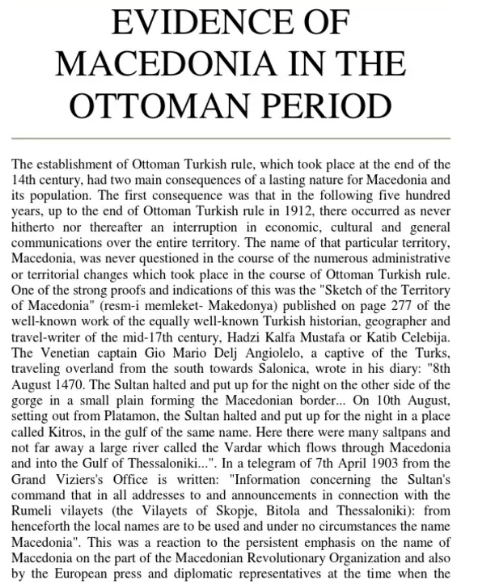


mozimo ovako do nove godine, dokazi ima ohoj

Rukometni Profesor
Stefan84
Stefan84
Dokazano ovisan
Pristupio: 10.10.2018.
Poruka: 15.308
05. listopada 2020. u 20:04

zassto su makedonci imao poseban folk dres, zasto su imao svoi pesmi. preku pesmi prebacis od generacija na generacija da postois. gledaj, ova sta se djesava izmedju 1991-2020 sve to je maslo soros i geo politiki CIA i zapad na balkan.


zasto grci imao dobar odnos prema makedonaca 1907 ? ali ne u 1991 godine ?.koj ih naterao. svedoci ste spesifican pokusaj eliminacije istorie. brisenje narod i nacija.


ete srba i rusi su nasa braca smatramo ih za braca ne im odgovara zapad to je fakt. mi smo braca sa svih u bivsa yu ali to nie dovolno.


mora da mrzis srbi zbog geo politika

[uredio Stefan84 - 05. listopada 2020. u 20:21]
Rukometni Profesor