
New York, New York


Looking at whom Knicks should keep — or lose
Even though the home-standing Hornets played a lackluster game, the Knicks' fourth straight win was very impressive.
However, it's universally agreed New York's front office is already looking past this season and is betting its future on being able to sign at least one top-flight free agent next summer. If this is indeed the case, which if any of the current Knicks are keepers? And which are losers?
Al Harrington is a point-maker deluxe. He has great range — 4-for-7 from out there — and he sports a wide variety of drives and pull-ups. What he can't do is pass — 0 assists, 3 turnovers — play defense and make good decisions in the clutch. Despite his shoot-first-and-never-ask-questions (or because of this), Harrington could easily be a dynamic go-to scorer off the bench for a competitive club. However, getting him to accept such a "diminished" role would take a lot of doing.
Depending on his attitude and the specifics of whatever roster changes are made in the offseason, Harrington is a keeper.
Chris Duhon celebrated his return to his home state by playing superb game — 7-for-11 (including 6-for-8 treys), 8 assists, nary a turnover and 22 points. Last season, Duhon simply wore out both physically and mentally, but he does seem to be totally energized so far this year. The key to his effectiveness in any given game, however, is his shooting — when he hits his jumpers, he doesn't miss much else. True, he has also been somewhat inconsistent, but if Mike D'Antoni can limit his playing time, then Duhon is a more than adequate point guard.
If a high-quality backup can be obtained, and Duhon's minutes can therefore be limited to about 25 to 30 minutes per game, then he's a keeper.
David Lee was given almost as many isolation opportunities — eight for 9 points — as Harrington — nine for 6 points. Lee can drive and reverse field in either direction, run the court, make nifty passes from the high post and he also scored three buckets on screen rolls. He works hard on defense, showing marked improvement in his understanding and his footwork so that he has become an adequate defender. Unfortunately, although he's power-forward sized — 6-9, 250 — Lee often goes head-to-head with opposing centers. Indeed, Emeka Okafor destroyed him in the low post, but for some reason Okafor played only 20 minutes.
Lee's specialty, of course, is rebounding — 14 rebounds, 17 points — which is enough for him to function as a valuable role player on a team that has a high-scoring center. Given that the Knicks can lure one of these rare specimens to NYC and that Lee's agent doesn't price him out of the market, Lee is a keeper.
Jared Jeffries is the team's only quality post defender. The bonus is that he can also occasionally drop 3-balls. Would be best used as the fourth big in a four-man rotation, also making him a keeper.
Wilson Chandler can shoot, drive and jump to the moon. He's not really an iso-type scorer, but needs to have space, time and lanes created by ball and player movement. Nevertheless, he's an explosive scorer — 10-for-15 for 20 points.
Chandler is a better defender when arriving on the scene in a help situation than he is playing man-to-man defense. On several occasions, he went under high screen/rolls and paid the price when his man dropped long-range jumpers. Chandler was also guilty of repeatedly turning his head and of getting faked off his feet beyond the foul line.
But he's only 22 years old and still learning the game. In any case, Chandler has the tools to develop into a 20 per game scorer. Definitely a keeper.
 |
| In two more years, Danilo Gallinari could develop in an elite NBA shooter. |
Danilo Gallinari has incredible range and a quick trigger. His shortcomings are shot selection, a slow initiatory dribble when he attacks the basket and a tendency to get lost when playing weak-side defense. On the other hand, he does have quick hands and good instincts on the defensive end. Give him another two seasons and Gallinari could easily become a much better player and shooter than Peja Stojakovic was in his prime.
Another keeper.
Larry Hughes registered 7 assists, mainly because his teammates shot the lights out — 55.1 percent, including 13-for-25 from downtown. But he also showed poor discretion in his own choice of shots — 3-for-10, including five forced jumpers. His defense was always overrated, based as it was on his continued gambling.
The best that can be said for Hughes is that, more often than not, he keeps both teams in the games.
A loser.
Eddy Curry's primary value is to stay healthy and show enough on the court to induce another sucker — er, team — to propose a trade that would be acceptable to the Knicks. In other words, any offer won't be refused.
Is and always was a loser.
Nate Robinson has been on the bench during the Knicks' mini-streak, proving he's much more valuable as a cheerleader than as a player. For sure, he's a cute little fellow and Knicks fans adore underdogs — but his rampant immaturity makes him a loser.
Darko Milicic wants to take his ball and go home, and the Knicks should oblige this loser.
Toney Douglas is supposed to be a good defender. And, in fact, nobody scores against him when he's glued to the bench. On the basis of his potential, he's a keeper.
Jordan Hill is a keeper, only because the Knicks would be too embarrassed to get rid of their first-round draft pick so quickly. In any case, Hill is a long-term project.
Marcus Landry shows some promise as being a dead-eye three-point shooter. Or maybe not. Somebody has to be the last man on the bench, and it might as well be him.
Overall, the Knicks played with much more urgency than did the moribund Hornets. New York did have some stretches where it stood around on offense — particularly when Harrington had the ball and could see the basket — but when the Knicks all got involved, their offense usually generated good shots.
Their post-up game was virtually nonexistent — six of these for 4 points — and most of their scoring came from mid- and long-range jumpers and fast breaks. The fact that they shot only 15 free throws (to the Hornets' 25) demonstrated how seldom they were able to drive the ball into the paint.
In addition to various isos, the Knicks offense consisted mostly of screen/rolls, handoffs and weaves and a guard or wing making a dive cut, then popping out behind a high screen. With no post-up game, the middle was usually open.
They clustered around ball-penetration on defense to good effect — and were helped by the Hornets' poor shot selection — 40.5 percent. However, the Knicks were often outsized in the low post, and their screen/roll defense was frequently confused — with both defenders choosing to guard the ball-handler and leaving the roller unattended.
But their energy was sufficient to overwhelm the listless Hornets.
So, the Knicks are not quite as bad as many critics — including me — have previously believed. If they can keep the ball moving and consistently shoot a high percentage, they can be a very dangerous club. Consistency is the key word here.
If they can somehow obtain the services of an athletic big man who can hit 15-footers and do some damage in the low post — like Chris Bosh? — then the Knicks could easily develop into a playoff team.
LeBron who?
"Smoke me a kipper, I'll be back for breakfast!" 🎸⚽🏀🎨


Nogomet
Slovenija posljednji protivnik Vatrenih uoči početka Svjetskog prvenstva
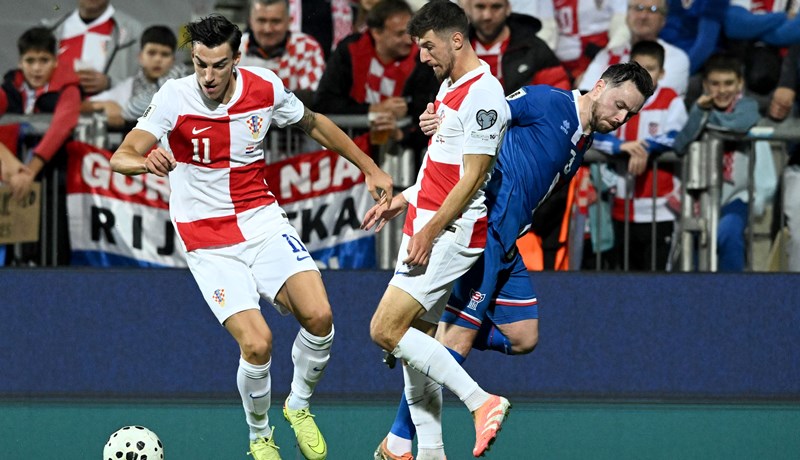
Nogomet
Sučić: 'Lijep pogodak, ali malo je značio u ovom slučaju'
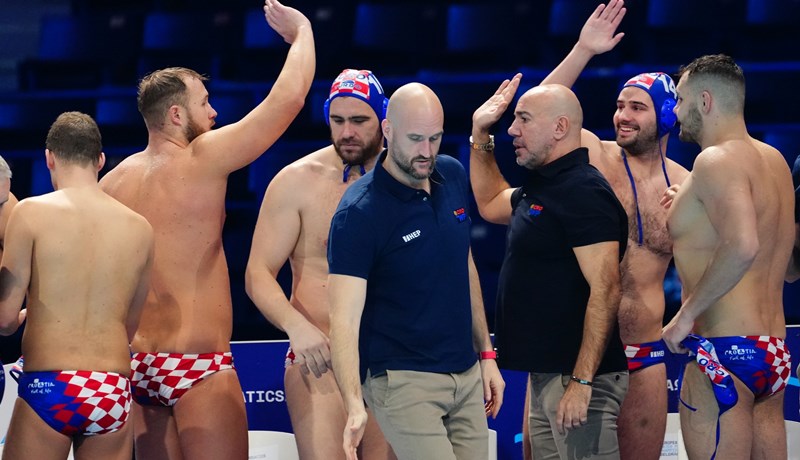
Vodeni sportovi
Odluka pada večeras, Hrvatska mora pobijediti velikog rivala
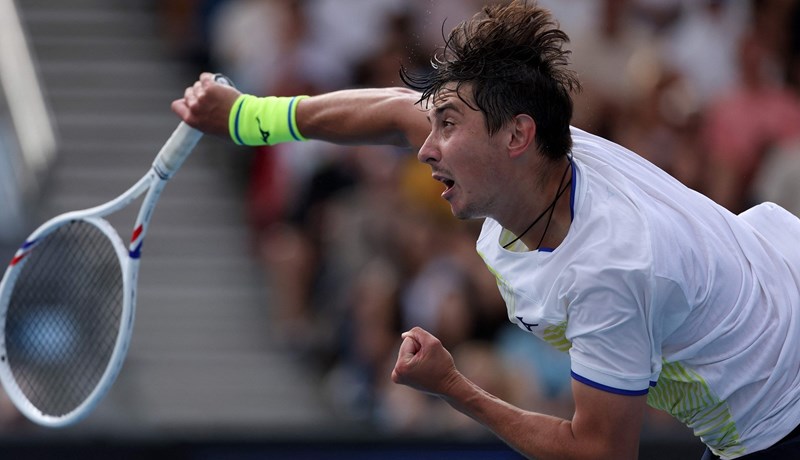
Tenis
Zverev i De Minaur ispustili po set, ali ipak prošli u treće kolo Australian Opena

Because of a few songs wherein I spoke of their mystery-women have been exceptionally kind to my old age
- Najnovije
- Najčitanije
Zverev i De Minaur ispustili po set, ali ipak prošli u treće kolo Australian Opena
37 min•Tenis
Finale America's Cupa počet će od sredine svibnja u Napulju
1 sat•Vodeni sportovi
Marseille pobjedom protiv Redsa osigurava nokaut fazu, jedni i drugi ciljaju Top 8
2 sata•Nogomet
Girona riješila pitanje vratara, stigao Ter Stegen iz Barcelone
2 sata•Nogomet
Otkazi, izdaje, uzalud žrtvovani milijuni eura, katastrofalne greške divova: sezona najluđe 'sječe trenera'
2 sata•Nogomet

Slovenija posljednji protivnik Vatrenih uoči početka Svjetskog prvenstva
3 sata•Nogomet
Ne kladi se protiv sinjske djece
4 sata•Fanatik
Hrvatska protiv jednog od domaćina Europskog prvenstva ide po prvo mjesto u skupini
4 sata•Rukomet
Hrvatska saznala protivnike u drugom krugu, Farski Otoci ipak nisu uspjeli
15 sati•Rukomet
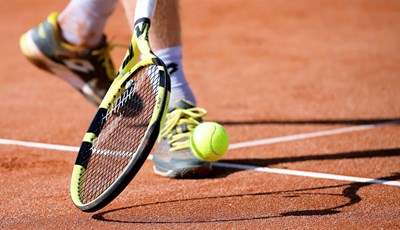
Izbacio je Prižmića u kvalifikacijama, a sada iznenadio 20. nositelja
3 dana•Tenis
Otkazi, izdaje, uzalud žrtvovani milijuni eura, katastrofalne greške divova: sezona najluđe 'sječe trenera'
2 sata•Nogomet
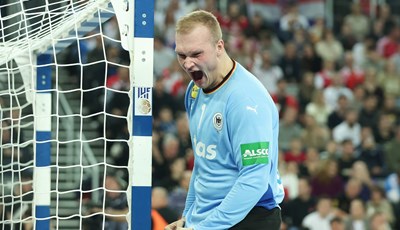
Situacija u skupini A se zakomplicirala, Njemačka mora pobijediti Španjolsku ako želi prolaz
2 dana•Rukomet
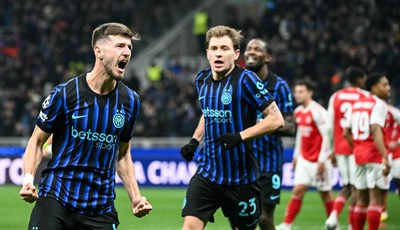
Sučić krasnim golom vratio Inter iz minusa protiv Arsenala, gosti ipak slavili
18 sati•Nogomet
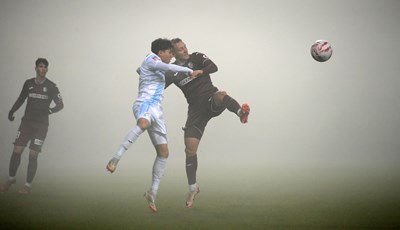
Kronologija: Rijeka uzela tri boda na Drosini, ovaj put uvjeti su bili savršeni
23 sata•Nogomet
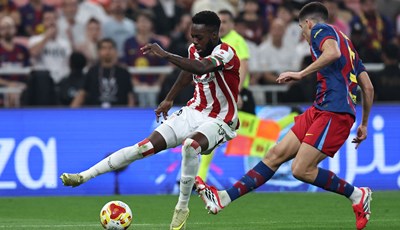
Atalanta želi nastaviti s pobjedama u Ligi prvaka, Baski traže povratak u formu
6 sati•Nogomet