
Davis Cup


Record crowd for the Davis Cup Final
NEWS ARTICLE

In an age when sports crowds tend to be smaller because of all-seater stadia and safety restrictions, it makes a change for an event to be boasting a record gate.
It was estimated that the attendance for the Davis Cup Final between France and Switzerland at the Stade Pierre Mauroy in Lille would fall just short of the record set 10 years ago for an officially-sanctioned tennis match. In the event, the tantalisingly prospect of a first title in 13 years for the host country coupled with the universal appeal of Roger Federer proved too much for the fans who turned out in force on the opening day on Friday, breaking the record by 232 at 27,432.
In fact, the French organisers must have wished there was a way of utilizing even more of the space afforded them by the 50,000-capacity football stadium, home of LOSC Lille. French demand was inevitably high – tickets sold out within hours of going on sale - and the Swiss could comfortably have taken up a much larger allocation than the 3,500 seats afforded them, but of course a tennis court has its limitations due to its relatively small field of play.
It is not uncommon for Davis Cup Final crowd capacities to evolve. The capacity originally predicted for the Spain versus United States Davis Cup Final at the Estadio Olympico de Sevilla in 2004, which previously held the record, was 23,300. That was 2,278 short of the earlier record which had stood for 50 years, set at the White City in Rushcutters Bay Park, Sydney, when Australia hosted the United States and even that figure was greater than initially planned.
The Spanish organisers, also, discovered they could safely squeeze in a few more – in fact a good few more - as the capacity was raised first by 3,300 and then a further 600 who, in theatre parlance, were offered a “restricted view” through four stanchions.
The multi-purpose, twin-level Stade Pierre Mauroy, built at a cost of 282 million Euros in 2012, lends itself more readily to conversion than either the White City or the Olympic Stadium. For one thing it has a retractable roof that can be closed in the space of just 15 minutes, whereas the Spanish had to build their roof.
That and other alterations cost them 1.5 million Euros, but it was money well spent as far as the city of Seville was concerned because it benefitted them to the tune of 22.5 million Euros in extra revenue resulting from the Final.
The White City alterations didn’t come cheap either and the cost of building the stands alone came to L50,000 – a huge amount of money in the Fifties. John Barrett, the BBC commentator, who attended the tie on his way back from playing at the US Open, remembers it well.
“The scaffolding filled in each of the corners of the White City and towered up to a terrific height – it was an amazing sight,” he said.
Had it not been for Andy Roddick’s rocket serve, the White City might have held the record for 60 years rather than 50. The 2004 Final was originally scheduled for Madrid, but fearful of the American’s new 155 mph (249.4 kph) world record serve, which, in the atmosphere of the Spanish capital, located 2,000 feet (625 metres) above sea level, might have fizzed past Rafael Nadal and company, the tie was moved to Seville. In the damp weather of the Andalusian city and on a very slow clay court, A-Rod’s serve was much more manageable.
The record for any tennis match remains the so-called “Battle of the Sexes” challenge match in 1973 between Bobby Riggs and Billie Jean King at the Houston Astrodome which drew a crowd of more than 30,000, but it was not officially sanctioned by the sport’s governing body. A television audience estimated at anywhere between 50 and 90 million saw King toy with the 55-year-old Riggs, beating him in three straight sets.
Riggs, a self-styled chauvinist, was carried onto court in a rickshaw pulled by scantily-dressed models. Many of Federer’s adoring fans no doubt believe that he, too, should be carried to the court like a king. After the beating he took from Gael Monfils on Friday the 17-time Grand Slam champion certainly needs a lift.
Read more at http://www.daviscup.com/en/news/191287.aspx#ixcXdxE0zPYyCSgz.99
Marva je marva, u trnju jede, u blatu spava, ali se nikada ne uprlja k'o čovjek!
leonard cohen je napisao/la:
3 meča u 3 dana
 , teško da federer može to iznijeti na svojim leđima.
Jučer se nije pojavio na terenu, danas su parovi gdje nije tolika potrošnja, tako da bi trebao biti spreman za sutra, ako je zdrav
Marva je marva, u trnju jede, u blatu spava, ali se nikada ne uprlja k'o čovjek!


velika šteta da federer nije na 100%...djelomično propao spektakl.
mada, ako ćemo iskreno, da je federer spreman, monfils bi ga onakvom partijom opet hladno dobio. realno, odigrao je maestralno. igrač kojeg mi je (uz rogera) najdraže gledati.
sad sve ovisi o federeru...ja mislim da ako dobiju barem jedan od sljedeća dva meča, da će stan the man riješiti zadatak do kraja u decideru....vidim mu u očima da je žedan afričke krvi
go switzerland go
(kako nepogodno ime zemlje za navijačke parole)
mada, ako ćemo iskreno, da je federer spreman, monfils bi ga onakvom partijom opet hladno dobio. realno, odigrao je maestralno. igrač kojeg mi je (uz rogera) najdraže gledati.
sad sve ovisi o federeru...ja mislim da ako dobiju barem jedan od sljedeća dva meča, da će stan the man riješiti zadatak do kraja u decideru....vidim mu u očima da je žedan afričke krvi
go switzerland go
(kako nepogodno ime zemlje za navijačke parole)
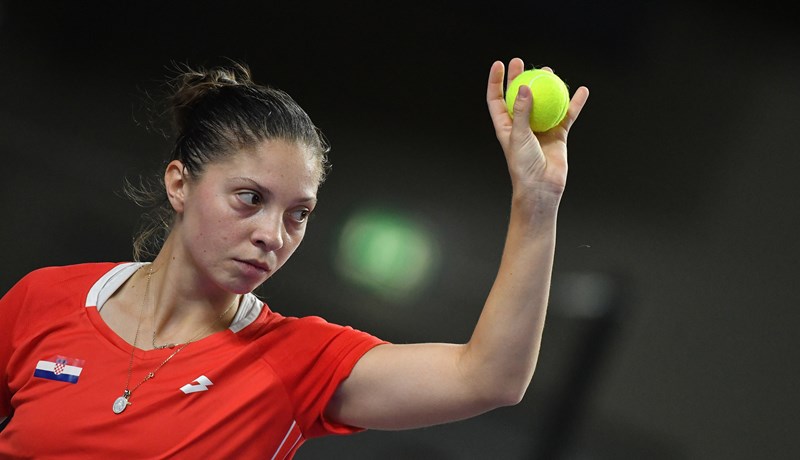
Davis Cup/Fed Cup
Antonia Ružić i Petra Marčinko predvode hrvatski sastav na turniru Billie Jean King Cupa u Portugalu
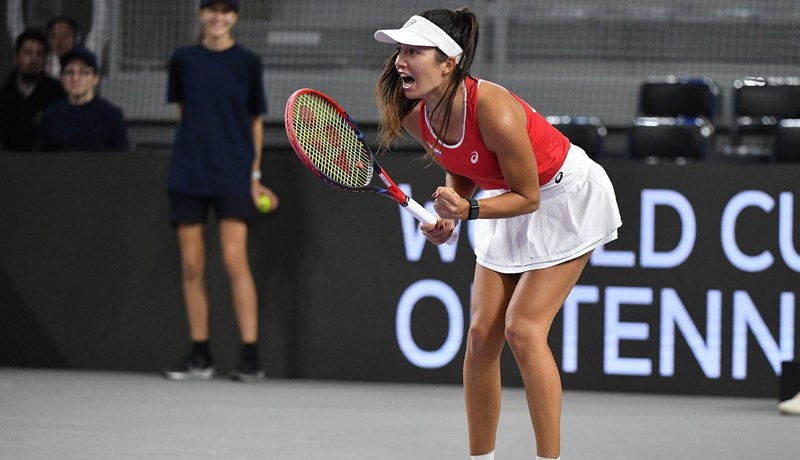
Davis Cup/Fed Cup
Hrvatske tenisačice saznale protivnice u Billie Jean King kupu
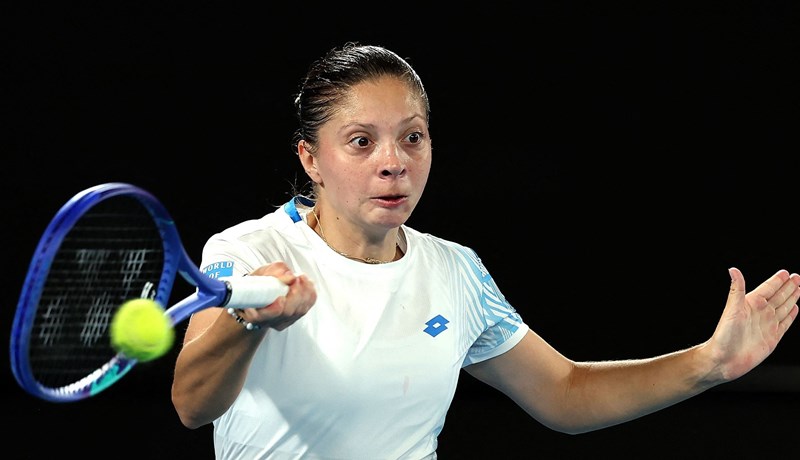
WTA Tour
Sjajna Antonia Ružić izbacila aktualnu olimpijsku pobjednicu i bivšu finalisticu Australian Opena
WTA Tour
Antonia Ružić bez prevelike šanse u dvoboju s Čehinjom
- Najnovije
- Najčitanije
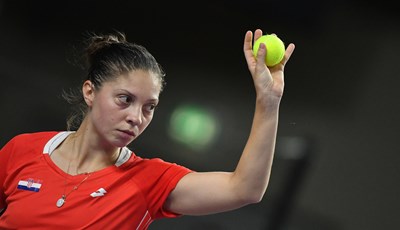
Antonia Ružić i Petra Marčinko predvode hrvatski sastav na turniru Billie Jean King Cupa u Portugalu
3 dana•Davis Cup/Fed Cup
Antonia Ružić bez prevelike šanse u dvoboju s Čehinjom
4 dana•WTA Tour
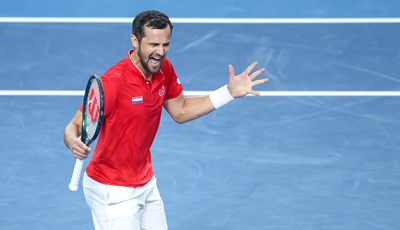
Arevalo i Pavić na početku puta u Indian Wellsu imaju ispred sebe Đokovića i Tsitsipasa
4 dana•ATP Tour

Sjajna Antonia Ružić izbacila aktualnu olimpijsku pobjednicu i bivšu finalisticu Australian Opena
5 dana•WTA Tour
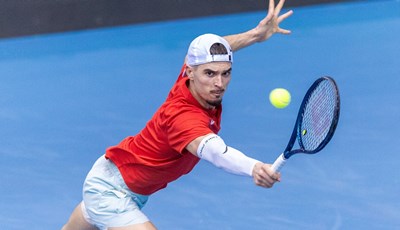
Ozljeda zaustavila Dinu Prižmića u drugom kolu Indian Wellsa
6 dana•ATP Tour
Antonia Ružić preokretom do pobjede i prolaza u drugo kolo WTA 1000 turnira
7 dana•WTA Tour
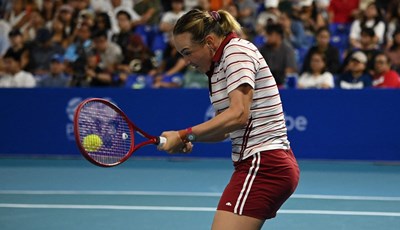
Donna Vekić izborila drugo kolo WTA 1000 turnira, svladala je 47. tenisačicu svijeta
7 dana•WTA Tour

Kronologija: Varaždinci nadigrali i zasluženo svladali posljednjeplasirani Vukovar
5 sati•Nogomet

Kronologija: Strasbourg do pobjede na Rujevici u dvoboju s Rijekom
1 dan•Nogomet

Dinamo mora imati spremnu zamjenu za Mišića, a u SuperSport HNL-u nameću se tri kandidata
7 sati•Nogomet

SuperSport Prva NL: Tri gola, tri boda i pjesma u autobusu Orijenta nakon gostovanja u Karlovcu
3 sata•Nogomet

Varaždin prekinuo crni niz, Vukovar svoj nastavio i doveo se u još veće probleme
3 sata•Nogomet

Budi se Hrvatski dragovoljac, upisao je prvu pobjedu u SuperSport Drugoj NL nakon pet mjeseci
6 sati•Nogomet

Poznate postave za prvi susret 26. kola SuperSport HNL-a: Varaždin bez Zelenike, Špoljarić starta kod Vukovara
6 sati•Nogomet

Top 5 utakmica vikenda: Poslastica do poslastice, okršaji ljutih rivala su kao finala ili majstorice
15 sati•Nogomet