
Pravila nogometne igre


Dobih odgovore, i to napismeno! na ona svoja pitanja o puštanju prednosti nakon faula za žuti karton. A i još neka. PA da evo podijelim ovdje s vama. Ako je nekome nešto nejasno zbog engleskog, drage volje ću objasniti, ali ne da mi se sad prevoditi baš sve na hrvatski...
B) Same questions for when the player is told by the referee to go off the pitch and correct his equipment.
C) A team has started the match short of full 11 players, and after the match begins, other players arrive - same questions for their proper entry into the game.
These are not substitutes, so there is no requirement to wait for a stoppage to allow them in. If the referee has ARs or a 4th, they can be delegated the duty to inspect the player for correct equipment and his player pass, and upon a prearranged signal that all is as it should be, the referee will wave them on during play. They can also enter at a stoppage, of course, and that may be the only way if there is a single referee.
na ona svoja pitanja o puštanju prednosti nakon faula za žuti karton. A i još neka. PA da evo podijelim ovdje s vama. Ako je nekome nešto nejasno zbog engleskog, drage volje ću objasniti, ali ne da mi se sad prevoditi baš sve na hrvatski...1) The player commits a cautionable offense, advantage is applied,
and in the continuation of play, the player commits another
cautionable
offense. At the next stoppage, should the referee issue two yellow
cards
(the 2nd obviously followed by the red), and if so, what's the correct
procedure for administering a double caution like that?
The answer is yes, both cards should be
shown. The
referee points to the spot for the original caution, showing the card,
then
points to the next spot, again showing the caution and then shows the
red
card, for the two cautions. You can also find this info in the USSF
Advice to Referees sections 12.30 & 12.32.
Under NO circumstances should the referee
allow play to
begin again before the cards are shown!! Stop any attempted restart
and announce the restart is only on your whistle. Even if they start
before you can get the whistle to your mouth to stop it, that is
okay.
Simply blow the whistle, explain briefly that the game may not be
restarted
except on your whistle, issue the cards, see the player off and set up
for the
restart. See 12.26.
2) Adding a twist to 1) above, what if that player already had a
caution in the game, so the two cautionable offenses were really his
second
and third? It doesn't seem that the referee could administer a
"double
caution", as it would mean showing 3 yellow cards to the same player
in the
same game
(Graham Poll's 3 yellows to Joe Simunic in WC 2006
notwithstanding:))?
Correct. You can only kill him once. Show
the second yellow, then the red, and include details of the entire
misconduct
episode in the referee report, including the one that could not be
issued.
3) What if the second offense is a sending-off offense? Should
the
referee administer only the direct red, or, since most leagues
accumulate
cautions and suspend players after X cautions in the season, should
the
referee go back to the original foul, caution for it, and then issue
the red
for the second foul? That seems really unwieldy, but perhaps it might
make sense?
This is a sticky wicket indeed. The appropriate
procedure is to show both cards, but make sure the player is aware it
is TWO
cards, one for the caution and a second which is the red, a direct
sending off. One assumes advantage was allowed in the first instance,
and when the second incident took place, it is the more serious and
should
control the restart. The objective is not to allow a team to use
their
misconduct to disadvantage their opponent.
4) Same as 3), but the player already has a caution in the game.
Should the referee even apply the advantage rule after the first,
cautionable
foul, since it is, for all practical purposes, a sending-off
offense?
In this case, the referee will have to use
common
sense. If the second caution is one where an advantage to the
attacking
team has a real scoring opportunity, wait to issue the caution and
sending off
until either the attack fails or the ball goes out of play. It is
okay
to stop play as soon as the 2nd caution occurs, but only if that is
not a
disadvantage to the opponent.
Regarding re-entry:
A) Injury treatment off the pitch - must a player return at the
halfway
line, anywhere across the touch line, or anywhere across any line?
Must
there be a stoppage in play before the player is allowed to return?
The player can return across the touchline
(anywhere)
when beckoned by the referee, during play, assuming there wasn't a
blood
issue, which would require either the referee, AR1 or 4th official to
check
the player. If play is stopped, the player may return over the goal
line with the referee's permission.
B) Same questions for when the player is told by the referee to go off the pitch and correct his equipment.
This one is different. If the player leaves
the
match (with permission or at the referee express direction) to correct
equipment, he may only return at a stoppage, after having his
equipment
checked. If play is stopped, it doesn't matter which line or where he
enters.
C) A team has started the match short of full 11 players, and after the match begins, other players arrive - same questions for their proper entry into the game.
These are not substitutes, so there is no requirement to wait for a stoppage to allow them in. If the referee has ARs or a 4th, they can be delegated the duty to inspect the player for correct equipment and his player pass, and upon a prearranged signal that all is as it should be, the referee will wave them on during play. They can also enter at a stoppage, of course, and that may be the only way if there is a single referee.
I am going to space, and when I come back I have to pick up poodle crap.

1) Koristeći taj "common sense", ne vidim niti jedan razlog da igraču odbijem zahtjev za napuštanje terena... naime, ne mogu si zamisliti situaciju gdje to predstavlja prednost za njegovu momčad. Isto tako, ne vidim kakve veze ima to pravilo koje spominješ sa situacijom da sudac odbije igraču dozvolu za izlazak...?
2) Nisam upoznat da ima neki takav naputak... ako ima, javi. Ja im obično zaprijetim da ću bilo kome i svakome ko se pomakne pokazat karton, pa makar ih morao podijeliti 6. Nikad još nisam morao ostvariti prijetnju.
2) Nisam upoznat da ima neki takav naputak... ako ima, javi. Ja im obično zaprijetim da ću bilo kome i svakome ko se pomakne pokazat karton, pa makar ih morao podijeliti 6. Nikad još nisam morao ostvariti prijetnju.
I am going to space, and when I come back I have to pick up poodle crap.


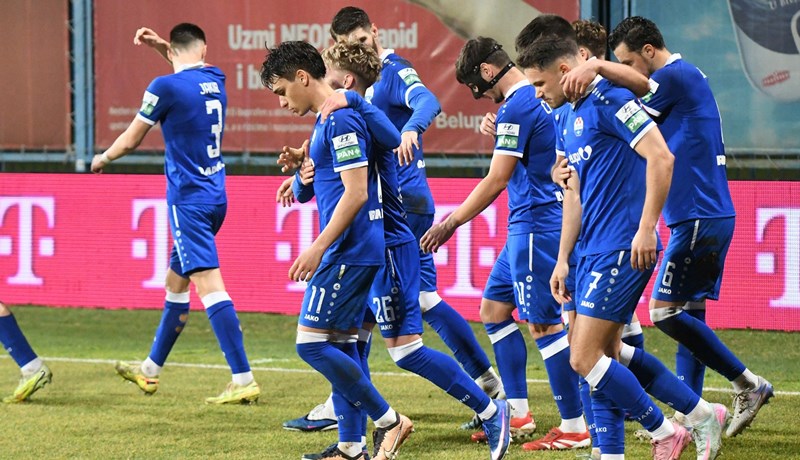
SuperSport Hrvatski kup
Pogledajte kako je Slaven Belupo eliminirao Lokomotivu iz SuperSport HNK raspucavanjem s 11 metara
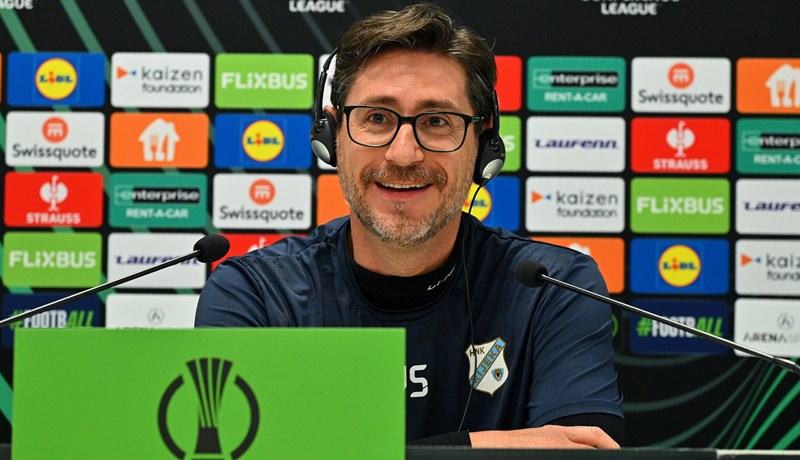
Konferencijska liga
Sanchez: 'Dobri su u svemu, imaju velik potencijal, kandidati su za osvajanje'
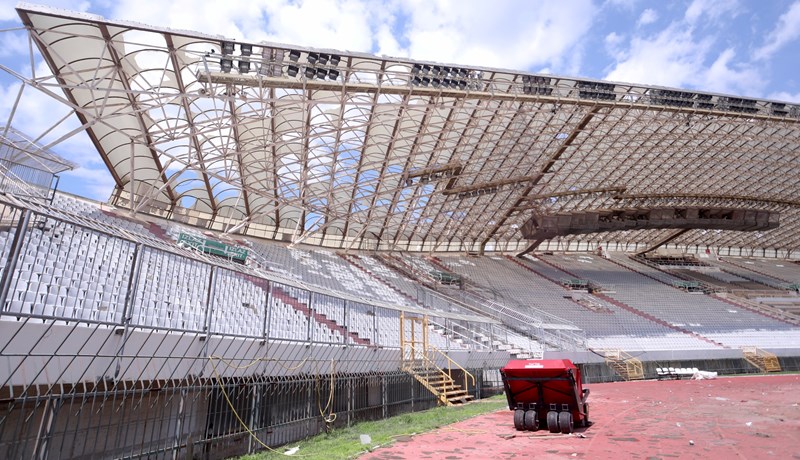
SuperSport HNL
Gledati u budućnost kroz prizmu prošlosti
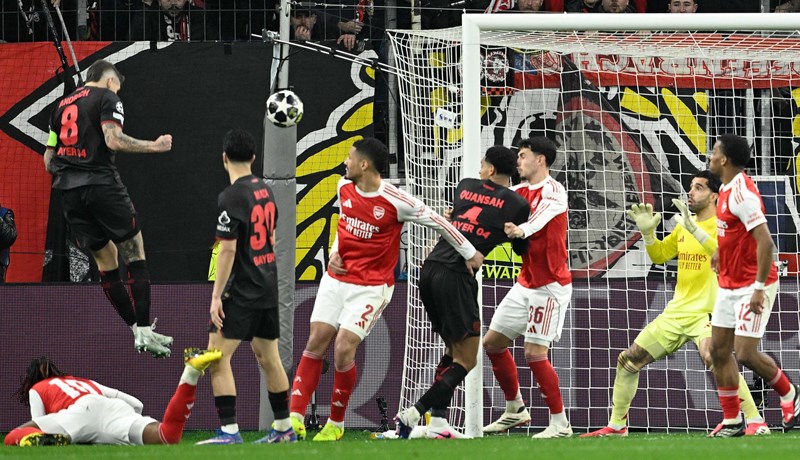
Liga prvaka
Sve je otvoreno pred uzvrat, bez pobjednika u dvoboju Bayer Leverkusena i Arsenala
- Najnovije
- Najčitanije

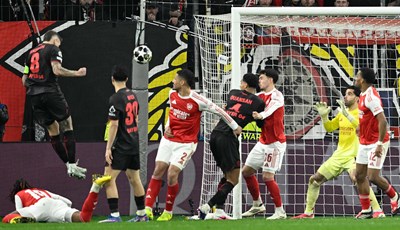
Sve je otvoreno pred uzvrat, bez pobjednika u dvoboju Bayer Leverkusena i Arsenala
9 sati•Liga prvaka
Rac za Sportnet: 'Šaranić je iskočio najviše zahvaljujući svom radu i trudu, svi znamo kakav je talent'
12 sati•Prva NL
Gledati u budućnost kroz prizmu prošlosti
14 sati•SuperSport HNL
Sanchez: 'Dobri su u svemu, imaju velik potencijal, kandidati su za osvajanje'
15 sati•Konferencijska liga
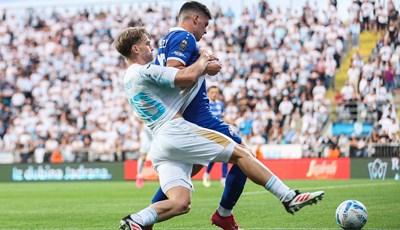
Poznati parovi polufinala SuperSport Hrvatskog kupa, izbjegnut dvoboj Dinama i Rijeke
19 sati•SuperSport Hrvatski kup
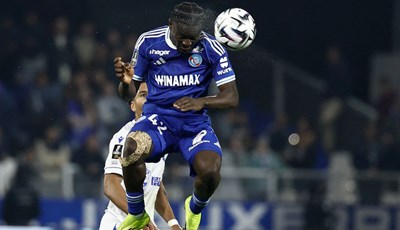
Grad iz bespuća povijesnih zbiljnosti, prvak s Wengerom i Domenechom, momčad Generacije Z i Chelseajeva 'Pepeljuga'
21 sat•Konferencijska liga
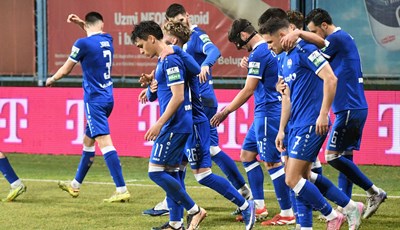
Pogledajte kako je Slaven Belupo eliminirao Lokomotivu iz SuperSport HNK raspucavanjem s 11 metara
1 dan•SuperSport Hrvatski kup
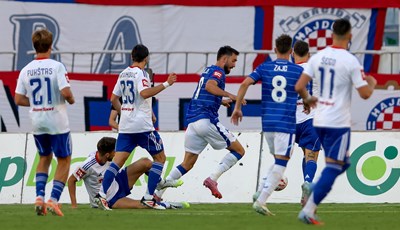
Kronologija: Dinamo sve riješio u prvom poluvremenu i upisao veliku pobjedu na Poljudu!
3 dana•SuperSport HNL
Poznati parovi polufinala SuperSport Hrvatskog kupa, izbjegnut dvoboj Dinama i Rijeke
19 sati•SuperSport Hrvatski kup
Gledati u budućnost kroz prizmu prošlosti
14 sati•SuperSport HNL
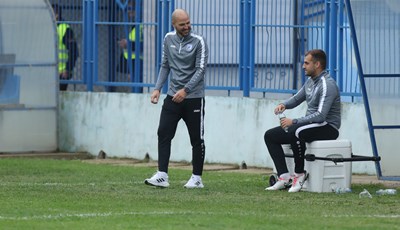
Kronologija: Karlovčani se probudili nakon primljenog gola i preokrenuli u Vinkovcima
3 dana•Prva NL
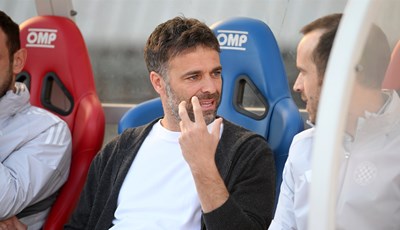
Garcia: 'Ne možemo se uspoređivati s Dinamom. Tko to radi, prodaje maglu'
3 dana•SuperSport HNL
Rac za Sportnet: 'Šaranić je iskočio najviše zahvaljujući svom radu i trudu, svi znamo kakav je talent'
12 sati•Prva NL
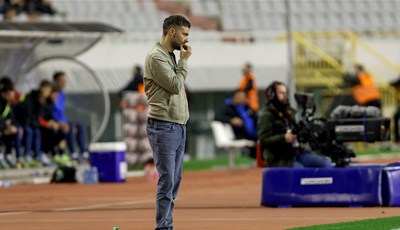
Garcia i Kovačević otkrili karte, poznati sastavi za 'utakmicu nad utakmicama'
3 dana•SuperSport HNL
Show Valverdea na Bernabeuu, Chelsea teško stradao na Parku Prinčeva, Bodo/Glimt ne staje
7 sati•Liga prvaka